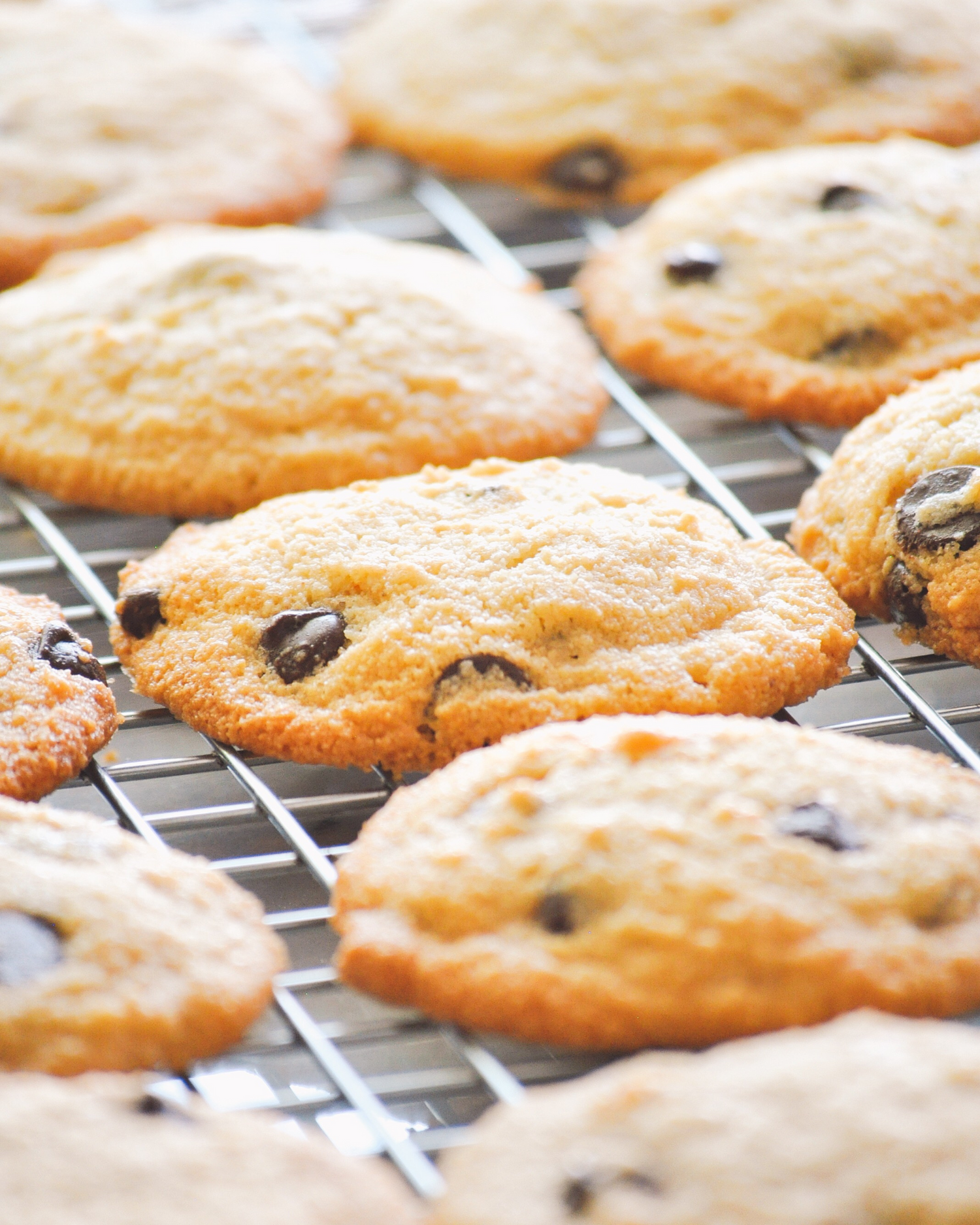
Almond Flour Chocolate Chip Cookies
The chocolate chip cookie may be one of America’s most familiar desserts, but changing the flour changes the entire personality of the cookie.
These Almond Flour Chocolate Chip Cookies are tender, slightly crisp around the edges, and rich with the natural flavor of almonds. They still deliver the essential pleasure of a chocolate chip cookie, warm chocolate tucked into a buttery dough, but almond flour gives them a softer, more delicate structure than cookies made with all-purpose flour.
The original chocolate chip cookie dates to the 1930s, when Ruth Graves Wakefield created her Toll House Chocolate Crunch Cookie at the Toll House Restaurant in Whitman, Massachusetts. Wakefield was an accomplished baker and restaurant owner, and her cookies became so popular that Nestlé acquired the rights to the recipe in 1939 and began printing it on its chocolate packaging. The cookie eventually became an American standard.
Almond flour brings a different baking tradition to that familiar idea. Made from finely ground blanched almonds, it has long been used in pastries and cookies, including European macarons and nut-based shortbreads. Because almonds contain considerably more fat than wheat flour and no gluten, almond flour produces baked goods that tend to be tender, moist, and somewhat more fragile.
That difference matters when making cookies.
The dough benefits from a short rest in the refrigerator, which makes it easier to scoop and helps control spreading. Once baked, the cookies should be allowed to sit on the baking sheet for a few minutes before moving them. Almond flour cookies can be delicate while hot and become noticeably sturdier as they cool.
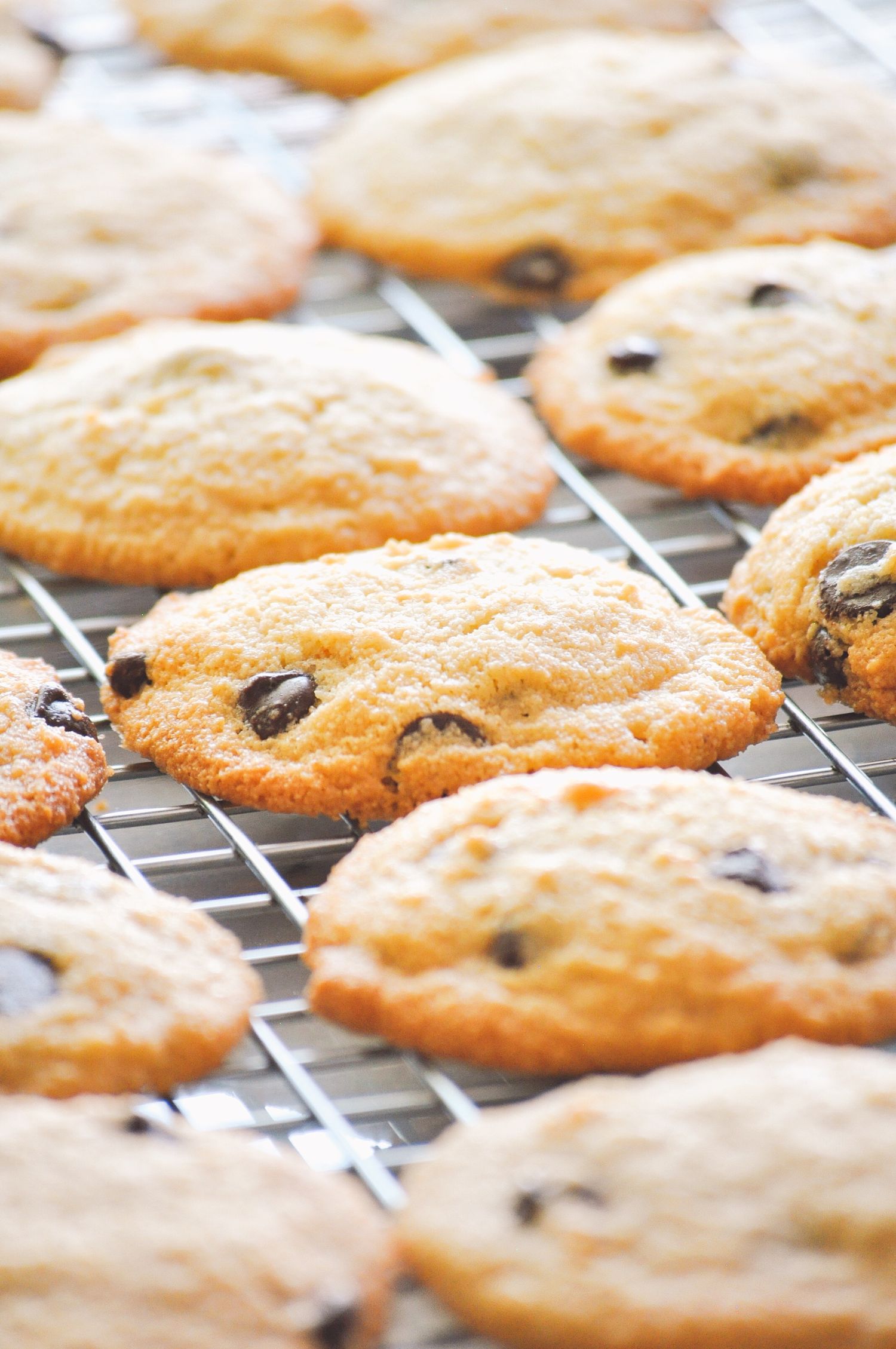
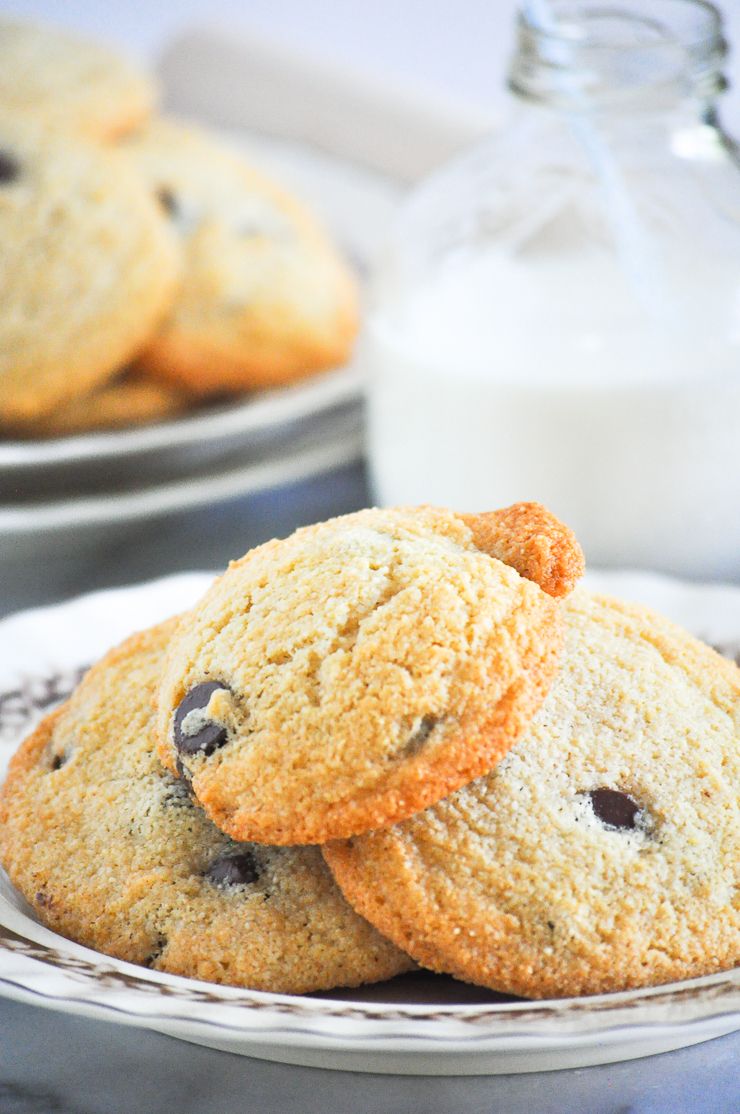
I also prefer to pull them from the oven when the edges are lightly golden rather than waiting for the centers to look completely firm. They continue setting as they cool, and overbaking can quickly take an almond flour cookie from tender to dry.
The chocolate does most of the talking after that. Semisweet chocolate gives enough bitterness to balance the buttery almond flavor, while vanilla rounds everything out.
I would also leave the phrase “guilt-free” out of any discussion of these cookies. They are cookies, and very good ones. Almond flour happens to be naturally gluten-free and brings protein, fiber, and fat from the almonds, but its greatest contribution here is flavor and texture.
That is reason enough to keep a bag in the pantry.
These cookies taste especially good once they have cooled just enough for the edges to set while the chocolate inside is still soft. Add a glass of cold milk or a cup of coffee and very little else is required.
Until next time, thank you for spending a little time with me. I hope you find a recipe to make, a story to enjoy, and something new to take into the kitchen. ♥️
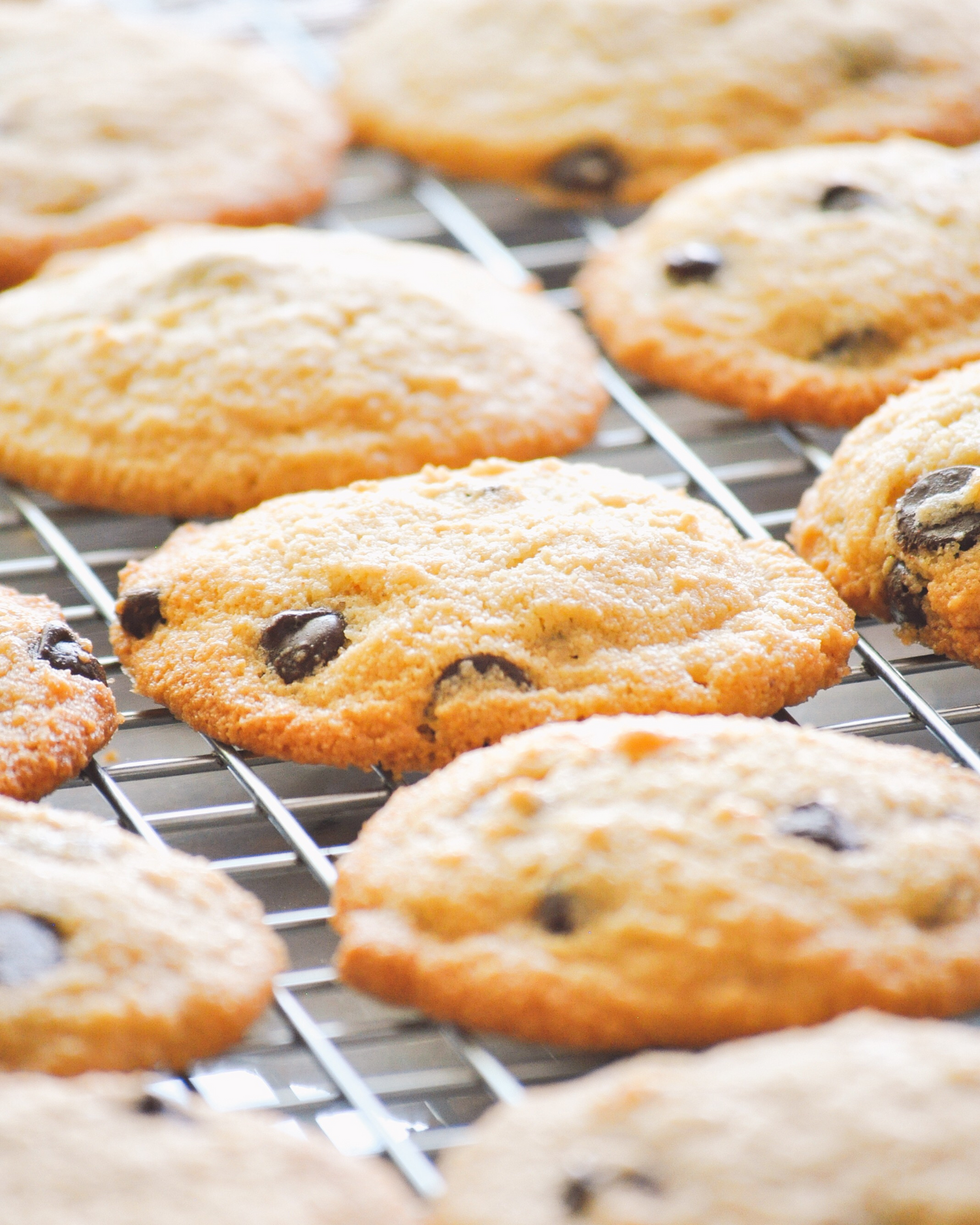
Almond Flour Chocolate Chip Cookies
prep time: 10 minutes
chill time: 30 minutes
cook time: 10 minutes
oven temperature: 350°F
servings: 2 dozen
Ingredients:
2 cups Almond Flour
1/2 tsp baking soda
1/4 teaspoon salt
1/2 cup unsalted butter, softened
1/3 cup granulated sugar
1 large egg
1 tablespoon vanilla extract
1/2 cup semi sweet chocolate chips
Instructions:
- In a medium bowl cream butter and sugar until smooth, beat in egg and vanilla. Add almond flour, baking soda, and salt. Mix until blended, stir in semi-sweet chocolate chips. Chill batter for 30 minutes.
- Preheat oven to 350°F. Grease baking sheet, or use non stick foil, or parchment paper. With a teaspoon or a small ice cream scooper, place a rounded teaspoonful of cookie dough on prepared baking sheet.
- Bake for about 10 to 11 minutes, pulling cookies out when they are slightly golden brown around the edges. Let them cool to set before serving.

about the AUTHOr
Stasia Boschetti is an American culinary writer and the founder of American Country Living. With more than thirty years of experience in the kitchen, a background in catering, extensive travel, and a strong knowledge of regional food traditions, she writes about the recipes, histories, and customs that have shaped the way America cooks. She lives in the United States with her husband, family, and rescue animals.