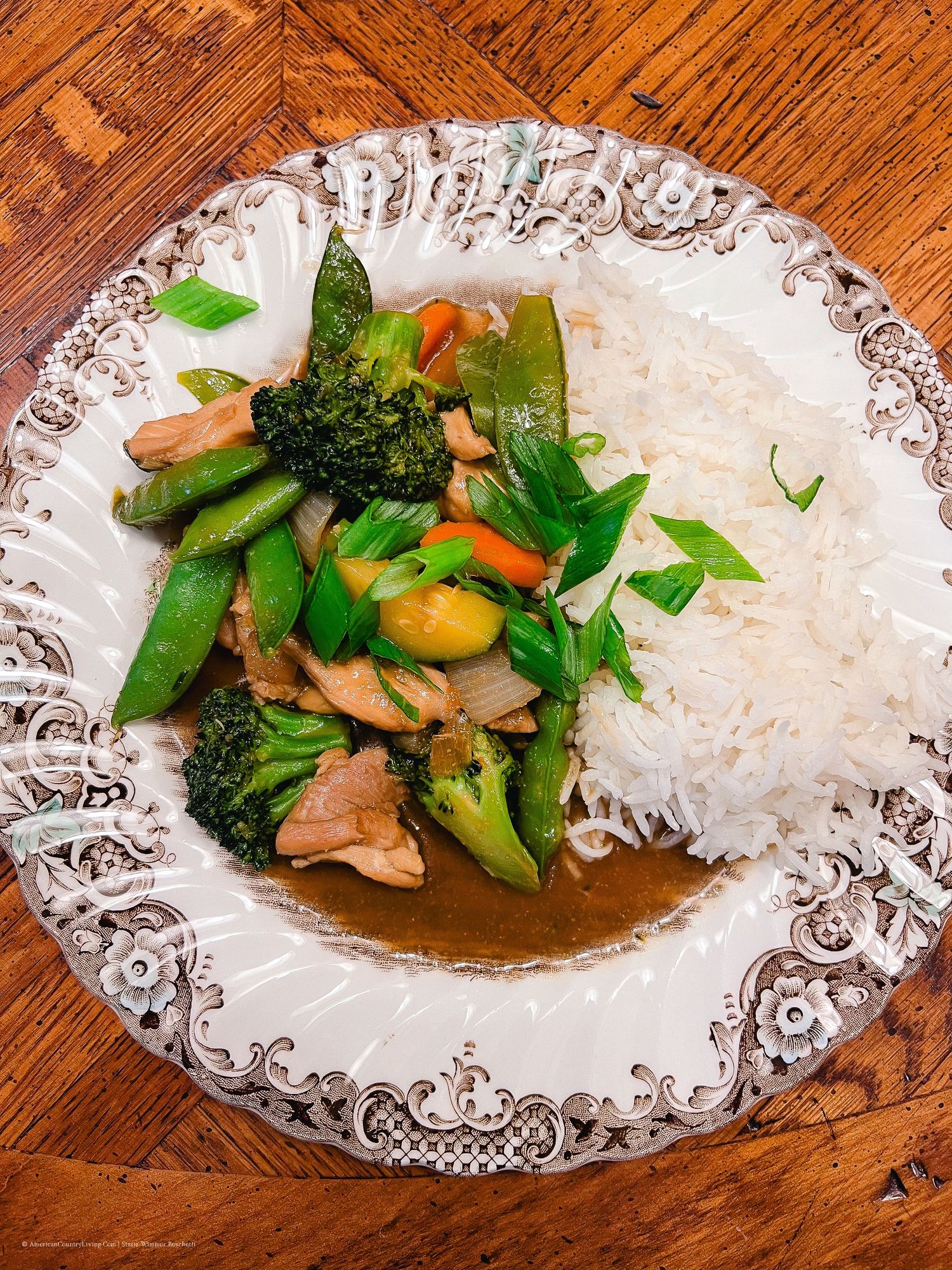
Chicken and Vegetable Stir-Fry
A good stir-fry should arrive at the table looking as though the vegetables have barely had time to lose their nerve.
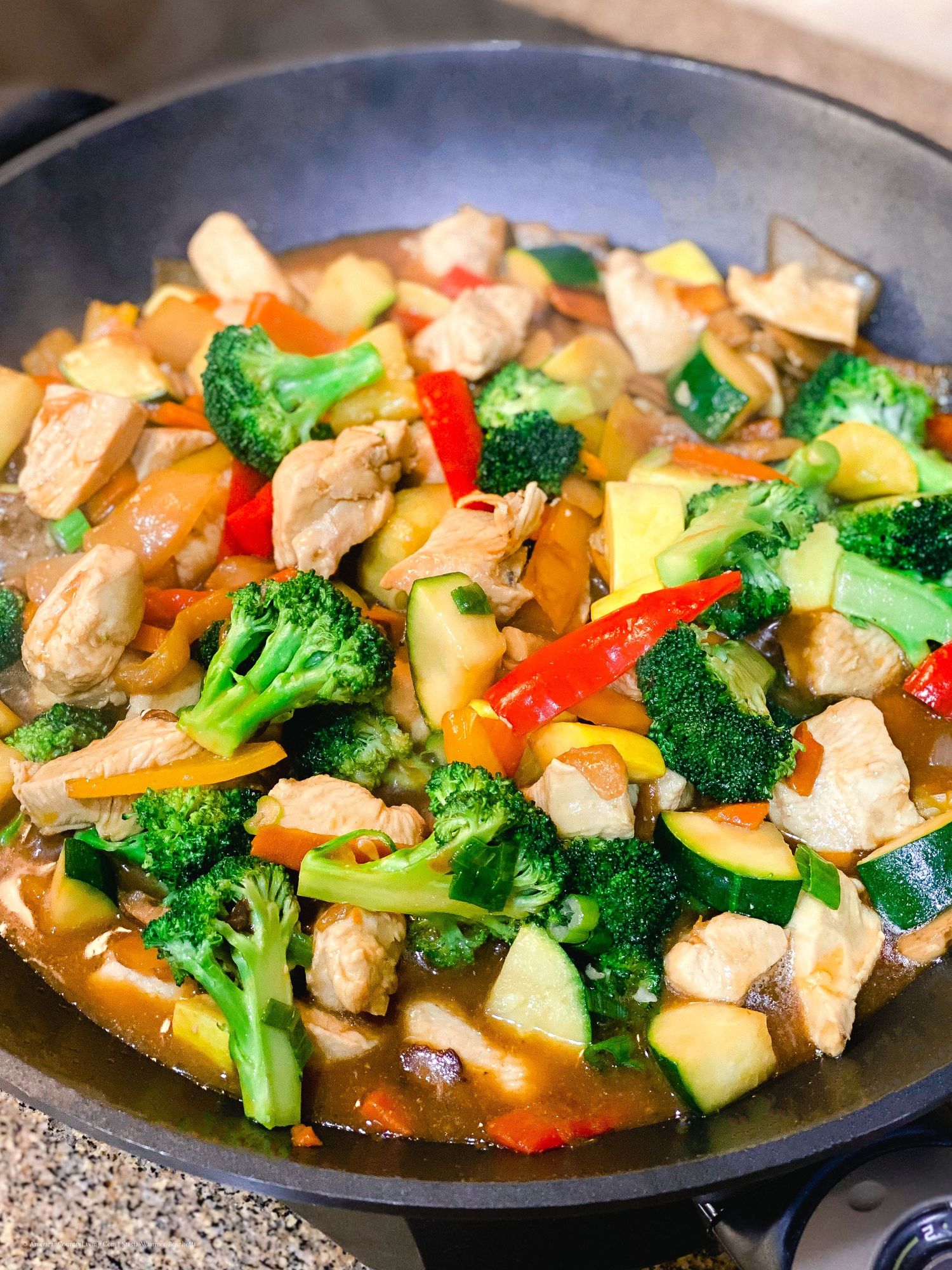
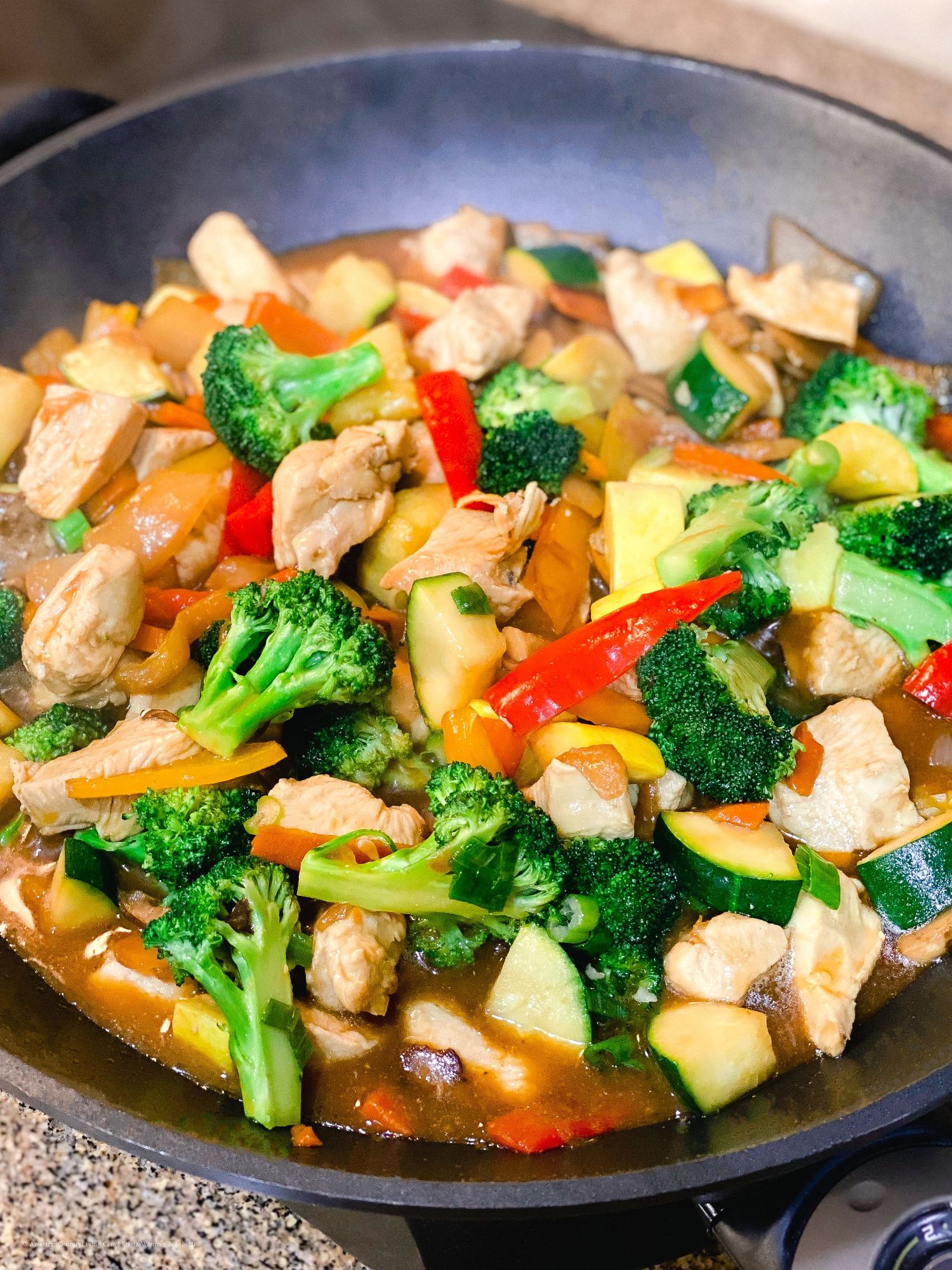
The broccoli should still be green, the peppers should retain a little snap, and the chicken should have browned edges beneath a glossy sauce that clings to everything in the pan. When stir-fry goes wrong, the vegetables soften into one another and liquid gathers at the bottom. The difference usually has less to do with the ingredients than with heat, timing, and a little restraint.
The cooking method itself comes from China, where stir-frying developed as one of several techniques for cooking food rapidly in a wok. The English expression we now use so casually is surprisingly recent. In 1945, Chinese physician and cookbook author Buwei Yang Chao published How to Cook and Eat in Chinese, an important introduction to Chinese cooking for American readers. Working with her linguist husband, Yuen Ren Chao, and their daughter Rulan, she introduced “stir-fry” as an English translation for the Chinese cooking technique chǎo. The book helped give American cooks language for methods that Chinese cooks had practiced for centuries.
By the second half of the twentieth century, the wok had become familiar equipment in American kitchens, and stir-fry had moved well beyond Chinese restaurants. Home cooks embraced the method because it was fast, flexible, and particularly good at turning a modest amount of meat and a refrigerator full of vegetables into dinner.
That is very much the spirit of my Chicken and Vegetable Stir-Fry.
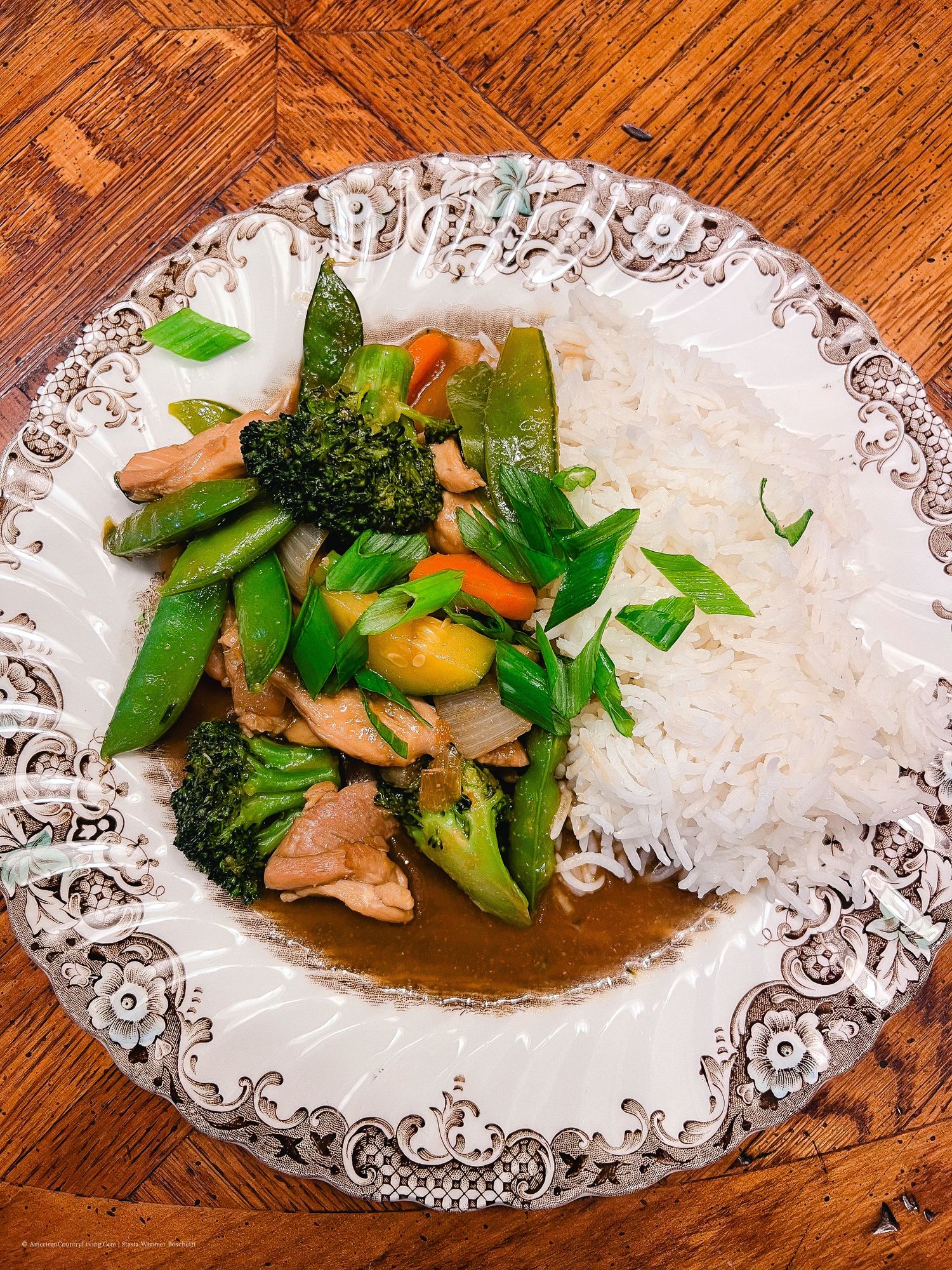
This is the sort of meal I make when I want plenty of vegetables on the plate but still want dinner to feel substantial. Chicken provides the protein, rice gives everything a foundation, and the vegetables can follow what is good, what is in season, or simply what needs using.
The most important work happens before the pan gets hot.
Stir-frying moves too quickly to stop halfway through and begin chopping a pepper. I cut everything first and keep the pieces relatively uniform so they cook at roughly the same rate. Dense vegetables need smaller pieces or a little more time in the pan. Tender vegetables can be cut larger and added later.
That order matters.
A wok is designed for intense heat, but a large skillet works perfectly well in an American home kitchen. What matters is giving the chicken enough room to brown. Crowding the pan causes the meat to release moisture faster than that moisture can evaporate, and suddenly the chicken is simmering in its own juices.
I cook it in a single layer, remove it once browned, and give the vegetables the same opportunity. They should cook until tender-crisp, a useful old cooking term that means exactly what it sounds like: cooked through enough to eat comfortably while retaining color, shape, and a little resistance when bitten.
Garlic and fresh ginger come in toward the end because both can scorch under high heat. Once they become fragrant, the chicken returns to the pan and the sauce follows.
For this version, I use chicken broth, soy sauce, honey, and a little cornstarch, with sriracha when I want some heat. Cornstarch is doing important work here. Once the sauce reaches a simmer, it thickens quickly and coats the chicken and vegetables rather than leaving them swimming in liquid.
That glossy finish is one of the pleasures of a properly made stir-fry.
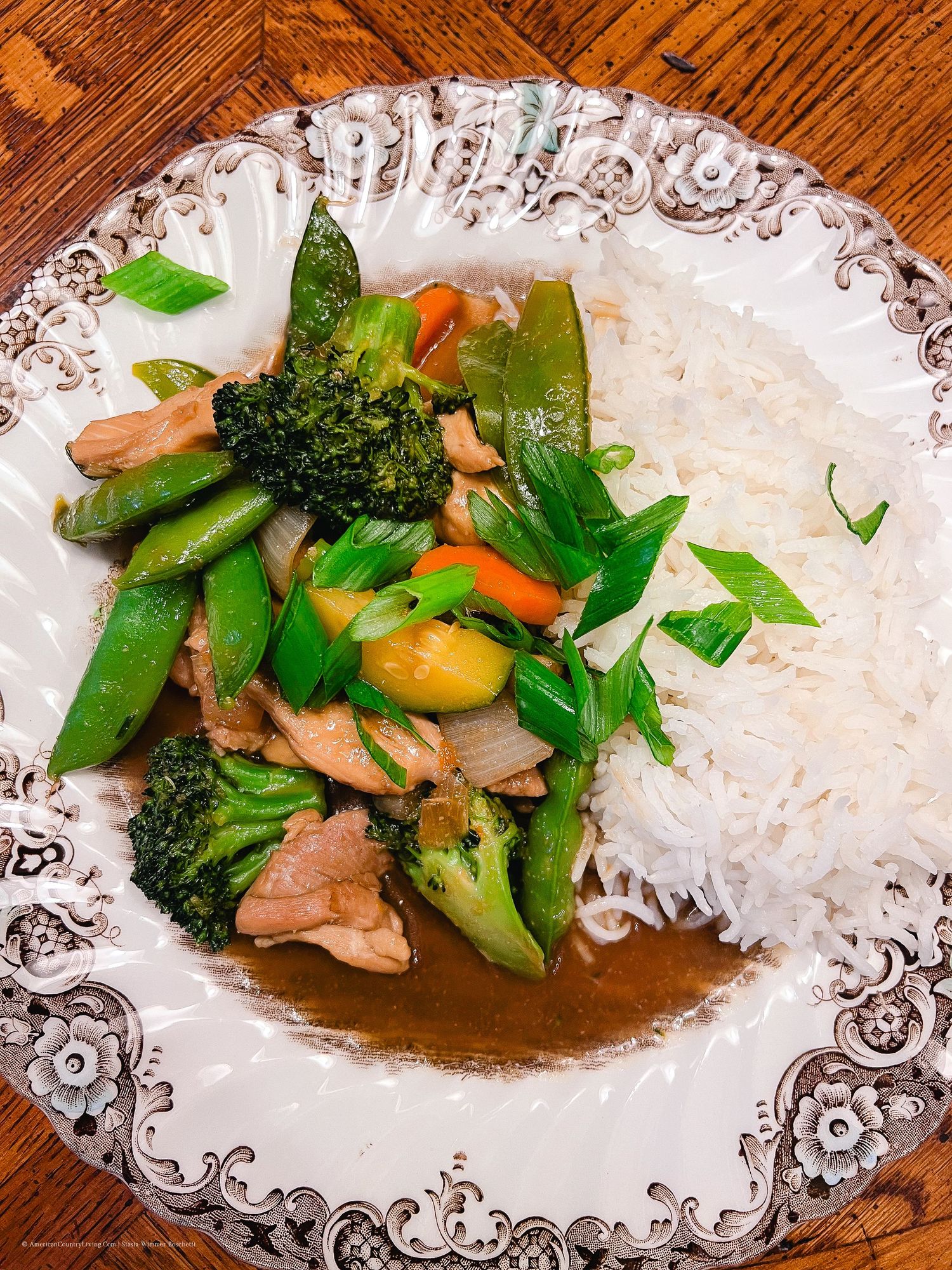
I serve it over steamed white rice and scatter sliced scallions over the top. The rice catches the extra sauce, the scallions bring a fresh onion bite, and dinner is complete without much else on the table.
The vegetables can change with the contents of the refrigerator, although I try to keep a balance of texture and color rather than tossing everything available into the pan. Broccoli, carrots, bell peppers, snow peas, mushrooms, zucchini, or green beans all have a place here. What matters more than the exact combination is understanding when each one should go into the heat.
That makes stir-fry particularly useful cooking to know rather than simply another recipe to memorize. Once you understand the order of the pan, you begin looking at vegetables differently. A carrot needs a head start. A snow pea needs very little encouragement. Garlic waits until the hard work is nearly finished.
And chicken, vegetables, rice, and a well-balanced sauce prove once again that dinner does not have to be elaborate to be worth making well.
Until next time, thank you for spending a little time with me. I hope you find a recipe to make, a story to enjoy, and something new to take into the kitchen.♥️
Chicken and Vegetable Stir-Fry
PREP TIME: 20 MINUTES
COOK TIME: 25 MINUTES
SERVINGS: 4 to 6 SERVINGS
Ingredients:
For the Chicken
1 lb chicken thighs or breast cut into bite-sized pieces
1 small to medium carrot, julienned or cubed
1 medium sized zucchini, sliced or cubed
1 large red and yellow peppers, julienned
1 cup of broccoli, cut into florets
1 cup fresh mushrooms, sliced
1 can water chestnuts, drained
2 teaspoons minced garlic
1 tsp fresh ginger minced, optional
2 Tbsp oil, divided
1/2 cup green scallions, chopped
4 - 6 cups cooked white rice, for serving (1 cup each)
Stir Fry Sauce
1/2 cup chicken broth
1/4 cup water
1/4 to 1/2 cup soy sauce
2 Tbsp honey (or brown sugar)
1 to 2 Tbsp cornstarch
1 teaspoon sriracha (optional)
Instructions:
- Trim chicken of excess fat and cut into bite-sized pieces, set aside.
- Cut the vegetables into even-sized pieces or julienned, set aside.
- Combine all of the ingredients for the sauce in a bowl, whisk together mixing well, set aside.
- In a large pan or wok, add 1 tablespoon of oil over medium to high heat. Once oil is hot, add chicken in a single layer and cook chicken until browned. Remove chicken from the pan, repeat until all the chicken is cooked, set aside. If there's a lot of juices remaining from the chicken, scoop some out with a spoon and set aside.
- Over medium heat and add the remaining oil to the skillet and add the carrots. Cook carrots until tender crisp, then add the zucchini, peppers, broccoli, mushrooms, and water chestnuts. Cook until all the remaining vegetables are tender crisp.
- Add the garlic, ginger, and cooked chicken back to the pan. Add the stir fry sauce and cook for about 3 minutes until bubbly and nicely combined. Serve over steamed rice and top with fresh green scallions. Enjoy!


about the AUTHOr
Stasia Boschetti is an American culinary writer and the founder of American Country Living. With more than thirty years of experience in the kitchen, a background in catering, extensive travel, and a strong knowledge of regional food traditions, she writes about the recipes, histories, and customs that have shaped the way America cooks. She lives in the United States with her husband, family, and rescue animals.