Springerle Cookie Molds
There are certain kitchen tools that earn a place in the drawer even if they appear only once or twice a year. A cast iron skillet works nearly every day. A pie plate returns in July for berry pie and again in November for pumpkin. A springerle mold earns its place through tradition.
Hold one in your hand and you understand immediately why people keep them. Most are carved from pearwood, a dense fruitwood that holds fine detail and resists cracking. The surface grows smooth with flour and years of handling. Press your fingers along the carved design and you may find a lamb, a pine branch, a heart, a bride and groom, or a scene from scripture. The image sits recessed into the wood, waiting for dough to be pressed firmly into every line.
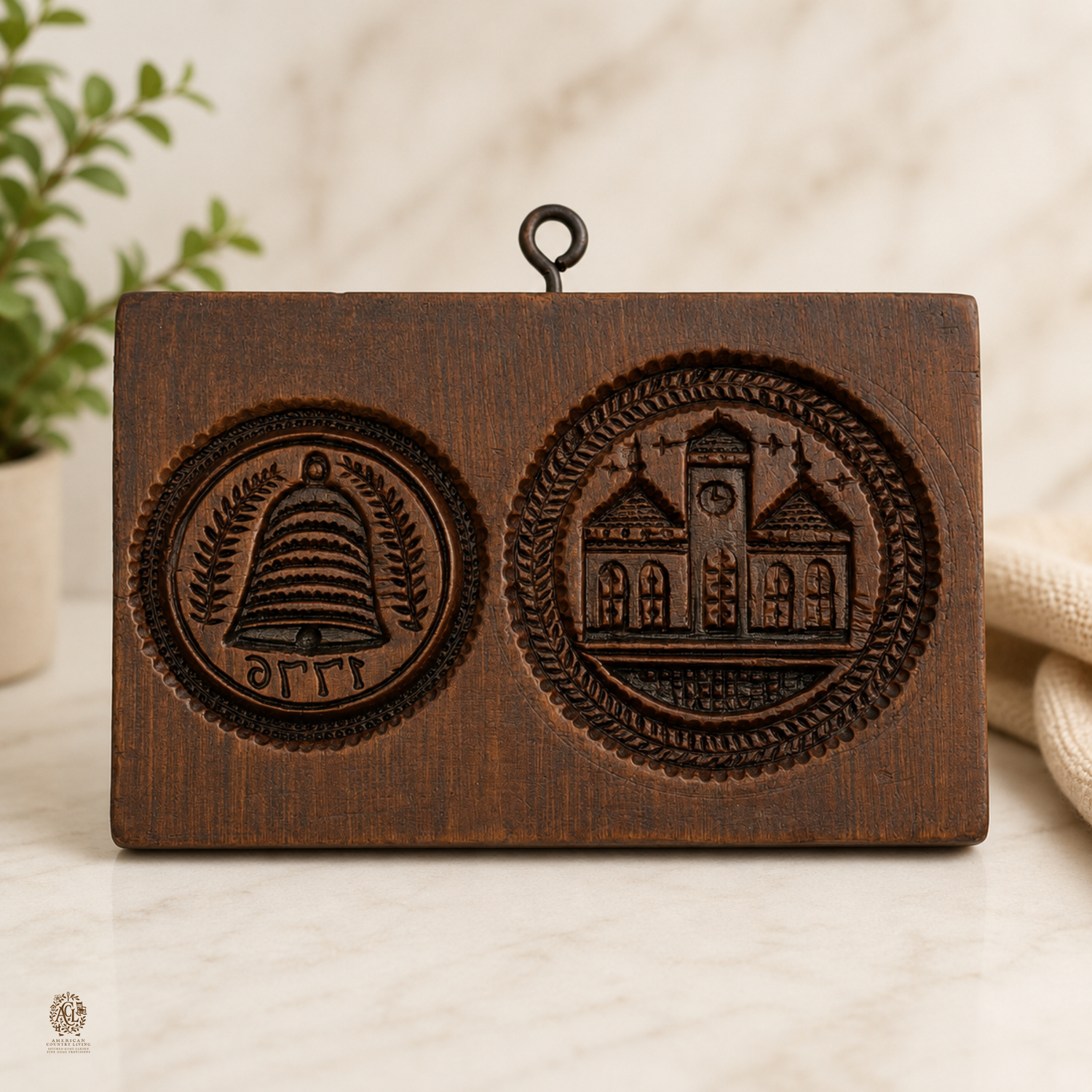
shop-americancountryliving.com / Liberty Bell & Independence Hall Springerle Cookie Mold
These molds were never meant to hang on a wall. They were working tools. In German and Swiss kitchens they were already in use by the fourteenth century.
Springerle cookies come from southern Germany and the Alsace region along the Rhine. The name comes from the German word springen, meaning to jump or rise. Traditional recipes used hartshorn, also called baker’s ammonia, as the leavening. When the cookies baked, the dough lifted upward, leaving the stamped image standing in sharp relief across the surface.

Andreas Bauerle / Springerle raw before 24h drying
When the baker had done the work correctly, the bottom edge of the cookie formed what bakers call “feet,” a small ruffled edge created as the dough rose beneath the hardened top layer.
In medieval Europe, sugar remained a luxury. White flour and spices signaled a household of means. To bake a cookie flavored with anise seed and shaped with an elaborate mold marked a special day. These cookies appeared at Christmas, weddings, baptisms, and Easter celebrations.
The images carved into the molds reflected the calendar. Lambs appeared for Easter tables. Fir trees and nativity scenes came out in December. Hearts and flowers were pressed into dough for betrothals and weddings. Many households owned only a few molds, each one tied to a specific celebration.
German immigrants carried this tradition to America during the eighteenth and nineteenth centuries. Families settled in Pennsylvania, Ohio, Wisconsin, and across Texas Hill Country. Alongside Bibles, linens, and family cookbooks, wooden springerle molds traveled in trunks and wagons.
.jpg)
Turku Gingerbread from Finland / Saffron springerles and regular springerle
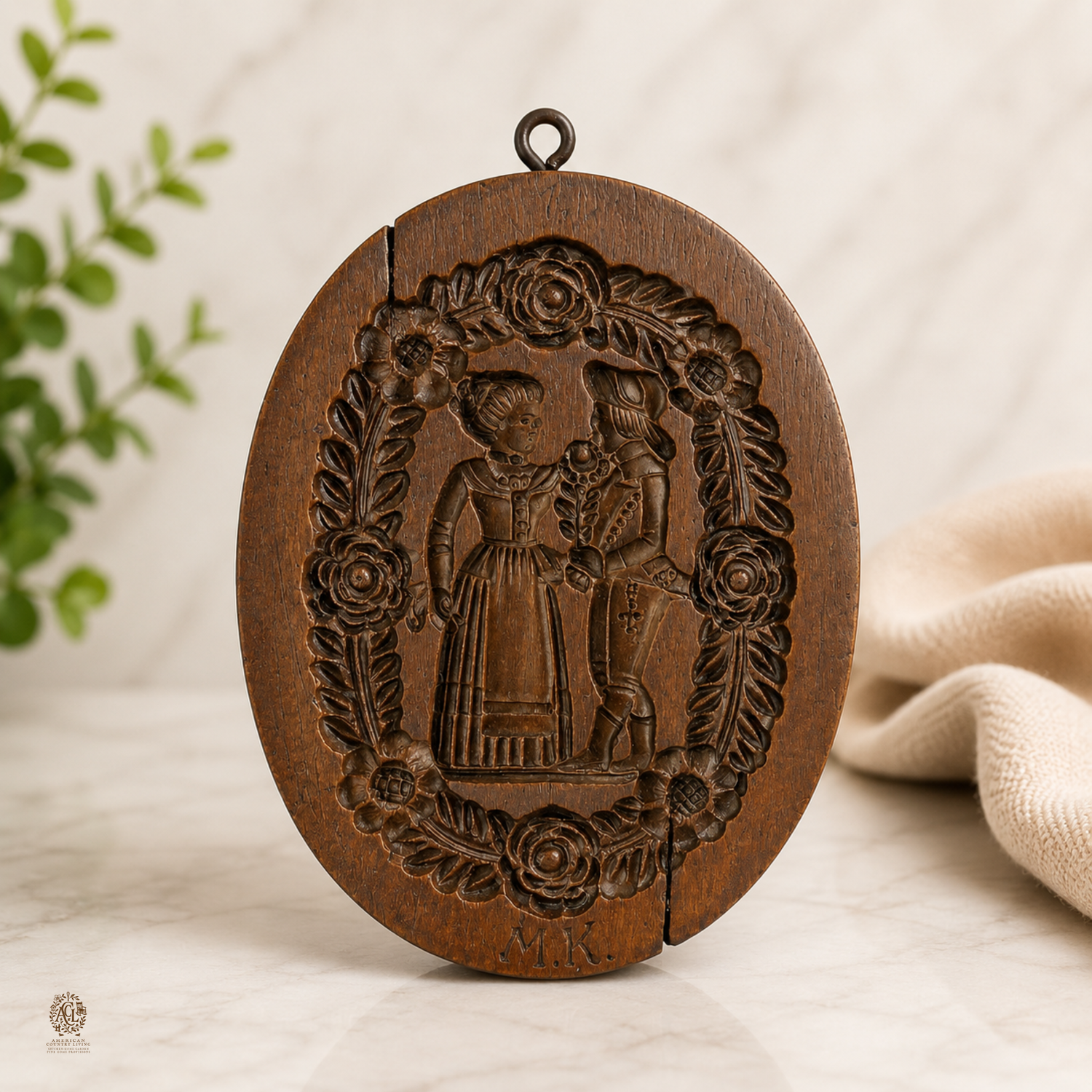
shop-americancountryliving.com / George & Martha Washington Springerle Cookie Mold
.jpg)
Baden de / Weihnachtsgebäck - panoramio
In Pennsylvania Dutch communities, springerle became a familiar Christmas cookie. Some families still use molds that have passed through four or five generations. The wood darkens with flour dust and the natural oils from hands that have used it year after year.
Making springerle requires patience and a steady kitchen rhythm.
Eggs and sugar are beaten until thick and pale. Butter and flour are added, along with crushed anise seed that perfumes the dough. After rolling the dough to about a half inch thickness, the mold is pressed firmly across the surface. Every corner must receive even pressure so the carved lines transfer clearly.
The cookies are then cut and placed on a baking sheet to dry uncovered for twelve to twenty four hours. This drying step forms a crust across the surface of the dough. When the cookies finally enter the oven, that crust holds the image in place while the dough underneath rises.
An oven that runs too hot will blur the design. Too cool and the cookie dries out before it lifts.
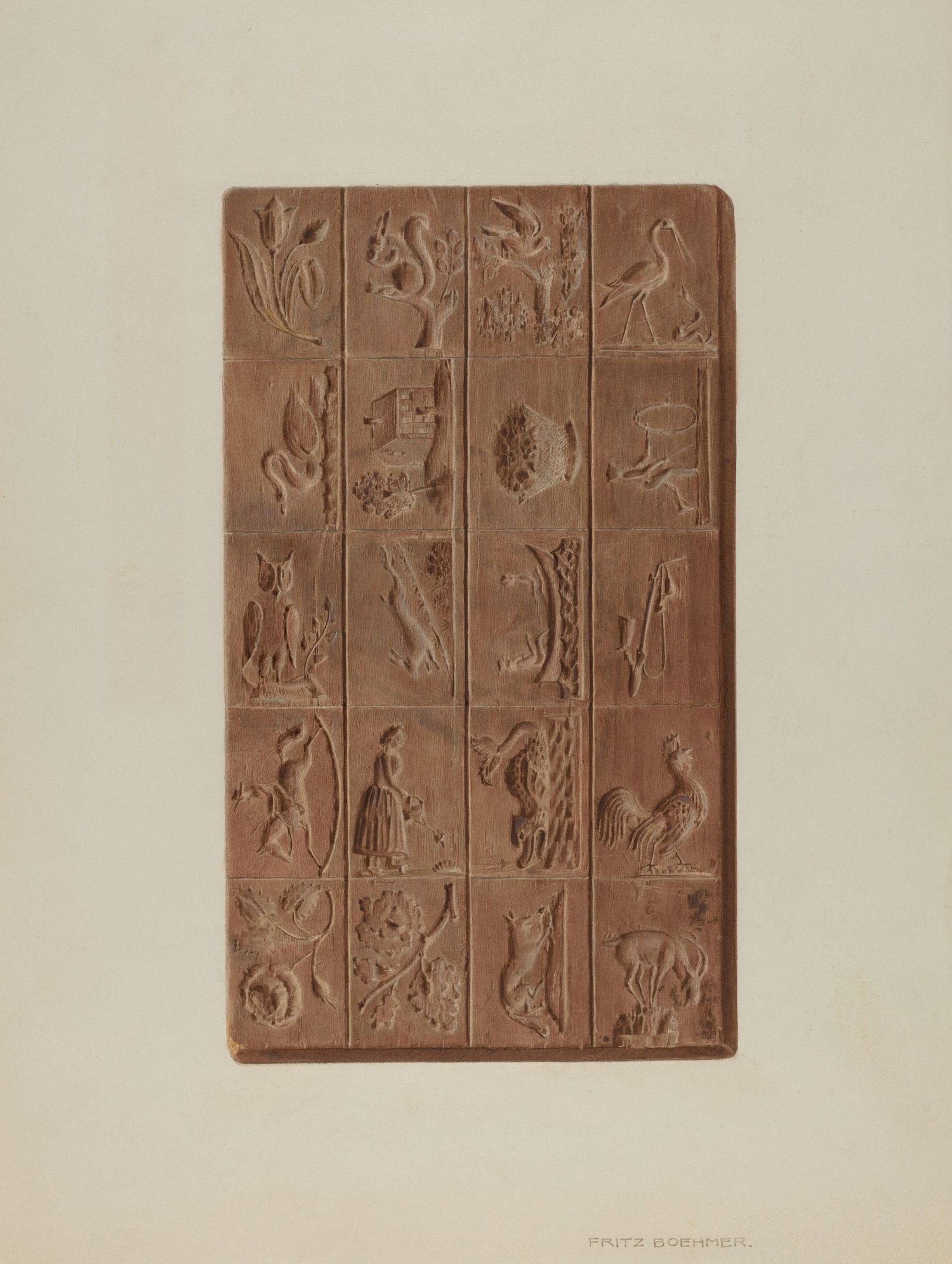
Fritz Boehmer / Springerle Board for Christmas Cakes c. 1939
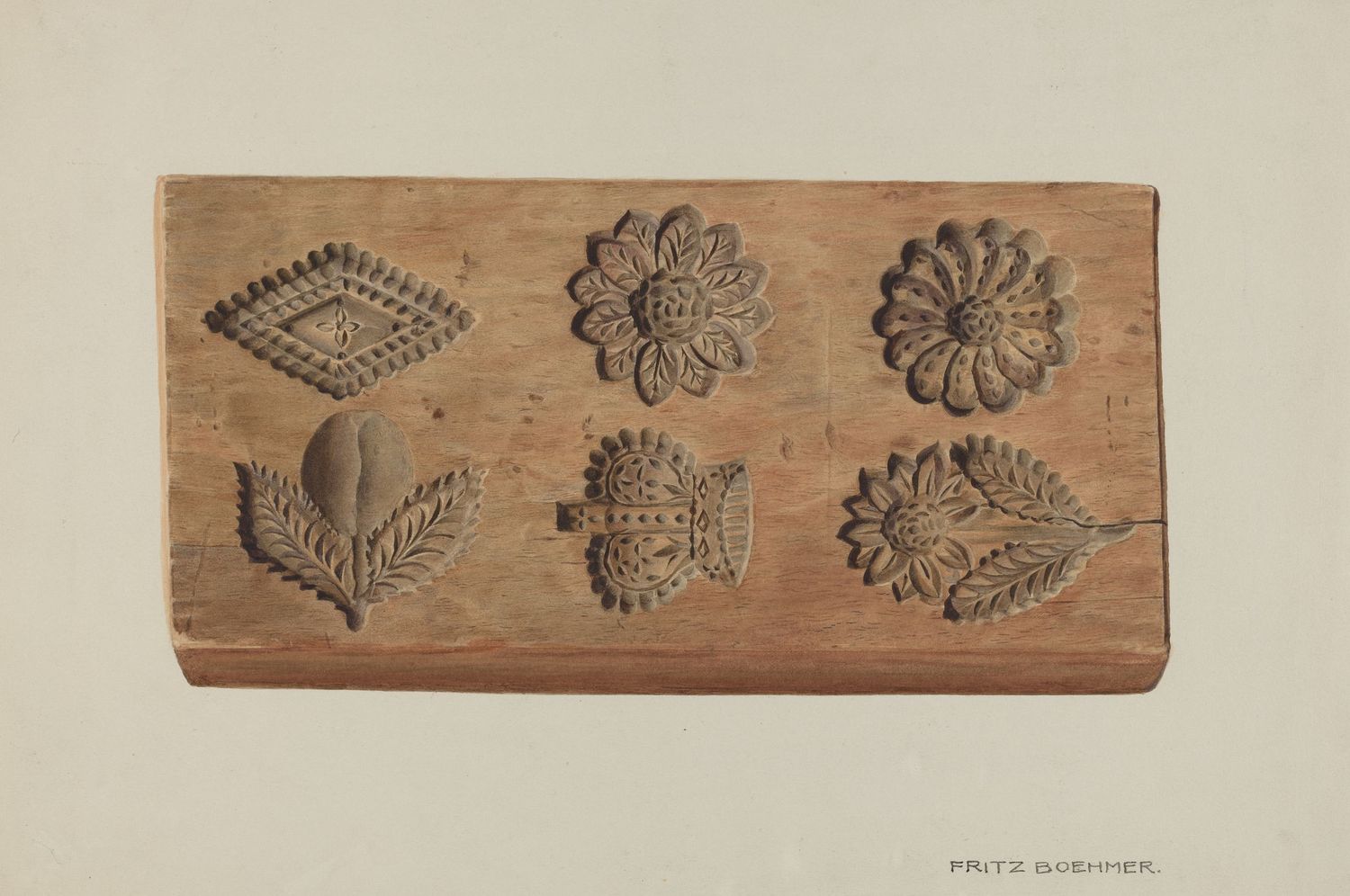
Fritz Boehmer / Pa. German Springerle Board 1935/1942
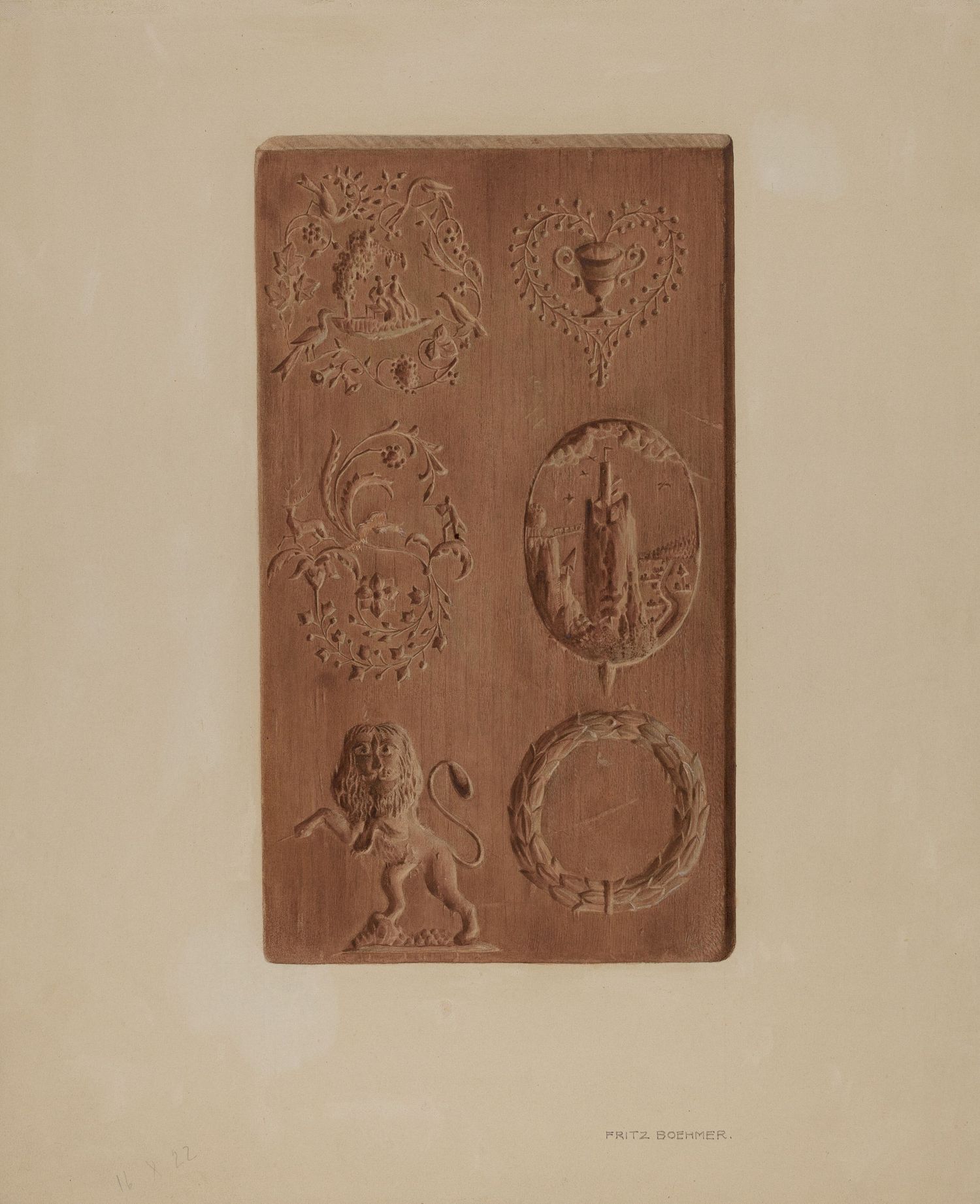
Fritz Boehmer / Springerle for Christmas Cookies 1935/1942
When it works, the moment is satisfying. The cookie comes out of the oven and the design remains crisp. A shepherd still stands. A rose remains open. The work of the mold carver and the baker both show clearly in the finished cookie.
By the nineteenth century, mold carving had grown into a respected craft. Artisans carved intricate scenes into pearwood boards. Some molds carried a single design. Others held several images carved into one board. Rolling pins were sometimes carved as well, allowing a baker to press repeating patterns across an entire sheet of dough in one pass.
Many of these molds formed part of a young woman’s bridal trousseau. A well stocked kitchen signaled readiness to manage a household, and the ability to produce beautifully detailed springerle demonstrated skill and care.
In a modern kitchen filled with silicone mats and laser cut stencils, a carved wooden mold can feel almost ceremonial. It demands preparation. The dough must be mixed correctly. The mold must be dusted with flour so the design releases cleanly. The cookies must rest overnight.
That deliberate pace is exactly why these molds belong in a column called Keeping Things.
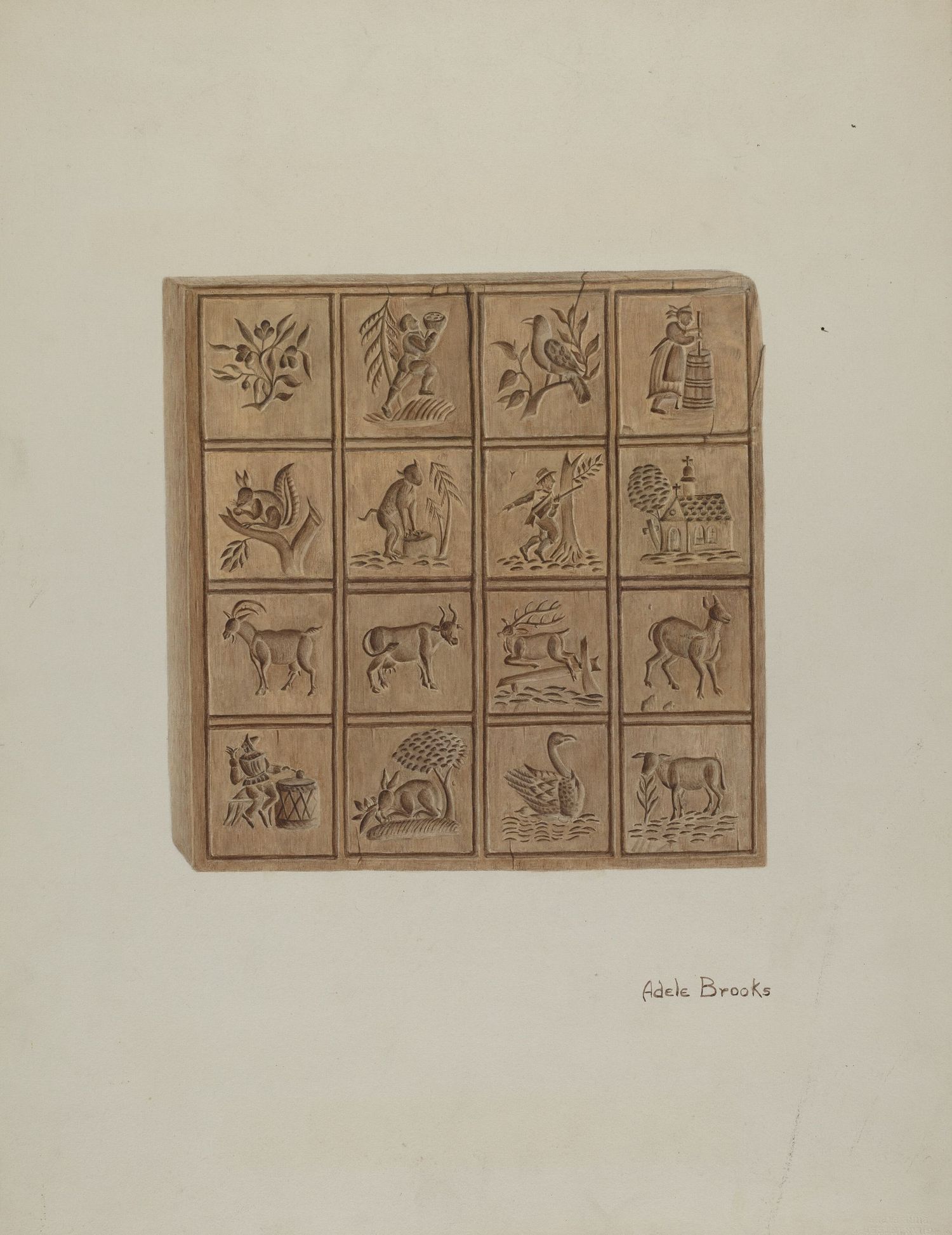
Adele Brooks / Pa. German Cookie Cutter c. 1941
A springerle mold holds more than a baking pattern. It carries a record of faith, celebration, and the seasonal rhythm of the household. A lamb carved into wood calls to mind an Easter table set with ham and braided bread. A heart suggests wedding cakes and long wooden tables dressed in white linen. A fir tree brings December kitchens scented with anise and citrus peel.
If you find one at an estate sale or tucked into a grandmother’s drawer, take a moment to study it. Look closely at the carving. Run your finger along the lines. Consider how many times dough has been pressed into that wood.
Then use it.
Mix the dough. Let the cookies dry overnight on the counter. Bake them on a December morning when the kitchen smells of anise and sugar.
The American kitchen has always absorbed the traditions carried into it. Springerle molds remind us that our tables were shaped by many hands and many homelands. When dough is pressed into carved wood, we take part in a practice that began centuries before our country existed and found a lasting home here.
That is worth keeping.
How to make Springerle Cookies by House on the Hill
Connie Meisinger of House on the Hill Cookie Molds shows how to make the perfect Springerle cookie!
- AmericanCountryLiving.Com is an authorized retailer for Springerle Cookie Molds by House on the Hill. Explore our collection available to purchase at: https://shop-americancountryliving.com/collections/springerle-cookie-molds
- Authentic recipes for Springerle cookies by House on the Hill available at: https://www.houseonthehill.net/recipes

about the AUTHOr
Stasia Wimmer Boschetti is an American culinary writer and the founder of American Country Living, where she writes about recipes, home, and the traditions that shape everyday American life. With more than thirty years of experience in the kitchen and a background in catering, she explores the history behind the foods we keep making and the customs that keep them in use. She is also the founder of the American Country Living General Store, offering homewares, baking goods, and provisions for everyday life at home. She lives in Texas with her husband, family, and five rescued animals, where she continues to cook, write, and keep a well-loved home.

