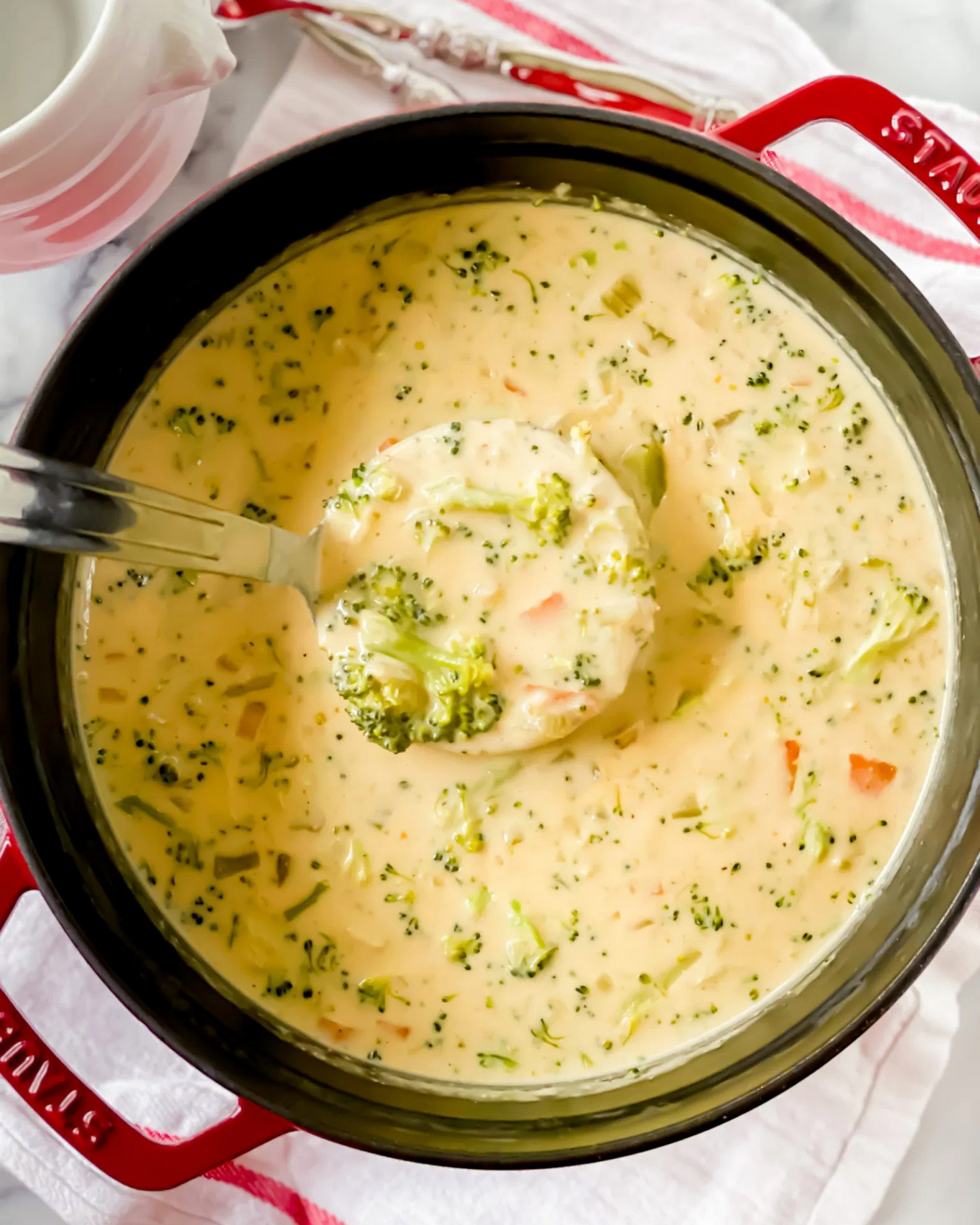
Broccoli Cheese Soup
A little boy from a Sicilian-American farming family helped put broccoli on the American map long before anyone thought of melting cheddar into it.
Andrew “Andy” D’Arrigo was born in California in 1924, the son of Stefano D’Arrigo, one of two Sicilian immigrant brothers who built a produce business around crops that were still unfamiliar to much of the United States. When Andy was about two and a half years old, he was photographed in overalls. His round-cheeked face became the image on the family’s bright pink Andy Boy label, trademarked in 1927 and eventually recognized across American produce departments.
The family story had begun several years earlier. Andrea and Stefano D’Arrigo formed their partnership in 1923, drawing on agricultural knowledge and seed connections from Italy. In 1925 they began shipping California-grown broccoli across the country to East Coast markets, an important step in turning a vegetable associated largely with Italian cooks into a commercial American crop.
Broccoli had centuries of history behind it before those railroad cars ever left California. The plant belongs to the brassica family and developed through cultivation in the Mediterranean world, becoming particularly associated with Italian cooking. Italian immigrants understood what to do with it when many other Americans still regarded it as something unfamiliar. They boiled it, sautéed it with garlic and olive oil, folded it into pasta, and grew it where climate and soil permitted.
California proved especially well suited to commercial production. Its long growing season and productive coastal agricultural regions helped broccoli move from immigrant gardens and produce markets into supermarkets across the country. The D’Arrigos were early participants in that transformation, using refrigerated shipping, recognizable packaging, and a family name to sell fresh vegetables at a national scale. The Andy Boy label became part of a larger change in American grocery shopping, when shoppers began recognizing produce by brand as well as by variety.
Broccoli’s rise continued for decades. USDA records show how dramatically American consumption increased during the second half of the twentieth century as year-round distribution improved and the vegetable became familiar enough to turn up beside roast chicken, under cheese sauce, in casseroles, on salad bars, and eventually in the soup kettle.
Then came one of the stranger chapters in broccoli’s American history.
On March 22, 1990, President George H. W. Bush announced at a press conference that he did not like broccoli, had disliked it since childhood, and had no intention of eating it now that he was president. Reports that broccoli had been kept off Air Force One added fuel to the story. California growers responded with truckloads of the vegetable. A few days later, 10,000 pounds were presented in Washington for distribution to food banks and shelters, while Barbara Bush accepted several cases for the White House.
The timing could hardly have been better for the soup business.
Campbell’s introduced condensed Cream of Broccoli soup to American shoppers in 1990 and promoted it as both soup and cooking ingredient. Later that year Campbell’s and Woman’s Day launched the wonderfully specific “How to Get President Bush to Eat Broccoli” recipe contest. More than 3,000 entries were submitted. The winning cook was Priscilla Yee of Concord, California, whose Broccoli Lemon Sauce used Campbell’s new soup. The episode captured exactly how deeply broccoli had entered American cooking. A vegetable once marketed to consumers as something new had become familiar enough to inspire thousands of home cooks to send recipes to a national contest.
Broccoli cheese soup was already developing a life of its own in restaurants. The St. Louis Bread Company opened in Missouri in 1987 and served soups in sourdough bread bowls as part of its bakery-café menu. The company eventually became Panera Bread, and broccoli cheddar grew into one of its defining dishes. By 2015, Panera was selling roughly 200 million servings of soup annually, and broccoli cheddar accounted for about a third of its soup business.
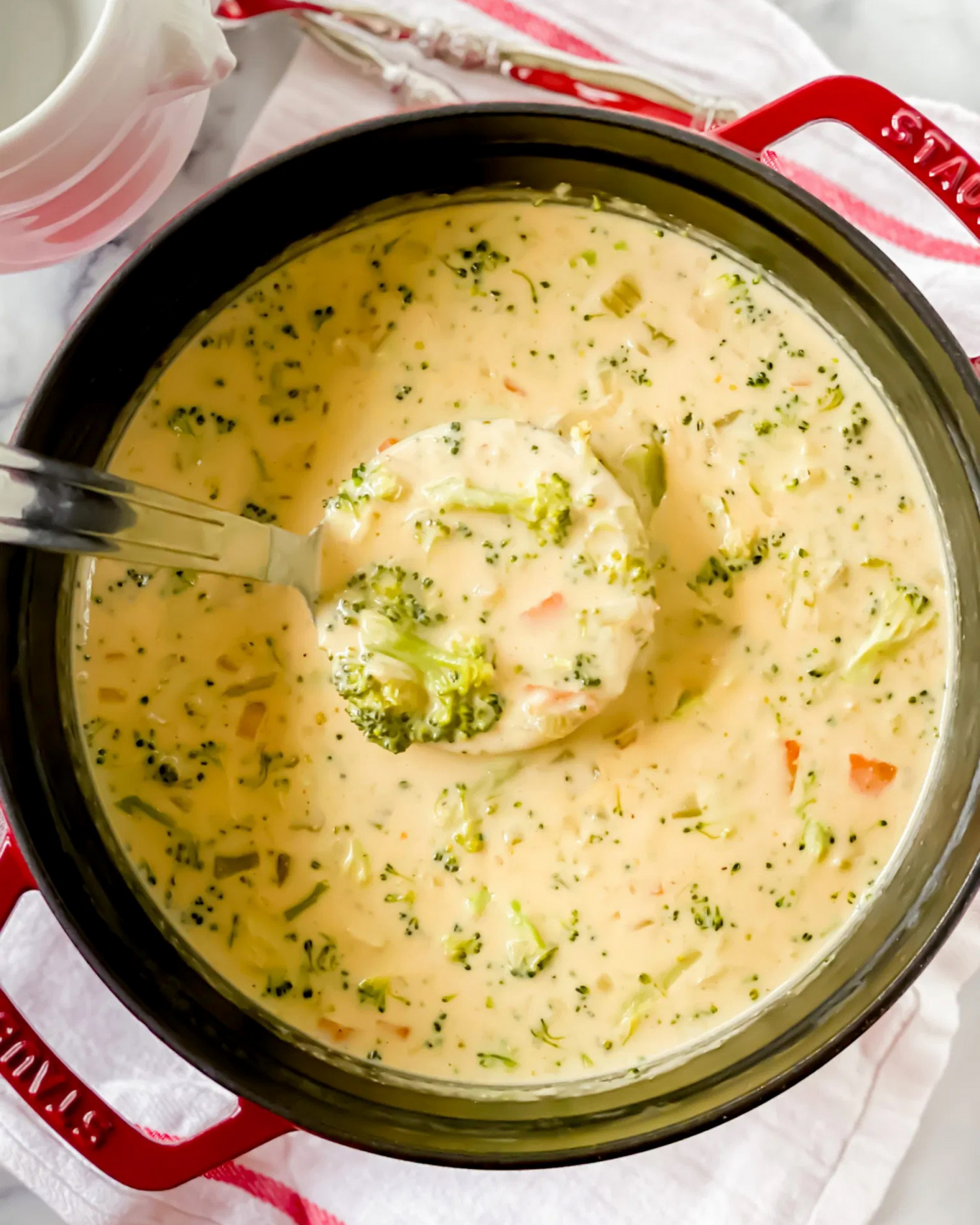
That restaurant version helped establish the style Americans recognize today: broccoli and carrot suspended in a creamy broth with enough cheddar to give the soup its deep golden color and unmistakable richness. Served inside a round loaf of sourdough, it became part soup, part lunch ritual, particularly during the bakery-café boom of the 1990s and 2000s.
At home, the success of broccoli cheddar soup still comes down to a few practical details. Freshly grated block cheddar melts more smoothly than most packaged shredded cheese, which often contains starches or cellulose to keep the strands separated. The soup should also come off hard heat before the cheese goes in. Cheddar pushed into a rapidly boiling pot can tighten and separate, leaving a grainy texture instead of the creamy finish you want.
I like the broccoli tender enough to eat easily with a spoon while leaving a few recognizable florets in the bowl. Carrot brings sweetness and color, while a little dry mustard sharpens the cheddar without making the soup taste distinctly of mustard. A pinch of cayenne or nutmeg can add another layer if you want it. These are small adjustments, but they make a noticeable difference in a creamy soup.
There is a remarkable amount of American food history sitting behind a bowl that now feels thoroughly familiar. Its trail runs through Sicilian immigration, California agriculture, refrigerated railroad shipments, the rise of branded supermarket produce, a presidential feud with broccoli, condensed soup advertising, and the bakery-café culture of the late twentieth century.
And somewhere near the beginning of that trail is a two-and-a-half-year-old California boy in overalls, whose face was printed on boxes of broccoli headed across the country.
That pink Andy Boy label carried more than vegetables. It carried the story of an immigrant family helping Americans learn to eat a crop they already knew well, grown on California soil and shipped thousands of miles from the fields where it took root.
Broccoli cheddar soup came later. By then, broccoli had earned its place at the American table.
Until next time, thank you for spending a little time with me. I hope you find a recipe to make, a story to enjoy, and something new to take into the kitchen.♥️
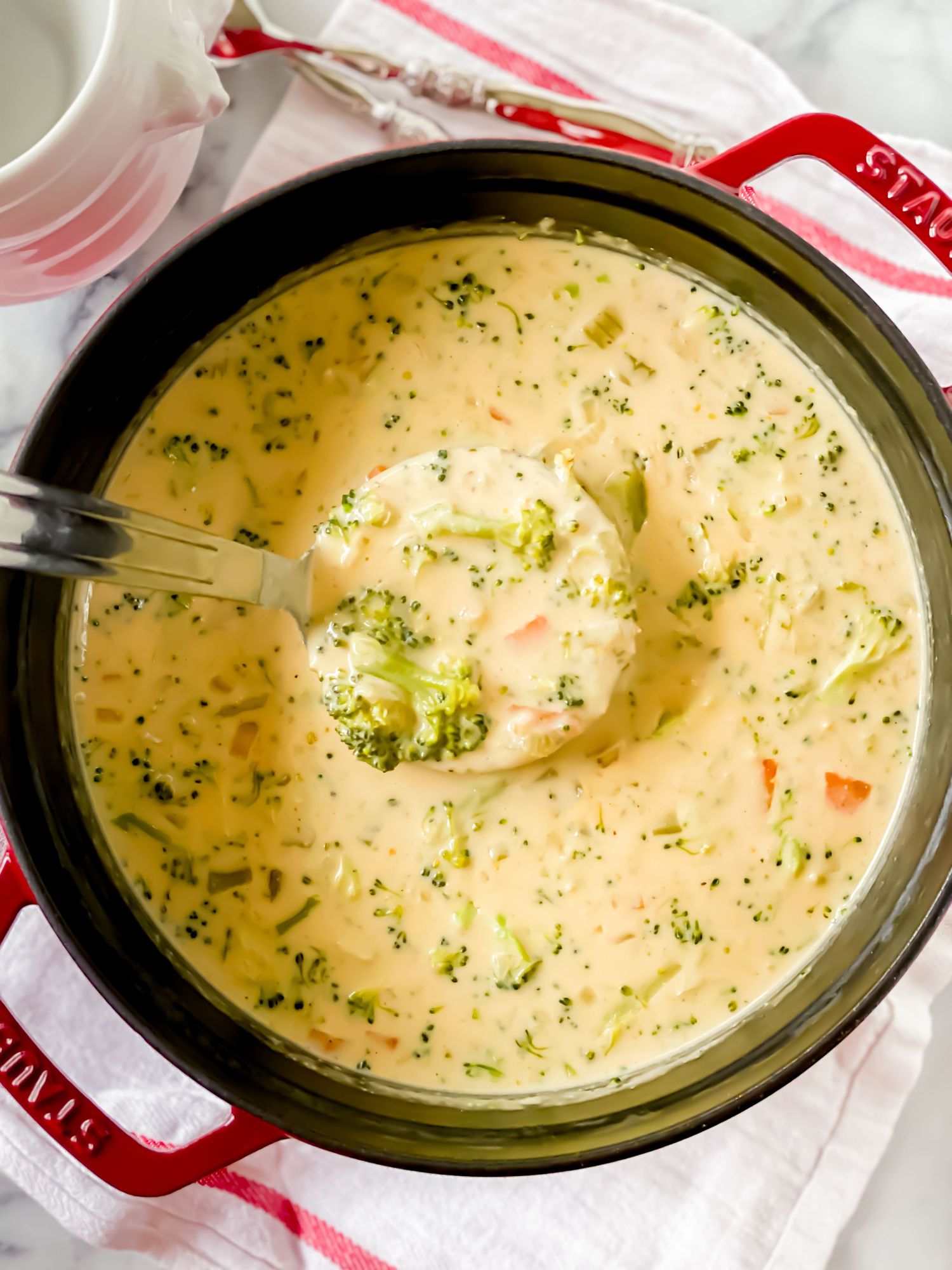
Classic Broccoli Cheese Soup Recipe
PREP TIME: 15 MINUTES
COOK TIME: 40 minutes
SERVINGS: 4-6 SERVINGS
Ingredients:
4 tablespoons unsalted butter
1 medium onion, diced
2 medium carrots, peeled and finely chopped
2 teaspoons garlic, minced
1/4 cup all-purpose flour
4 cups low-sodium chicken stock (or vegetable stock)
2 cups half & half or whole milk
2 large heads of broccoli, chopped into small bite sized pieces
1 teaspoon kosher salt
1 teaspoon dry mustard
3/4 teaspoon sweet Hungarian paprika or regular paprika
1/2 teaspoon freshly ground black pepper
2 1/2 cups sharp cheddar cheese, shredded
Optional: pinch of cayenne or nutmeg for added depth
Instructions:
- In a large pot, melt the butter over medium heat. Add the onion and carrots and cook until softened, about 5 to 8 minutes.
- Stir in the garlic and cook for another 2 minutes, just until fragrant. Sprinkle in the flour and cook for 1 to 2 minutes, stirring constantly, until it forms a pale golden paste.
- Gradually whisk in the chicken stock and half & half, stirring until smooth. The mixture should begin to thicken slightly.
- Add the broccoli, salt, dry mustard, paprika, and pepper. Bring to a gentle simmer and cook for 15 to 25 minutes, until the broccoli is tender.
- Remove from heat and stir in the cheddar cheese until melted and creamy. Adjust seasoning to taste with additional salt and pepper.
To Serve
- Ladle the soup into warm bowls and garnish with extra cheese or a sprinkle of paprika. Serve alongside crusty bread or toasted baguette slices for dipping. For extra indulgence, top with crispy bacon bits or a few homemade croutons.

about the AUTHOr
Stasia Boschetti is an American culinary writer and the founder of American Country Living. With more than thirty years of experience in the kitchen, a background in catering, extensive travel, and a strong knowledge of regional food traditions, she writes about the recipes, histories, and customs that have shaped the way America cooks. She lives in the United States with her husband, family, and rescue animals.