Homemade Pizza Dough
A bowl of flour, water, yeast, salt, and olive oil can take you surprisingly far.
Pizza may be one of the most familiar foods in America, but its foundation is still the same elemental dough that made the food practical in the first place. Long before pizza was delivered in cardboard boxes or sold by the slice beneath fluorescent lights, Naples had built a food culture around rounds of fermented dough baked at intense heat and eaten fresh from the oven. By the late eighteenth century, pizza was becoming firmly associated with the streets of that city, where inexpensive flatbreads topped with readily available ingredients fed working people throughout Naples.
Tomatoes, brought to Europe from the Americas centuries earlier, eventually became closely tied to Neapolitan pizza. By the nineteenth century, combinations of tomato, cheese, herbs, oil, and bread had developed into the recognizable ancestor of the pizzas we know today. The famous story of the Pizza Margherita dates to 1889, when pizzaiolo Raffaele Esposito is traditionally credited with preparing a pizza of tomato, mozzarella, and basil for Queen Margherita of Savoy.
The combination itself was already known in Naples decades earlier. Like many beloved food histories, the royal episode has accumulated a fair amount of legend, but Naples remains central to the development of modern pizza. In 2017, UNESCO added the art of the Neapolitan pizzaiuolo to its Representative List of the Intangible Cultural Heritage of Humanity.
Pizza traveled particularly well.
Between the 1880s and 1920, more than four million Italians arrived in the United States, establishing communities in cities and towns across the country. Pizza followed Italian families and businesses into those neighborhoods. Early American pizza history is more complicated than the oft-repeated claim that a single New York pizzeria started everything. Researchers have found evidence of pizza being sold in the United States before the famous 1905 date usually attached to Lombardi’s in Manhattan. Pizza remained strongly associated with Italian American communities for decades, then spread much more widely after World War II.
America eventually made pizza thoroughly its own. New York developed its broad, foldable slices. Chicago built deep-dish pies with tall, buttery crusts. Detroit became known for rectangular pizza baked in steel pans, with crisp cheese reaching all the way to the edges. New Haven produced its thin, blistered apizza. California cooks piled pizza with the produce, cheeses, and combinations associated with West Coast cooking.
That history is part of what makes homemade pizza dough worth knowing. Once you can make the dough, pizza stops being a fixed dish and becomes one of the most useful preparations in the kitchen.
This dough uses all-purpose flour, active dry yeast, water, salt, a little sugar, and olive oil. It is designed for an American home kitchen and a conventional oven, so there is no reason to imitate an 800 to 900 degree Neapolitan wood-fired oven to make a good pizza at home. What you are looking for is a dough that becomes smooth and elastic during kneading, rises until visibly doubled, and can be stretched or rolled without immediately snapping back into a ball.
The temperature of the water matters. Active dry yeast wakes up readily in warm water around 105°F to 110°F. Water that feels pleasantly warm encourages the yeast to become active. Excessively hot water can damage it. After several minutes, a layer of foam or bubbles across the surface tells you the yeast is alive and ready for the flour.
Then comes the part worth learning by feel.
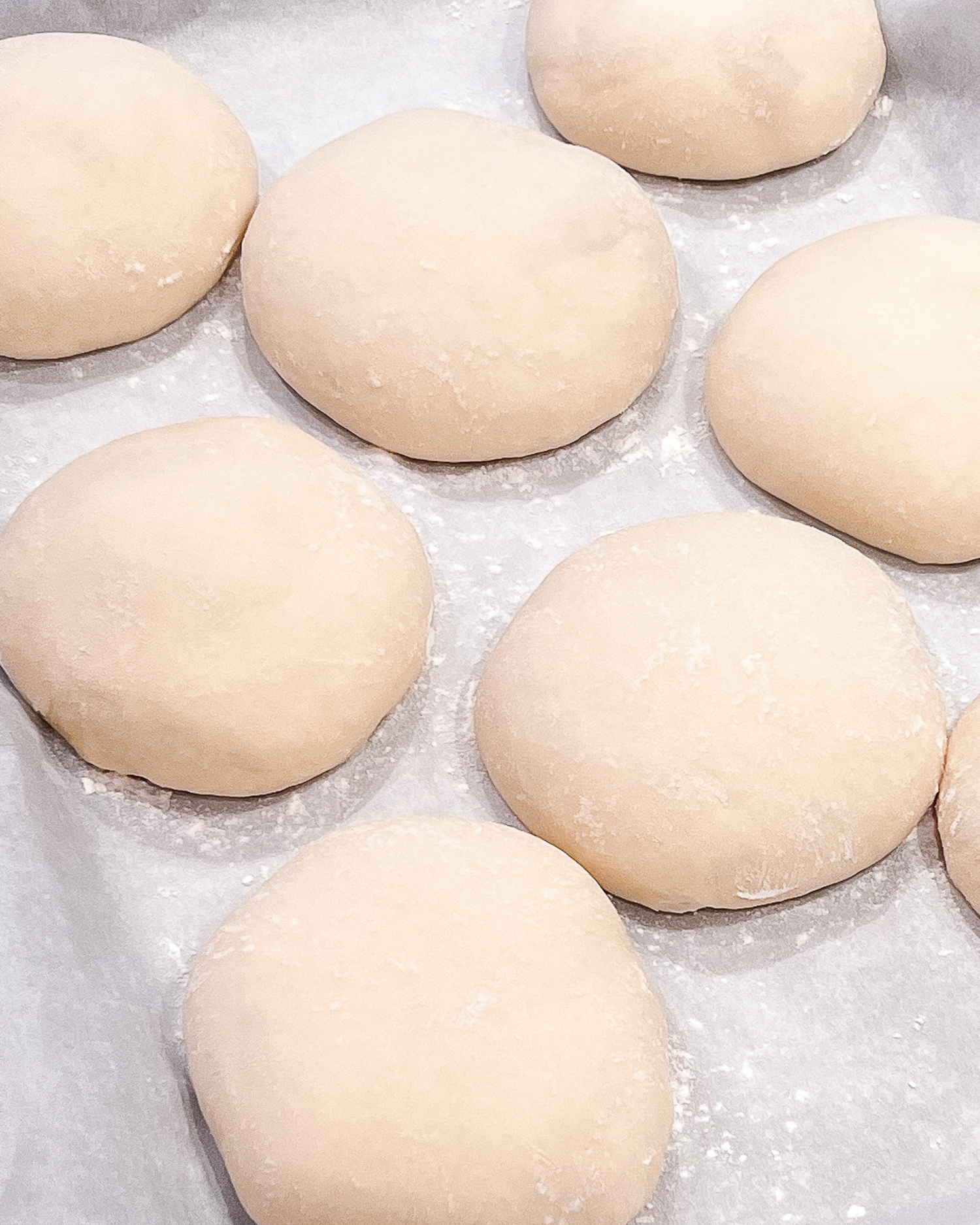
Freshly mixed pizza dough can look shaggy and slightly unruly. During kneading, the flour absorbs the liquid and the gluten develops. After several minutes, the rough mass becomes smoother, springier, and easier to handle. That transformation is far more useful than following a rigid flour measurement. Humidity, the flour itself, and even how the cup was filled can change how much flour a batch needs. Add only enough extra flour to keep the dough workable. A soft dough usually produces a better crust than one packed with unnecessary flour.
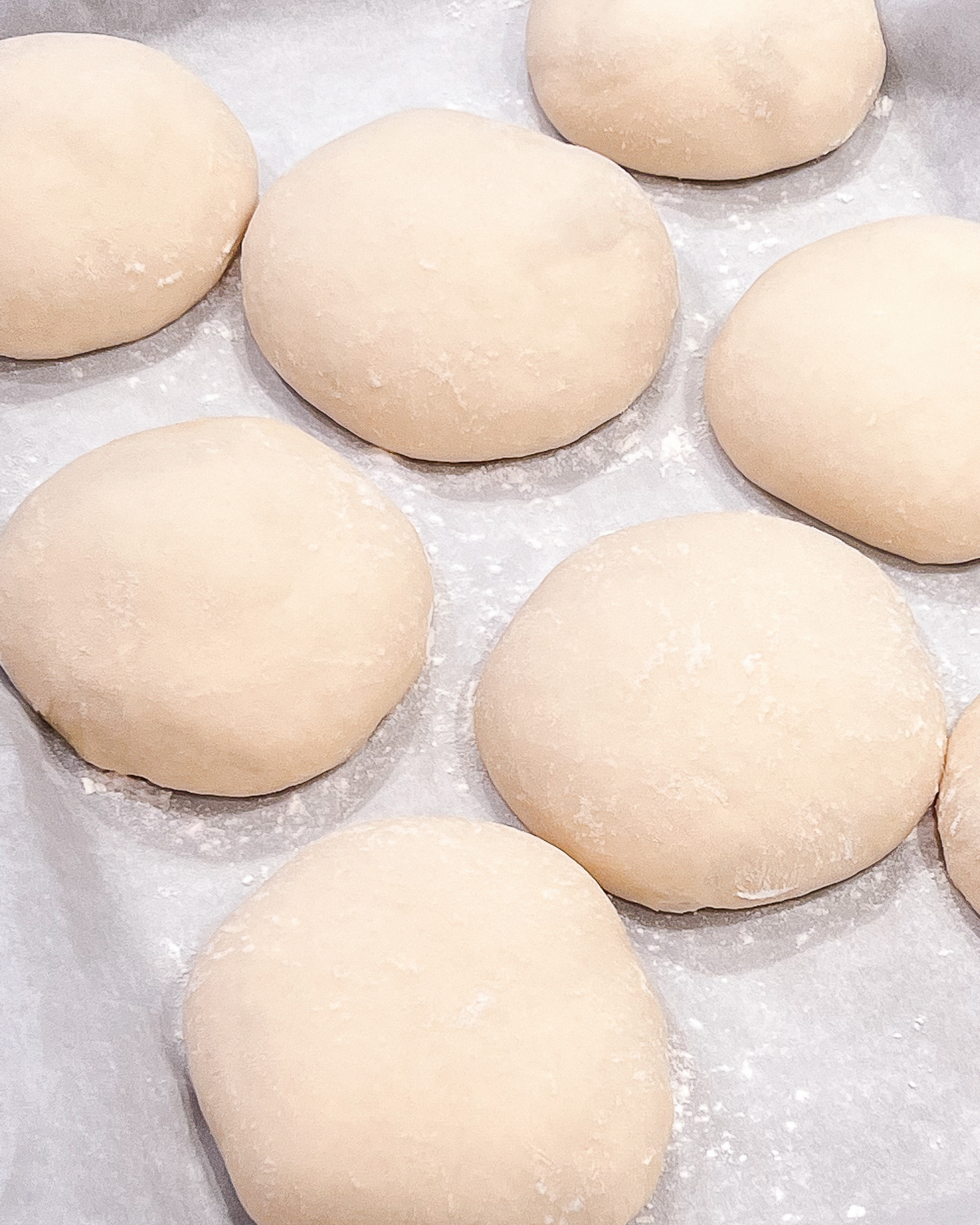
The rise gives the yeast time to produce gas within the dough, creating the small pockets that become an airy interior and browned crust in the oven. When the dough has doubled, dividing it into two balls gives you enough for two pizzas and opens up several possibilities. Bake both for a tableful of people, refrigerate one for later, or freeze the extra dough for the evening when homemade pizza sounds good and starting from flour does not.
That second dough ball may be the best argument for learning the recipe in the first place.
A freezer containing homemade pizza dough puts dinner within reach without deciding in advance exactly what dinner has to be. Tomato sauce and mozzarella make the obvious pie. Leftover roasted vegetables, mushrooms, sausage, fresh herbs, ricotta, sliced tomatoes, peppers, or the final handful of cheese in the refrigerator can all become toppings. You can make one pizza for the adults and another for children, serve thin wedges with drinks, or put several pizzas through the oven when friends are gathered around the kitchen.
And once you have made pizza dough several times, you begin to recognize it without thinking much about measurements. You know how soft it should feel beneath your palms. You know when it needs another spoonful of flour. You know the look of properly risen dough pressing against the sides of an oiled bowl.
That kind of familiarity is worth keeping. Pizza has traveled from the streets of Naples through Italian American neighborhoods and into nearly every corner of American cooking. Making the dough at home gives you a small connection to that much larger story, along with two very good reasons to start thinking about what you want on top.
Until next time, thank you for spending a little time with me. I hope you find a recipe to make, a story to enjoy, and something new to take into the kitchen. ♥️
Homemade Pizza Dough
PREP TIME: 30 minutes
RISE Time: 1 HOUR 30 minutes
SERVINGS: 2 DOUGH BALLS
Ingredients:
1 1/2 cup warm water (105°F - 110°F)
1 packet (¼ oz) active dry yeast
1 teaspoon sugar
3 1/2 - 4 cups all-purpose flour
1 teaspoon sea salt or kosher salt
3 tablespoon olive oil (plus 2 teaspoons extra to oil bowls)
Instructions:
- In a small mixing bowl dissolve the sugar in warm water (105°F - 110°F), then whisk in the yeast. Yeast is active when you see it start to bubble on top. If it doesn't bubble on top, the yeast packet is no longer active. Start water, sugar, and yeast mixture over with a new yeast packet.
- In a large mixing bowl whisk the salt into 3 1/2 cups of flour. Make a well in the center of the flour and pour in the water, sugar, yeast mixture and oil into the flour. Mix with a wood spoon until combined into a soft dough ball. (Add a little extra flour at a time if the dough is too wet, or add a little extra water at a time if the dough is too dry).
- Turn dough out onto a lightly floured surface. Knead dough until it is smooth and elastic, adding more flour to the surface as needed, this could take approximately 5-10 minutes. Cut dough in half and form into two smooth balls of dough.
- Lightly oil two large mixing bowls with about 1 teaspoon of olive oil each, and place each dough ball into a bowl. Top dough with a little more olive oil, cover tightly with plastic wrap or a tea towel, set aside in a warm area and let dough rise and double in size for about 1 ½ hours.
- Transfer risen dough to a lightly floured work surface. Roll out and top with desired toppings, or cover with plastic wrap and freeze for about one month.