Homemade Chicken Stock
A pot of chicken stock may be the most useful thing you can make without ever intending to serve it on its own.
It becomes the liquid beneath chicken and dumplings, the backbone of a pan gravy, the first pour into a pot of rice, the moisture in a casserole, and the difference between a thin soup and one that tastes as though it has been tended for hours. I keep homemade stock for exactly that kind of cooking. A few cups tucked into the freezer give me far more options than another finished meal taking up space.
Stocks and broths have been part of Western cooking for centuries, long before anyone could buy them by the carton. Early American cookery grew from British and European traditions of boiling meats, poultry, vegetables, and herbs to make soups, gravies, sauces, and restorative broths. Amelia Simmons's American Cookery, published in Hartford in 1796 and recognized by the Library of Congress as the first cookbook written by an American and published in the United States, included instructions for dressing poultry and preparing the kinds of dishes that depended on these fundamental kitchen techniques.
There is a technical distinction worth knowing. In classical culinary language, stock generally relies heavily on bones, which release collagen as they simmer, while broth is more often made with meat and may be seasoned for eating as it is. The terms have never stayed perfectly separated in home cooking, however, and a whole chicken can produce a richly flavored, gelatinous cooking liquid that most American cooks would readily call chicken stock. The Institute of Culinary Education describes bones and aromatic vegetables as the foundation of traditional stock making.
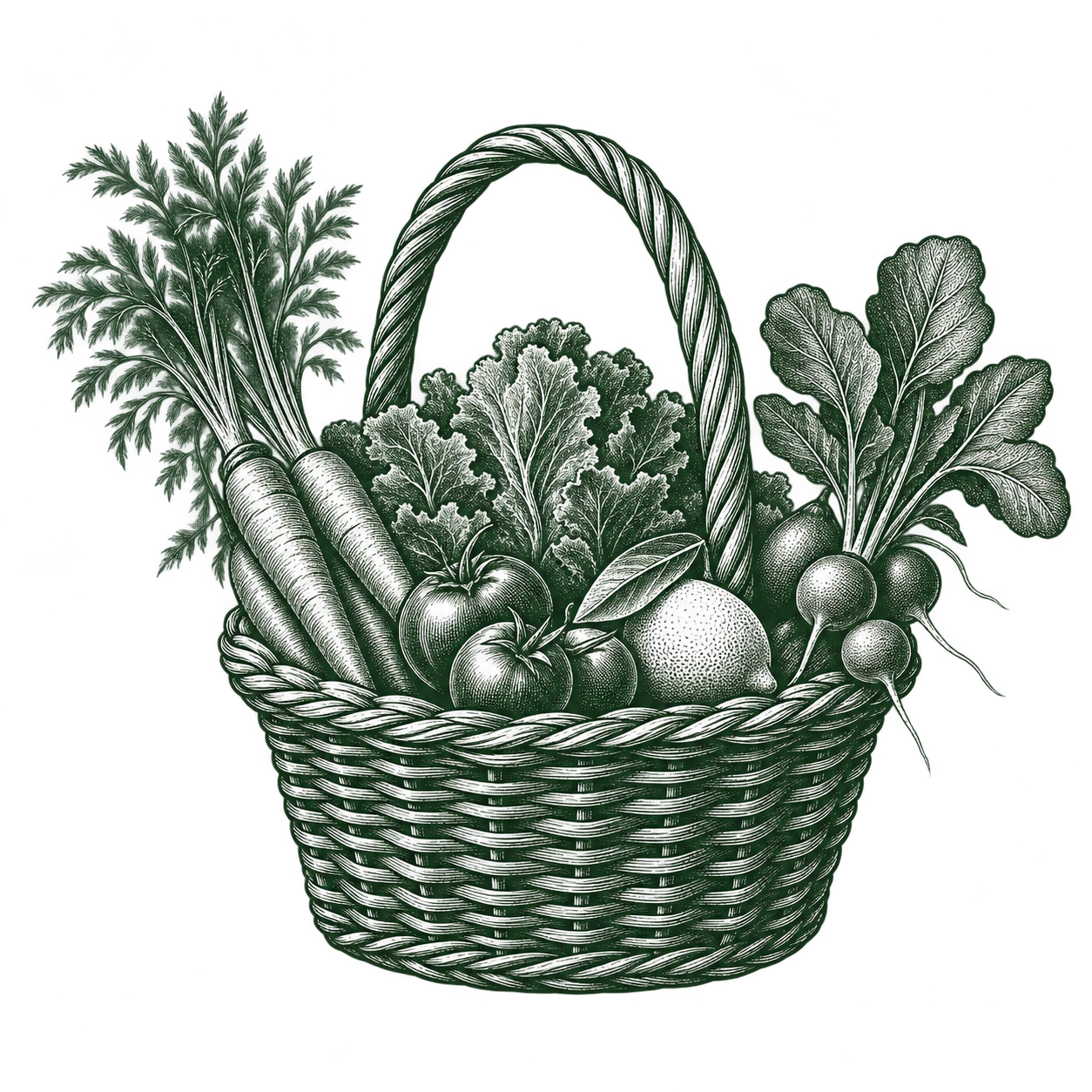
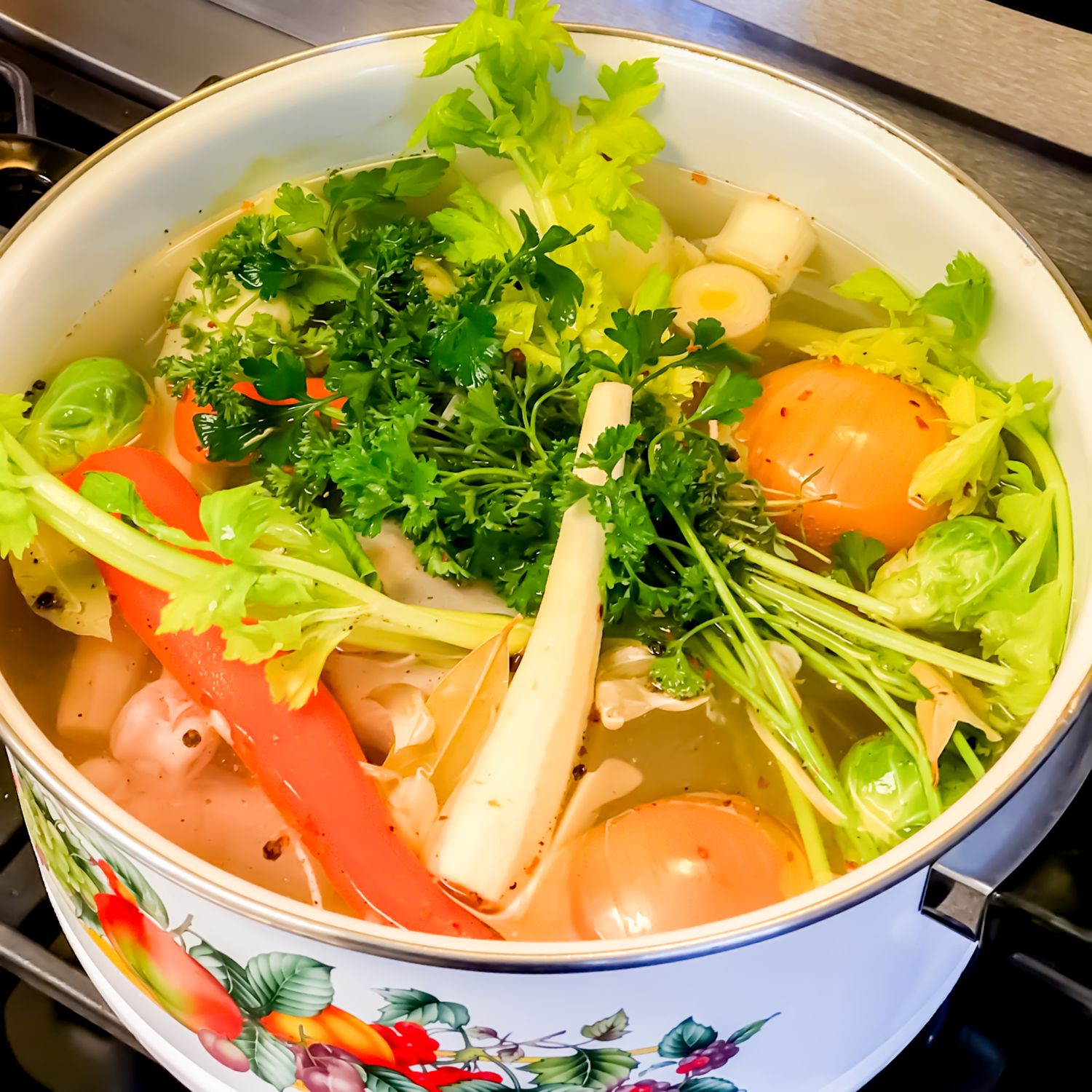
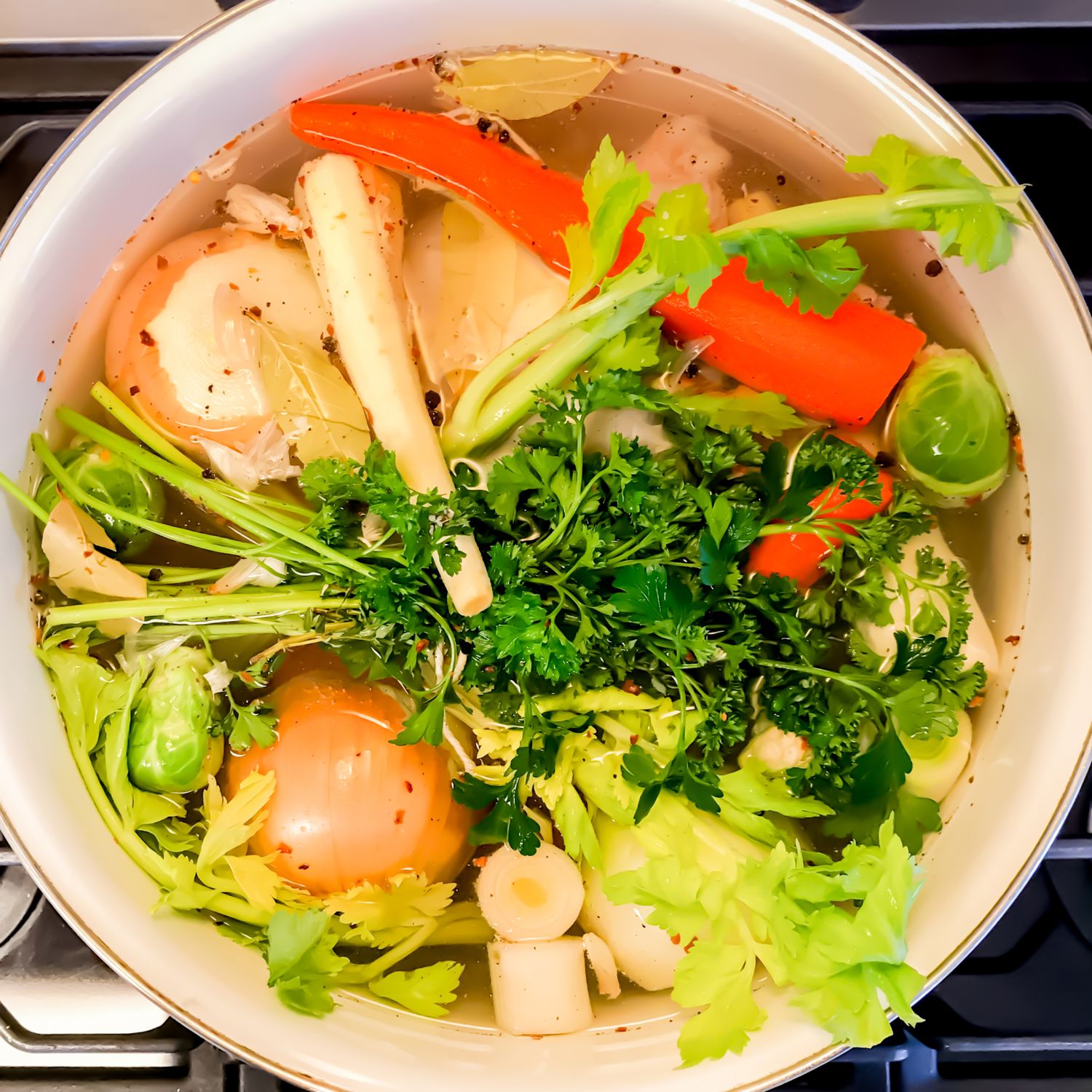
This particular pot begins with a whole chicken and a broad assortment of vegetables: carrots, celery, onion, garlic, parsnip, parsley, and, when I have them, celery root and a couple of Brussels sprouts. Those last additions move the flavor beyond a textbook onion-carrot-celery stock. Celery root brings an earthy celery flavor without adding more stalks, while parsnip contributes a mild sweetness. I would keep the Brussels sprouts restrained, exactly as the recipe does. Two are enough to contribute a little vegetal depth without allowing their cabbage-family flavor to take over the pot.
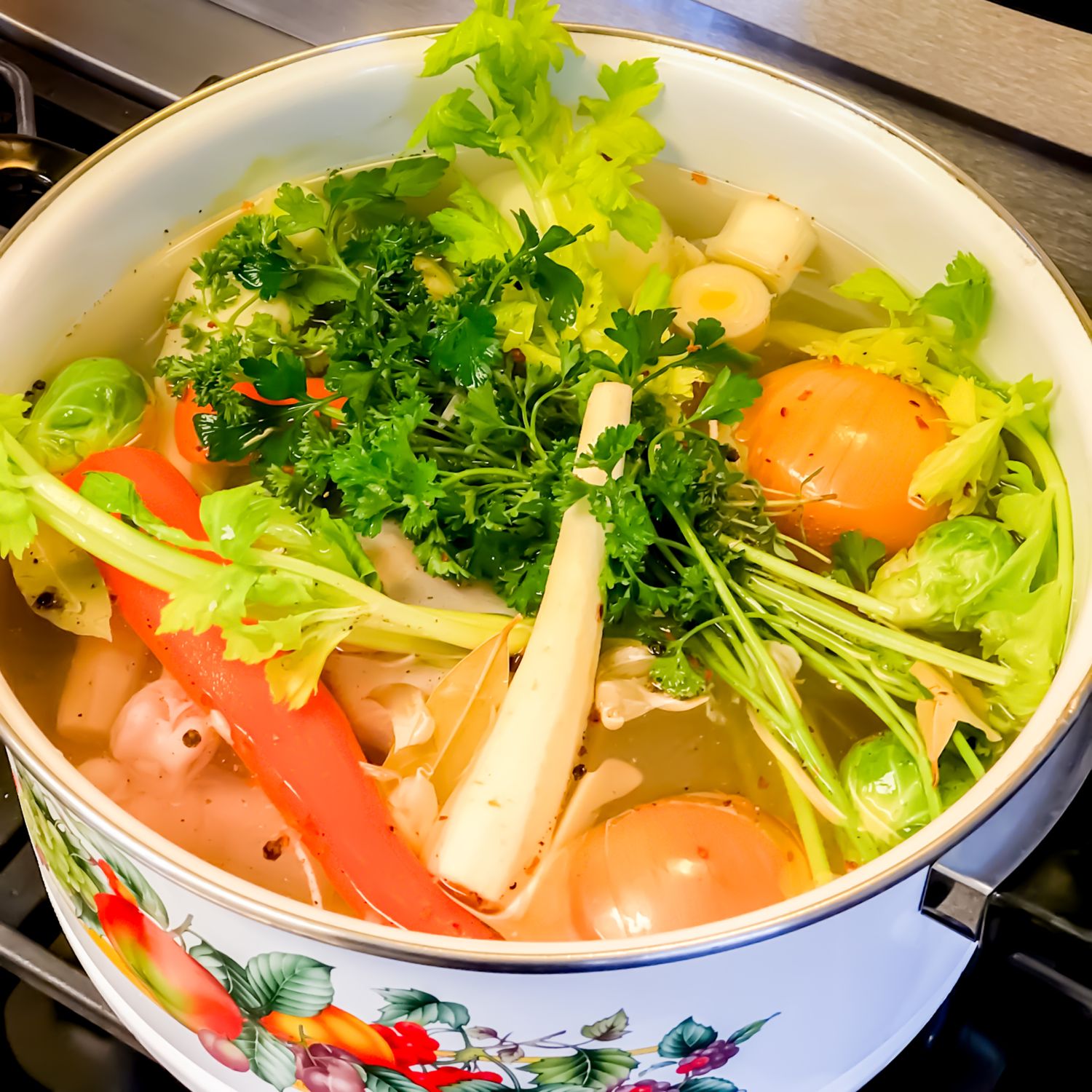
The onion skins may stay on if they are clean. They contribute additional golden-brown color, which is useful when you want a stock with some warmth to it. Garlic can go in halved with its papery skin as well. There is very little reason to fuss over perfect knife work here because the vegetables will eventually be strained away.
Cold water matters more. Starting the chicken in cold water and bringing everything up gradually allows flavor and soluble proteins to move into the liquid as it heats. Once the pot reaches a boil, lowering it to a steady simmer keeps the stock from becoming unnecessarily agitated. A hard boil can cloud the liquid and break vegetables apart. The Smithsonian's chicken broth instructions likewise call for bringing the ingredients to a boil, reducing the heat, simmering, straining, and removing the fat after cooking.
After three hours, the kitchen will smell unmistakably of chicken, celery, garlic, and bay. The carrots will be spent, the parsley darkened, and the chicken itself will have given much of its flavor to the liquid. That is exactly what you want. Stock making is extraction. The ingredients in the pot are there to flavor what passes through the strainer.
Once strained, I chill the stock before removing the fat. Refrigeration firms the chicken fat into a solid layer across the surface, making it considerably easier to lift away cleanly. The stock beneath may also turn soft and jiggly in the refrigerator. That texture comes from gelatin derived from collagen in the chicken and is a very good sign. Once heated, it melts back into liquid and gives soups, sauces, and gravies a fuller texture.
I season this stock relatively lightly because I usually intend to cook with it again. A stock destined for gravy may eventually be reduced. Another batch may go into a soup alongside salty ingredients such as ham, Parmesan, or seasoned sausage. Starting with restraint leaves room to season the finished dish properly.
That is why I still think a pot of chicken stock is worth knowing how to make. It gives you an ingredient rather than a single meal, and that ingredient can follow you through several days of cooking. Freeze it in the quantities you actually use, whether that means eight-ounce portions for sauces or two-cup containers for soups and braises, and there is very little chance it will go to waste.
Until next time, thank you for spending a little time with me. I hope you find a recipe to make, a story to enjoy, and something new to take into the kitchen. ♥️
Homemade Chicken Stock
PREP TIME: 15 MINUTES
Cook Time: 3 hours
Yields: 8 cups (+/-)
Ingredients:
4 lb whole chicken
3-4 carrots, peeled, leave whole removing ends
2 stalks celery, with leaves, cut in half
2 medium onions, skin on or off, quartered or leave whole
2 brussels sprouts, (optional + more or less to taste)
1 parsnip, peeled, leave whole removing ends
1 head of garlic, skin on or off, halved
4-5 sprigs parsley
1 celery root peeled, halved (optional)
2 bay leaves
2 tbsp black peppercorns
1 1/2 tsp kosher salt
3 quarts cold water, (or enough to fill just above chicken)
Instructions:
- Clean and prepare chicken and vegetables.
- In a large stock pot place whole chicken, carrots, celery, onions, brussels sprouts, parsnip, celery root and garlic, parsley, bay leaves, black peppercorns, salt; cover with water. Bring to a boil, then reduce heat and simmer uncovered or partially covered for 3 to 4 hours.
- Pour all the ingredients through a large fine mesh strainer (be very careful it’s hot). Chill chicken stock, skim off and discard fat solids. Use immediately and adjust seasonings, or store in airtight containers and freeze.

about the AUTHOr
Stasia Boschetti is an American culinary writer and the founder of American Country Living. With more than thirty years of experience in the kitchen, a background in catering, extensive travel, and a strong knowledge of regional food traditions, she writes about the recipes, histories, and customs that have shaped the way America cooks. She lives in the United States with her husband, family, and rescue animals.