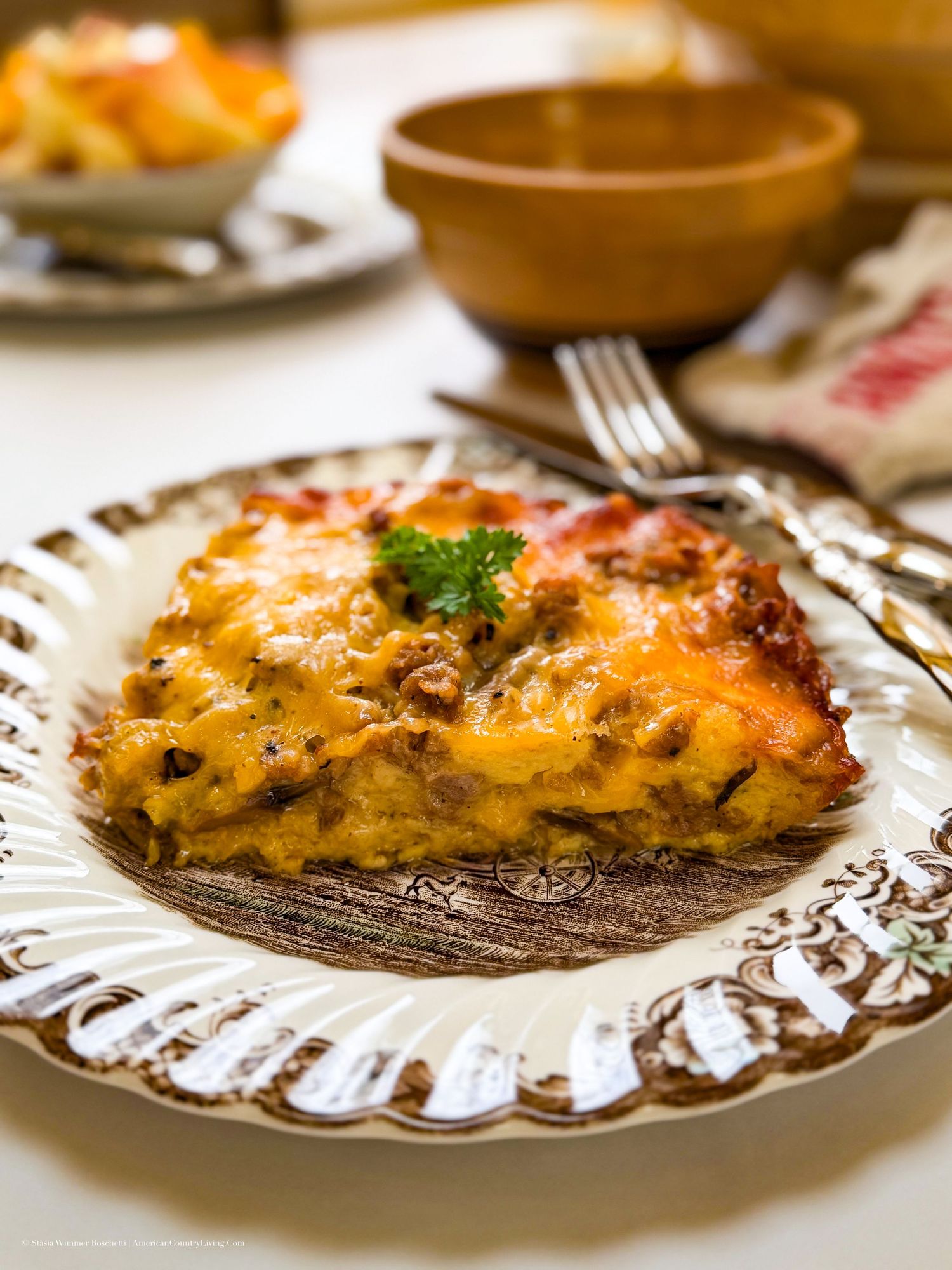
Tahoe Brunch Casserole
Tahoe Brunch Casserole has the sort of name that immediately suggests a long weekend: cold mountain air, a full coffee pot, wet boots by the door, and enough people in the house to make cooking eggs to order an unreasonable proposition.
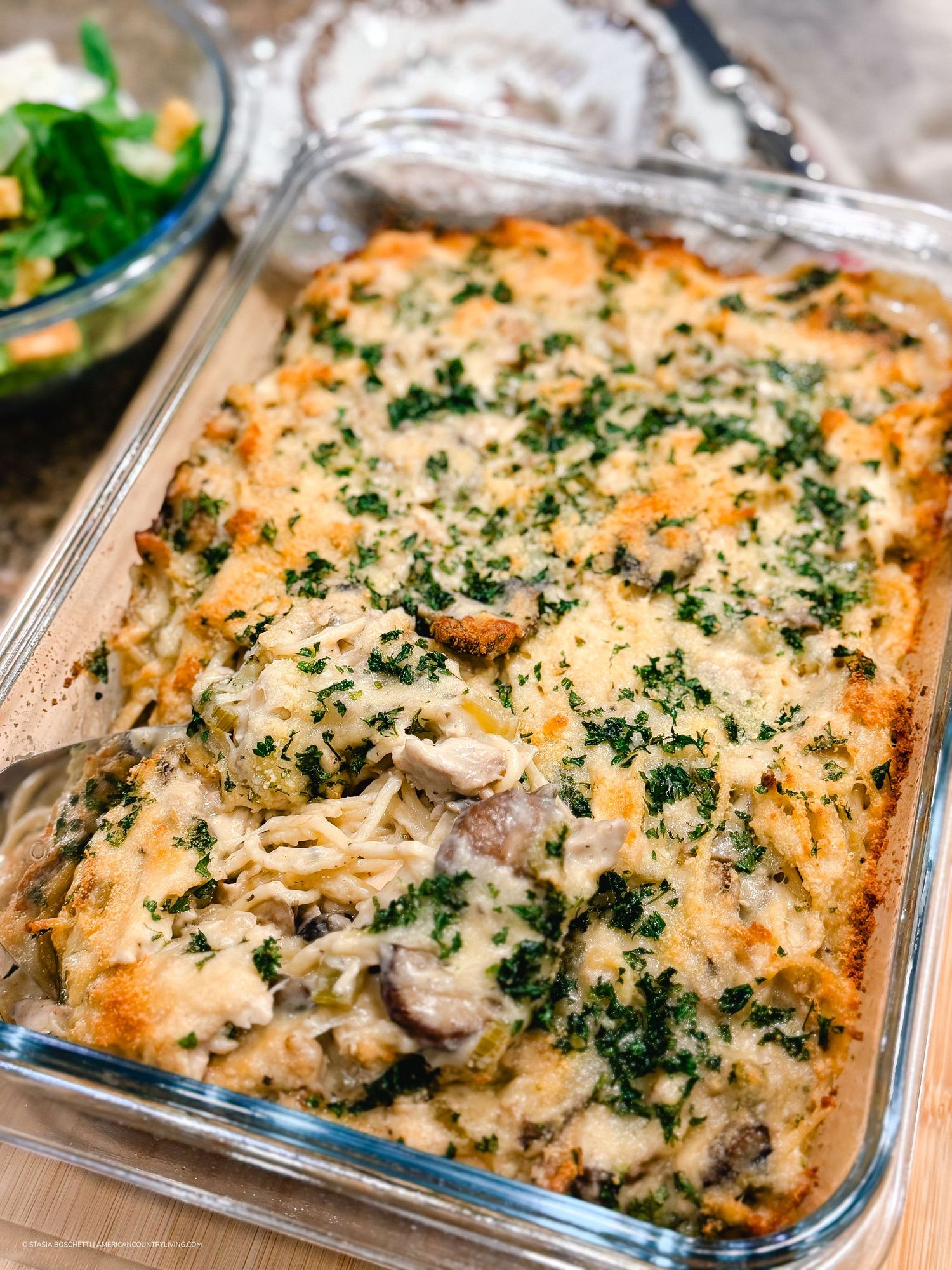
Built with bread, Italian sausage, mushrooms, onion, sharp cheddar, eggs, and milk, this is essentially an American breakfast strata, assembled in advance so the bread has time to absorb the seasoned egg mixture before baking. That overnight rest matters. By morning, the bread has softened throughout rather than simply sitting beneath the custard, and the casserole bakes into a substantial, deeply browned dish with crisp edges and a tender center.
The idea behind it has much older roots than the American breakfast casserole. Bread soaked with eggs and dairy belongs to a long family of economical dishes created to make good use of yesterday’s loaf. The Italian word strata means “layers,” an especially apt description for the American casseroles that eventually took the name. Brunch itself entered the written culinary vocabulary in the late nineteenth century. The word appeared in print in 1895, when British writer Guy Beringer proposed a leisurely late-morning Sunday meal that combined breakfast and lunch.
In the United States, baked casseroles became increasingly familiar during the twentieth century as ovenproof bakeware, refrigerators, frozen foods, and other kitchen conveniences changed the way Americans planned meals. By the middle decades of the century, the casserole dish had become a standard piece of American kitchen equipment. Corning was producing Pyrex casseroles in patterns that now instantly date a family cupboard to the 1960s or 1970s, the same period when make-ahead cooking appeared regularly in newspaper food sections, women’s magazines, church cookbooks, and spiral-bound community collections.
An overnight egg casserole fit neatly into that style of cooking. A pan could be assembled after the evening dishes were cleared, refrigerated, and baked the following morning while coffee brewed and fruit was cut. For a houseful of relatives, a ski weekend, Christmas morning, Easter brunch, or guests staying through Sunday, that kind of planning made good sense.
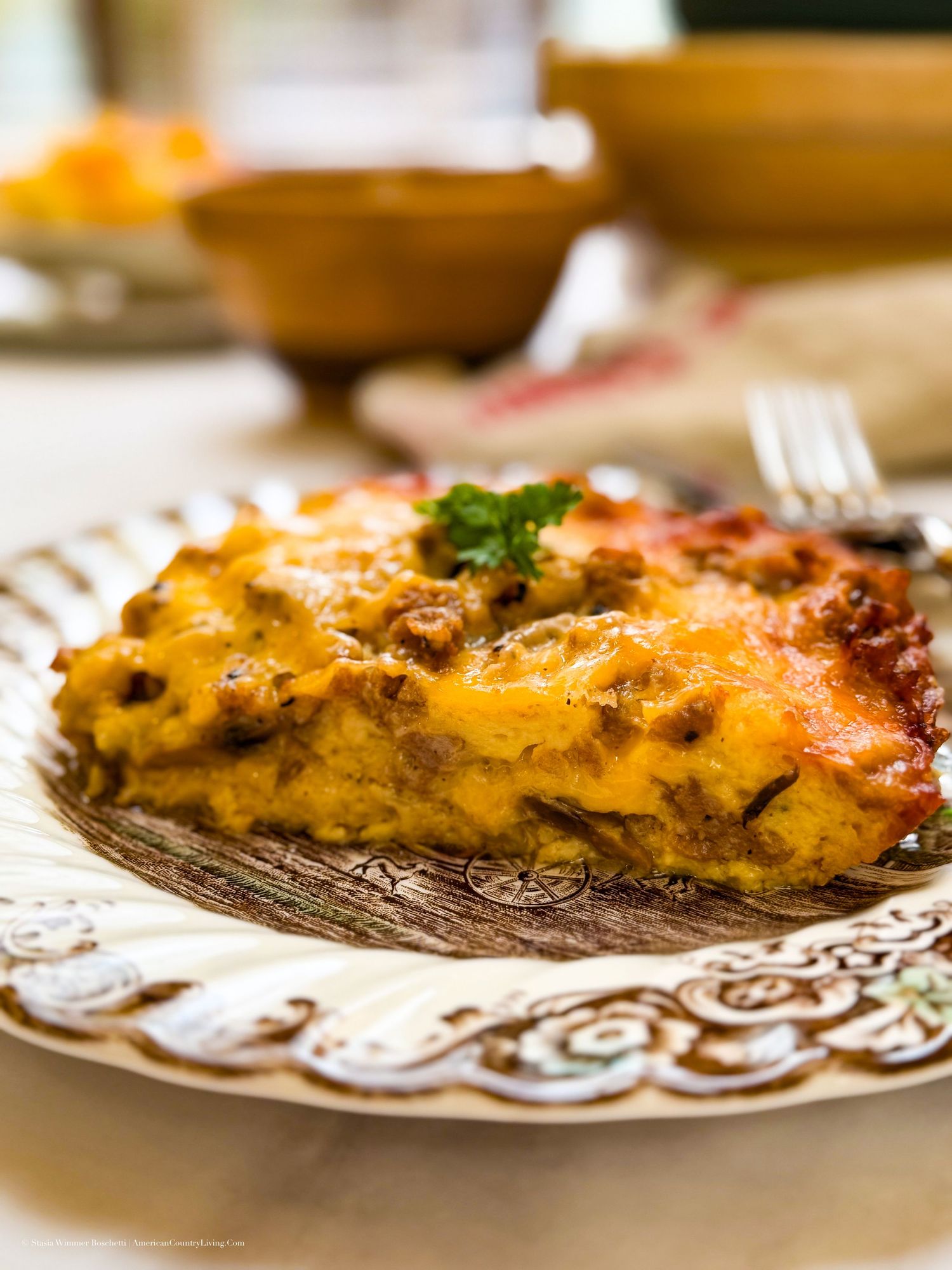
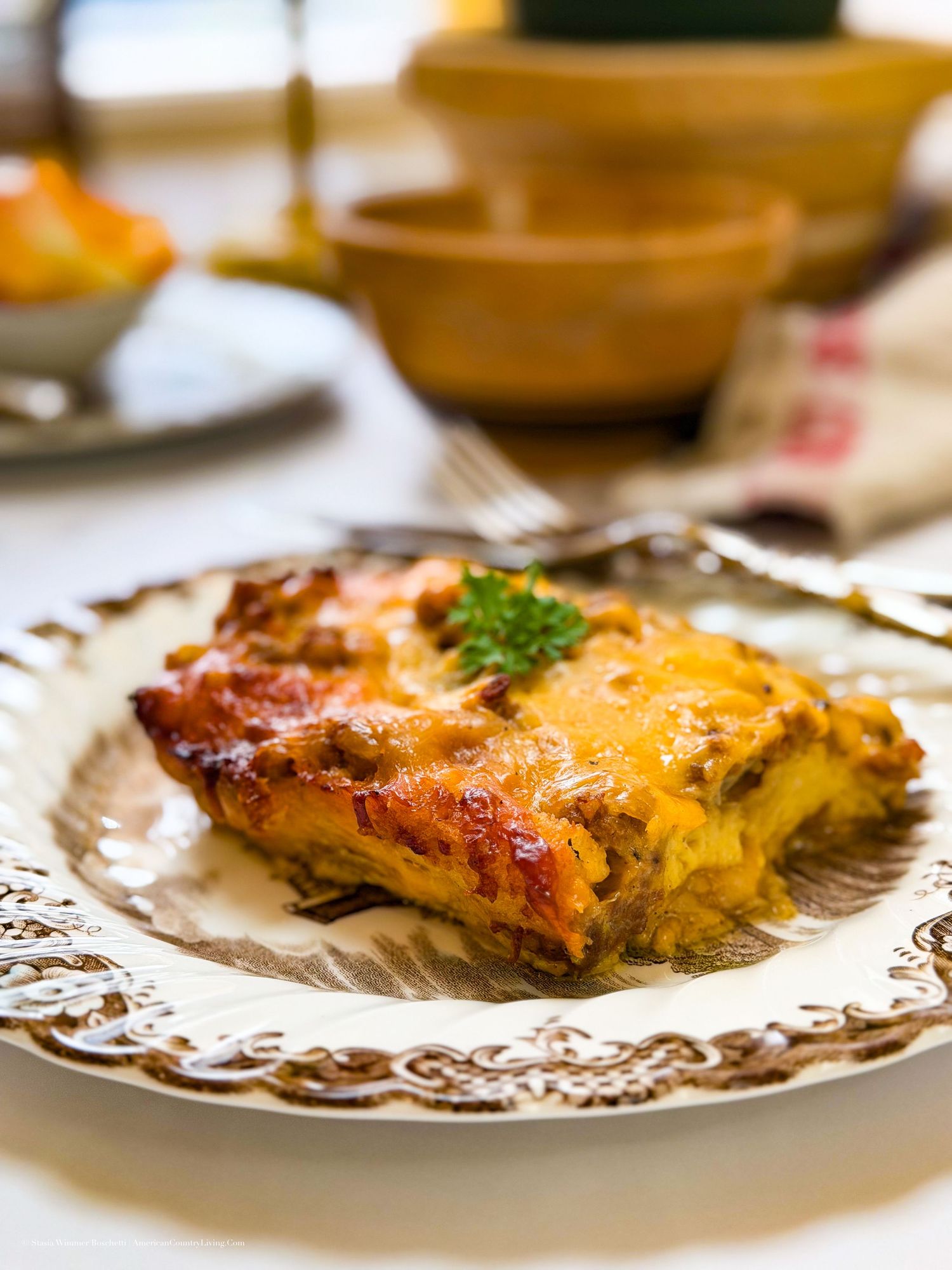
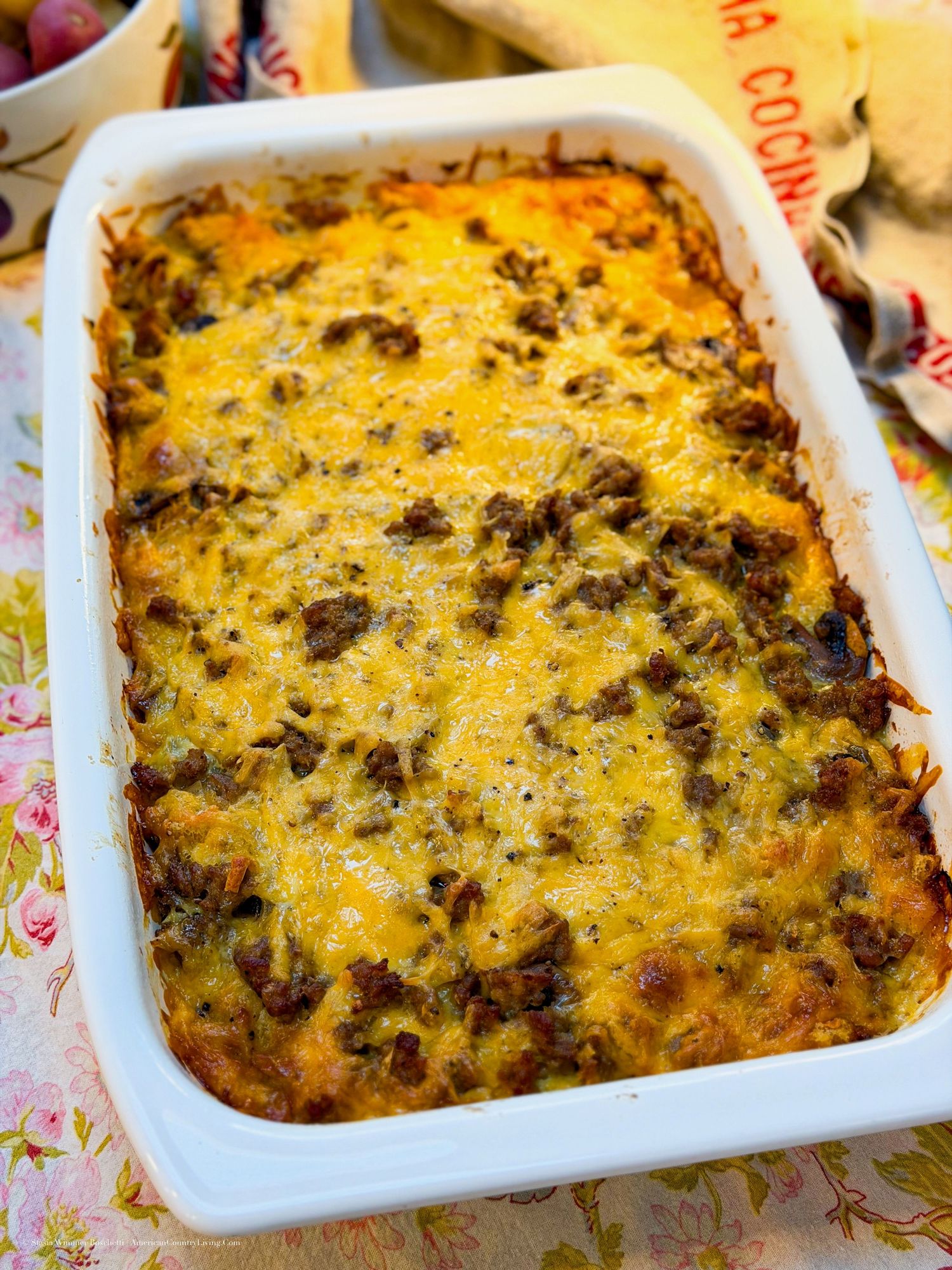
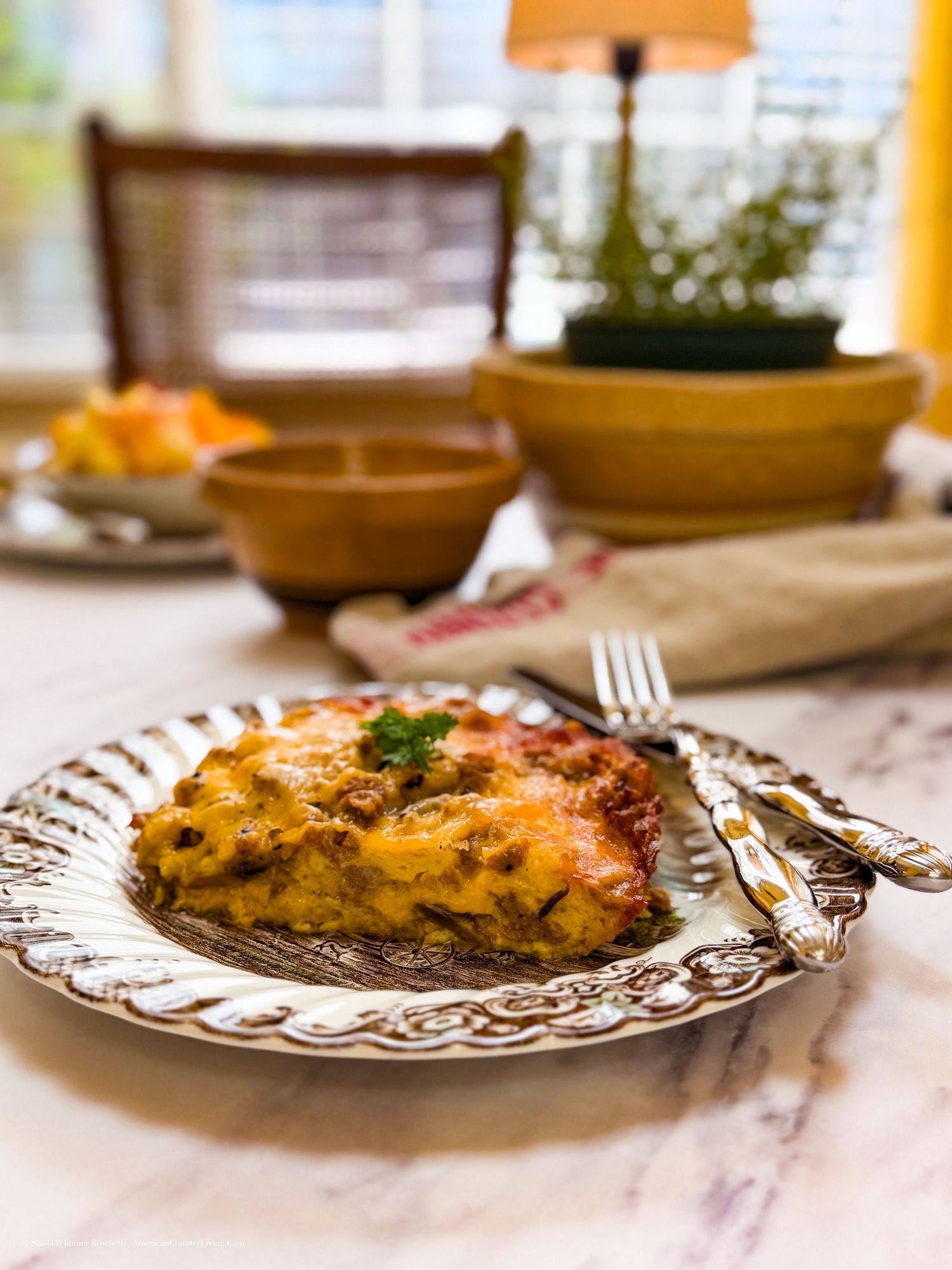
Tahoe Brunch Casserole is particularly hearty. Italian sausage gives the eggs plenty of seasoning and richness, mushrooms bring an earthy flavor that suits the sausage, and onion softens as the casserole bakes. Sharp cheddar melts through the bread and forms those browned patches across the top worth reaching for first. The finished casserole should hold together when cut while remaining soft inside, with the edges noticeably firmer and more deeply browned than the center.
Because the dish is rich, I like the rest of the table to be fairly straightforward. A bowl of oranges, berries, or sliced melon gives the meal some freshness. Hot coffee is practically mandatory. If the occasion calls for something sweeter, cinnamon rolls, coffee cake, or muffins can be passed alongside without turning breakfast into a complicated production.
There is also a practical reason recipes like this remain in family collections. They solve a very specific problem well. When eight people need breakfast at roughly the same time, nobody has to hover over a skillet turning out individual omelets while everyone else eats in shifts. One baking dish comes from the oven, the fruit gets passed around, coffee cups are refilled, and everyone can sit down together.
That, more than any clever ingredient or elaborate technique, explains the staying power of the American breakfast casserole. Tahoe Brunch Casserole belongs to the generous end of that tradition: warm, substantial, prepared ahead, and built for a table with more than two chairs pulled up to it.
Until next time, thank you for spending a little time with me. I hope you find a recipe to make, a story to enjoy, and something new to take into the kitchen. ♥️
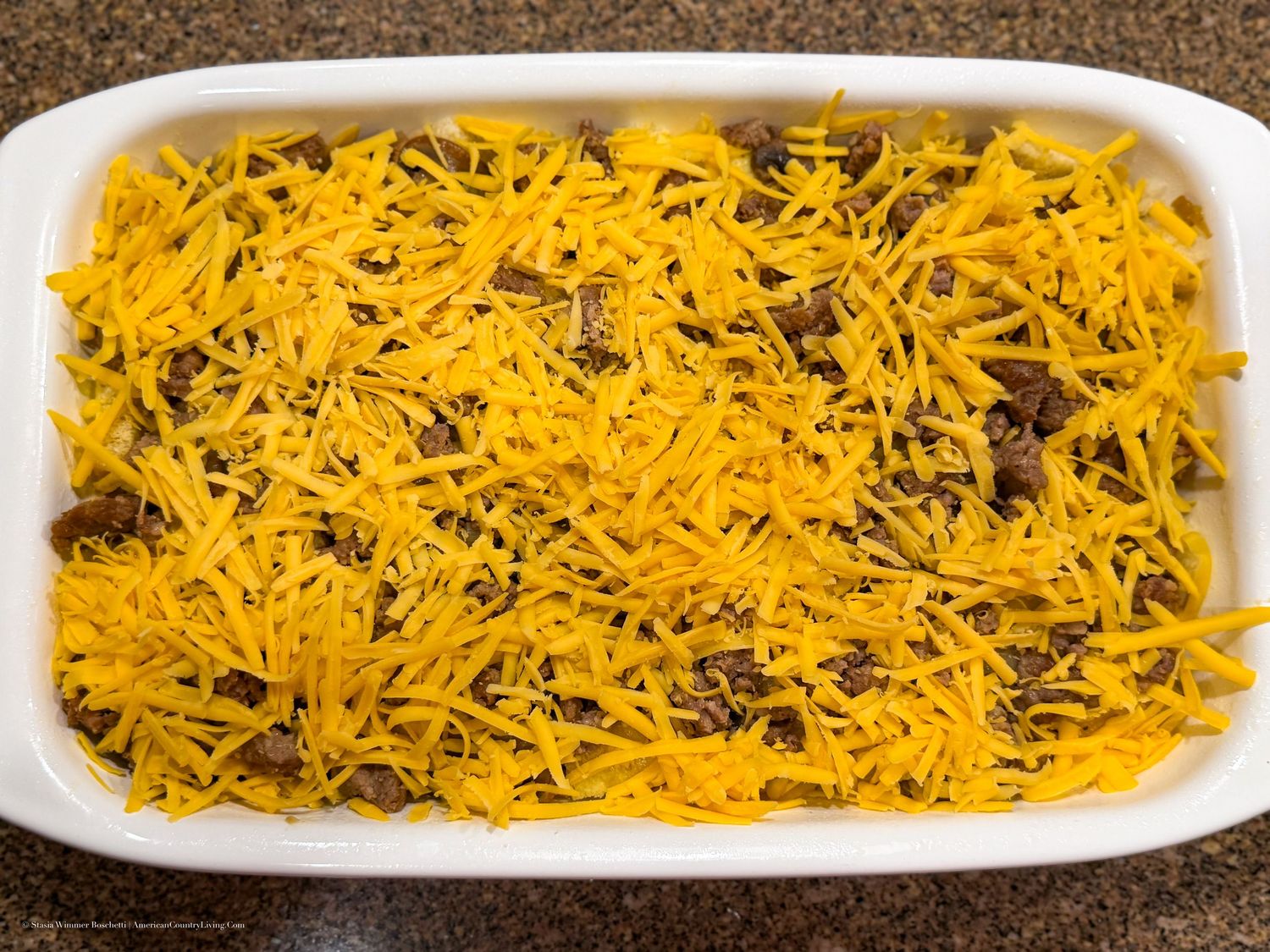
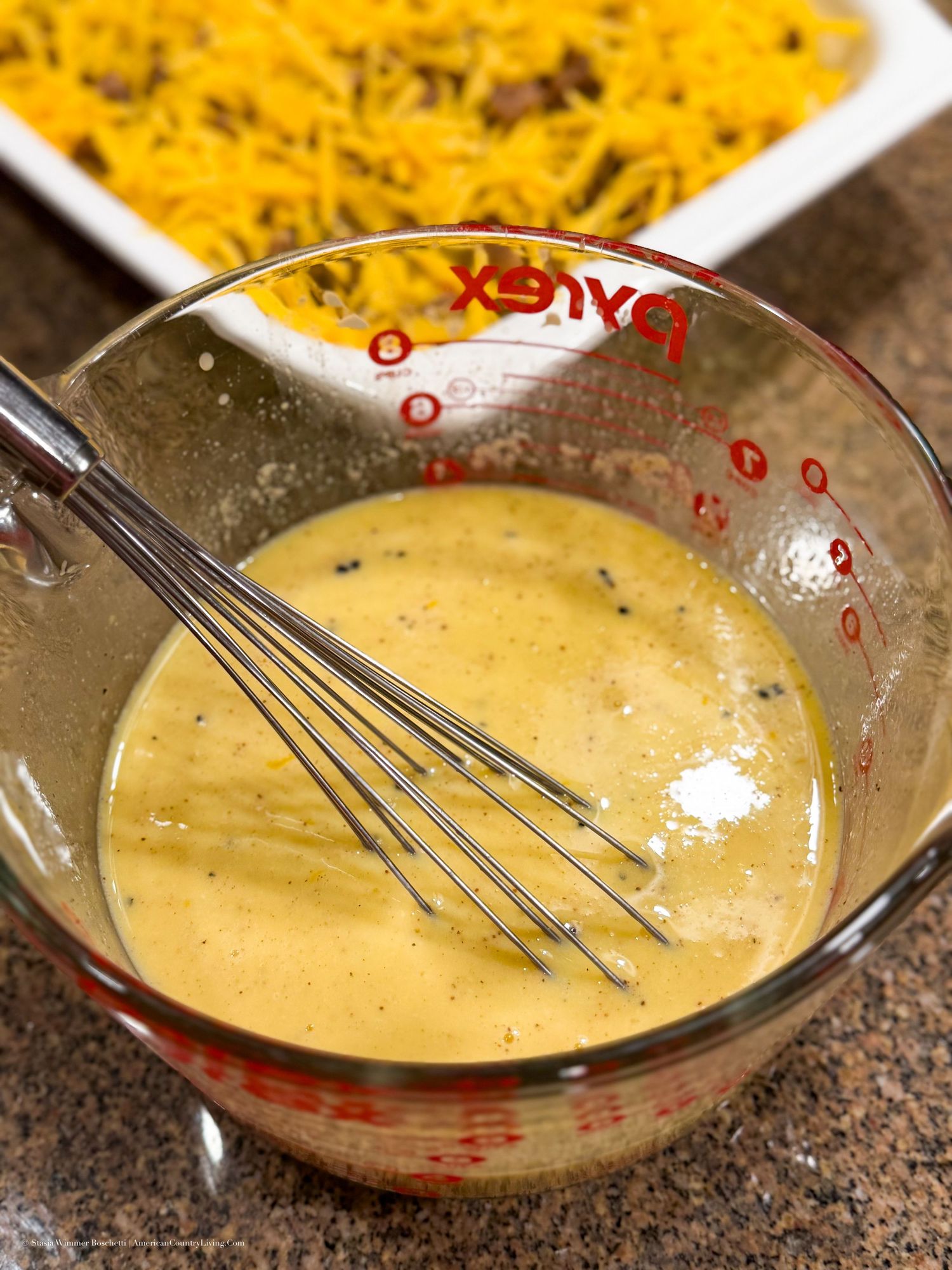
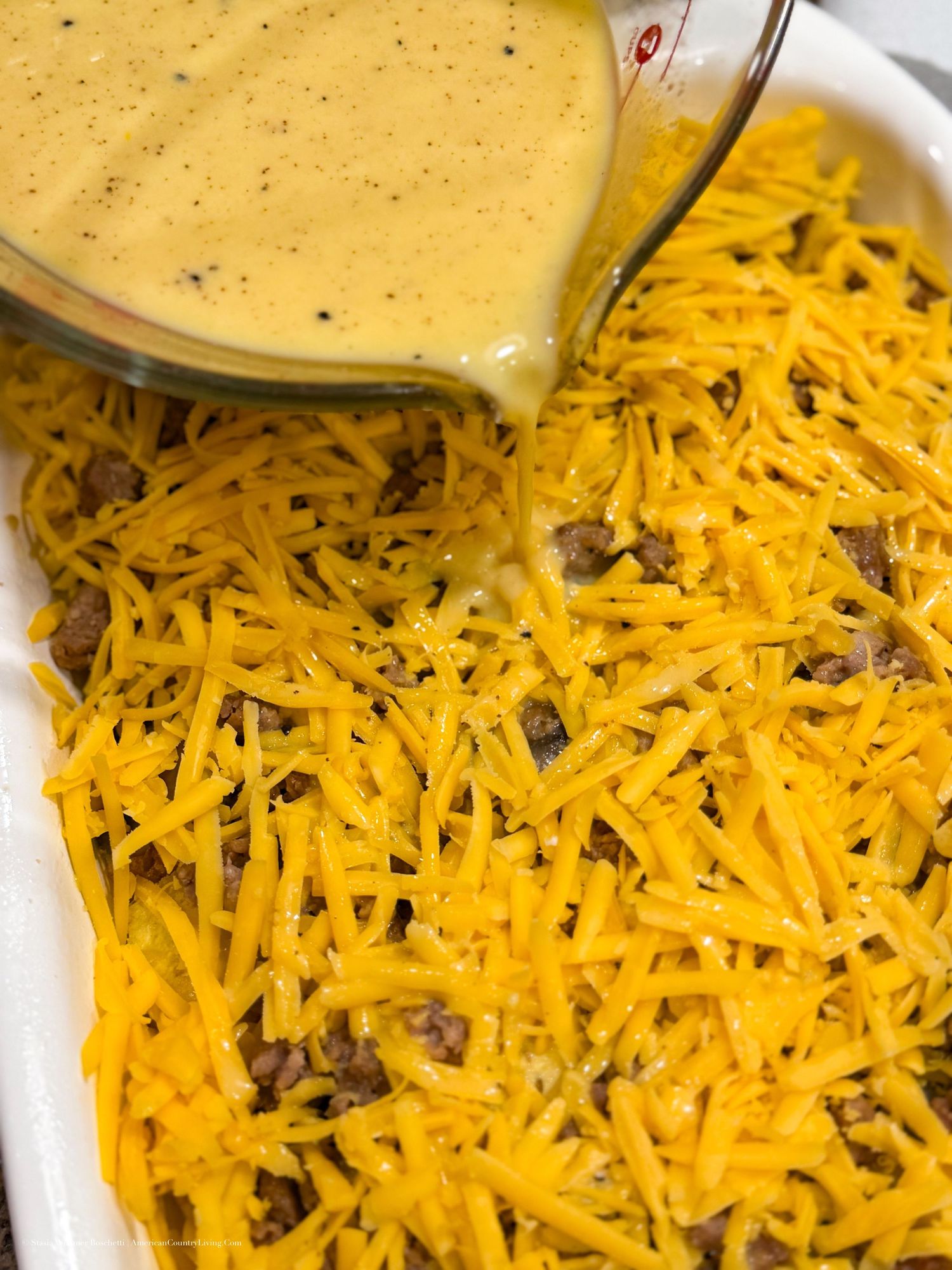
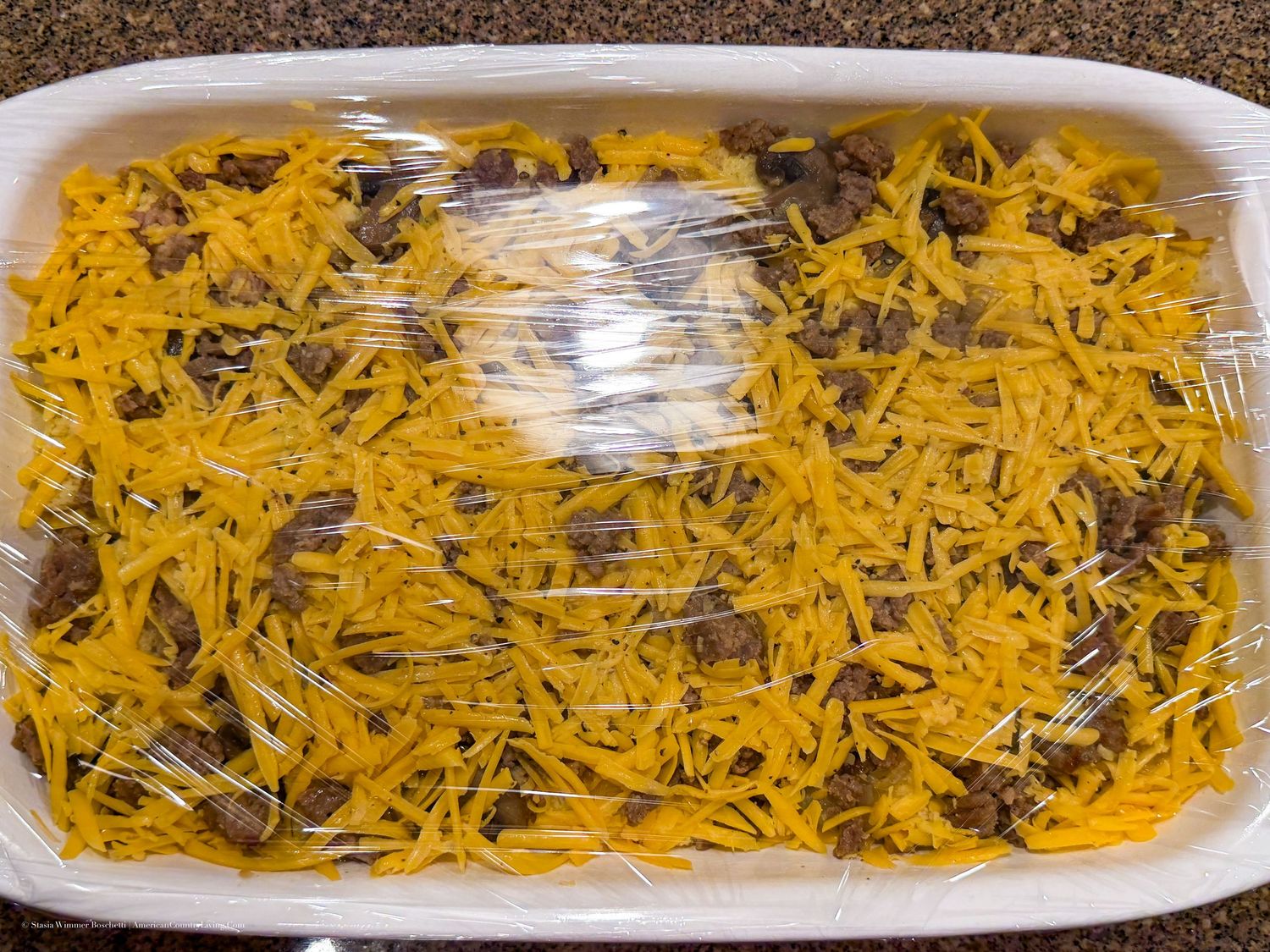
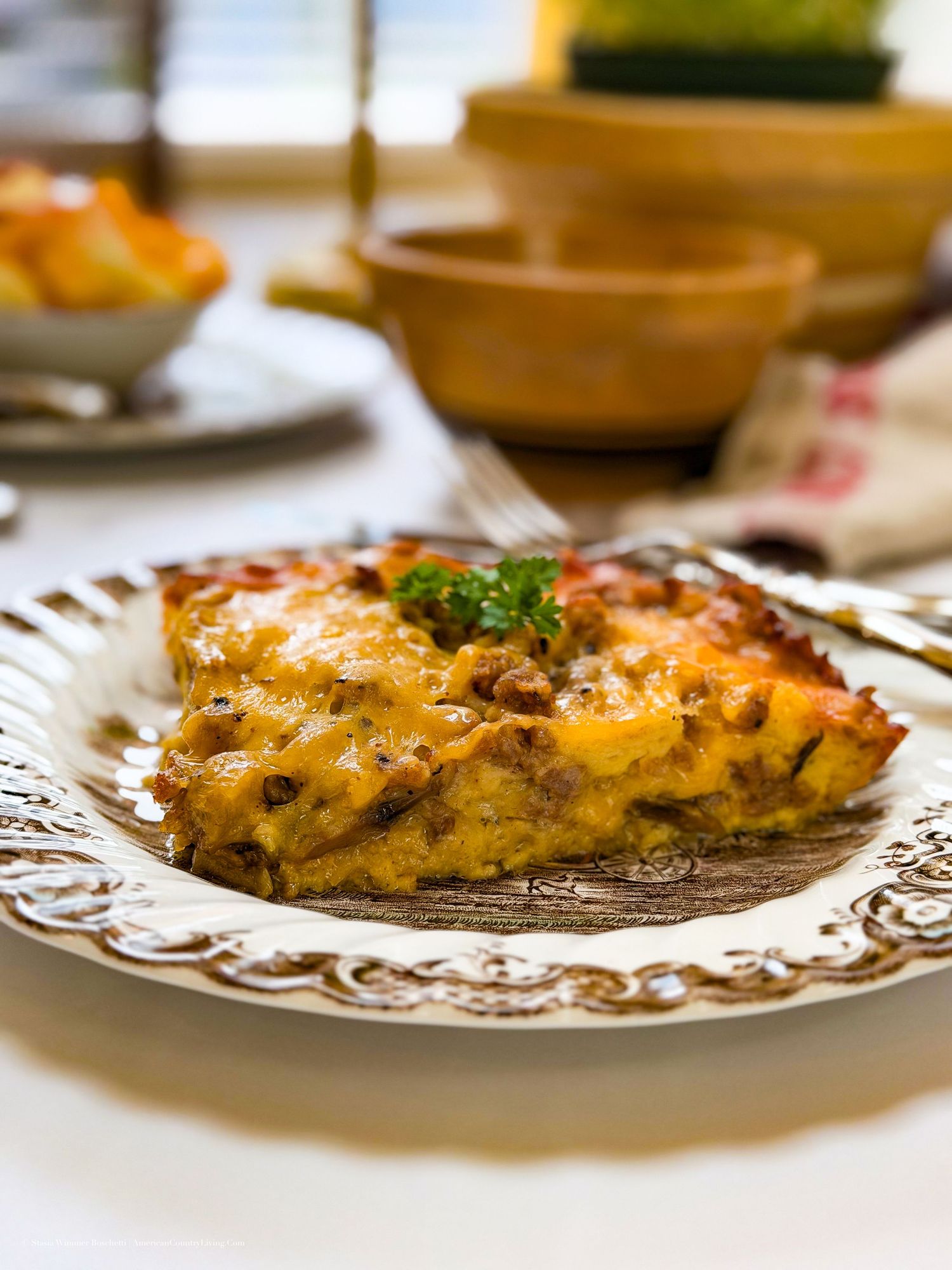
Tahoe Brunch Casserole
Prep Time: 30 minutes, plus overnight refrigeration
Bake Time: 1 hour to 1 hour 15 minutes
Oven Temperature: 350°f
Servings: 8
Ingredients
4 tablespoons butter
12 slices white sandwich bread, crusts removed
1 pound fresh mushrooms, trimmed and sliced
2 cups thinly sliced yellow onion
Salt and freshly ground black pepper, to taste
2 pounds bulk mild Italian sausage
1 pound sharp cheddar cheese, grated
6 large eggs
2½ cups whole milk
1 tablespoon Dijon mustard
1 teaspoon dry mustard
1 teaspoon ground nutmeg
1 teaspoon kosher salt
⅛ teaspoon black pepper
2 tablespoons finely chopped fresh parsley (optional)
INSTRUCTIONS
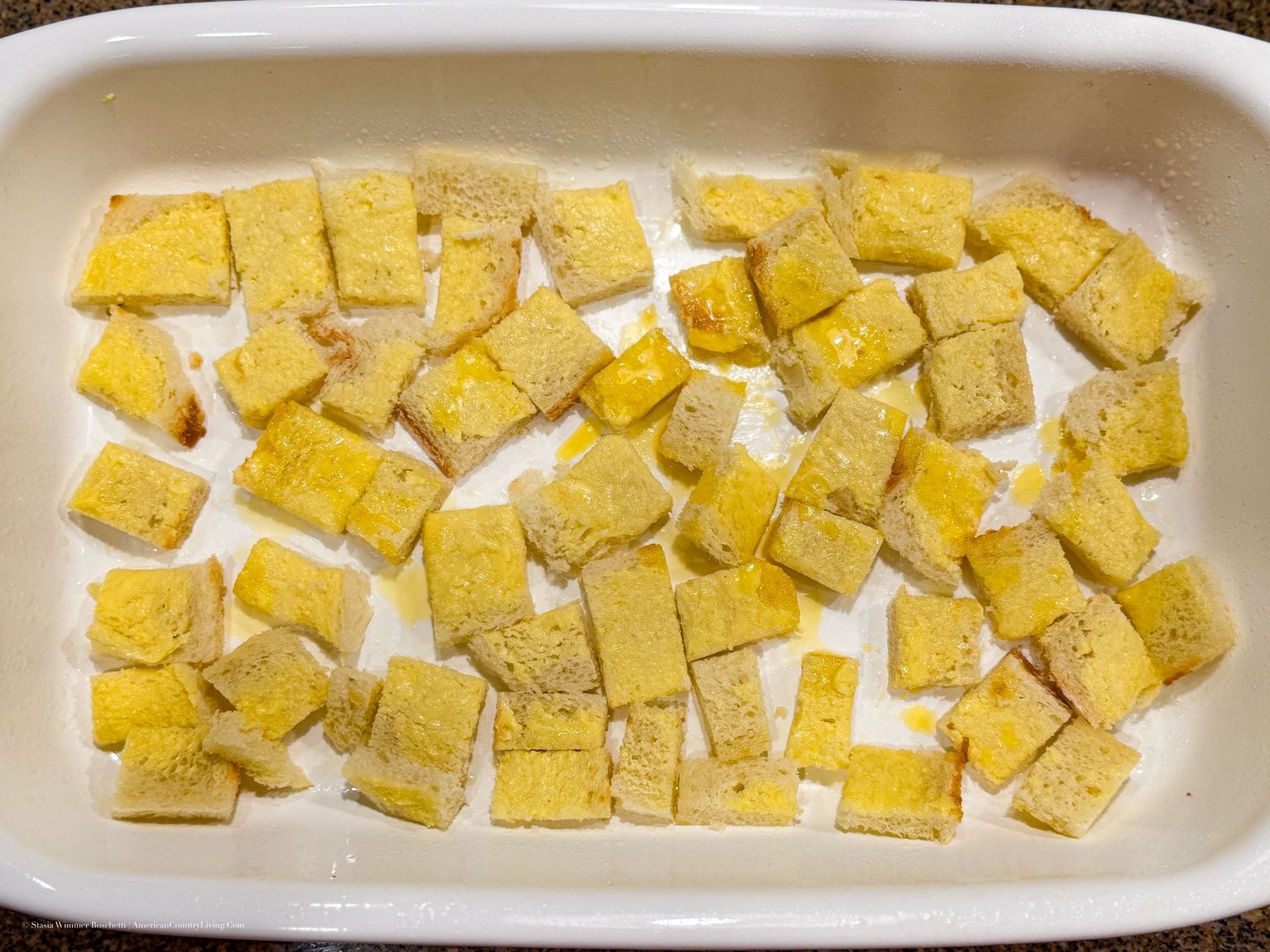
- Remove the crusts from the bread. Leave the slices whole or cut them into 1-inch cubes, if preferred.
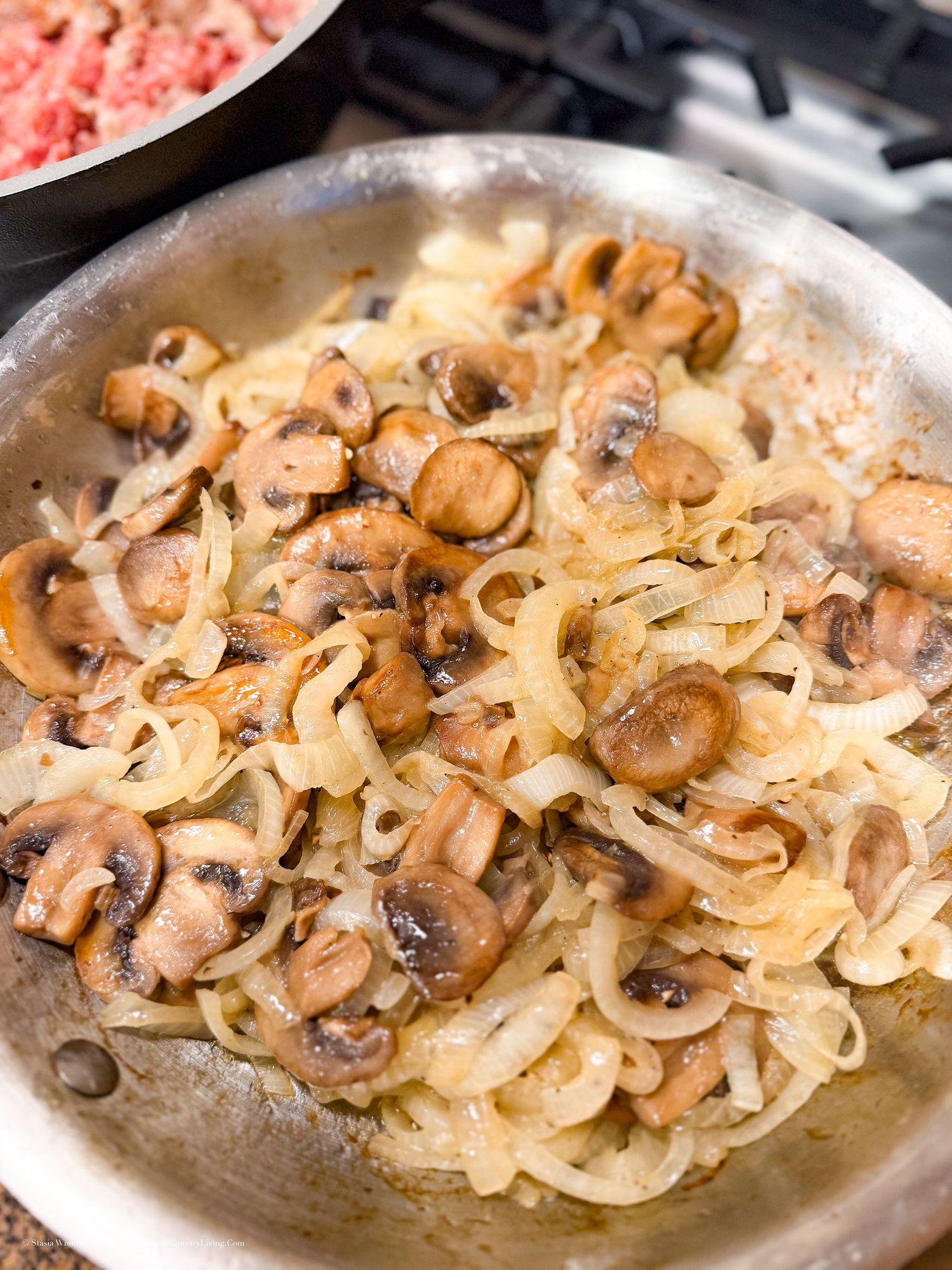
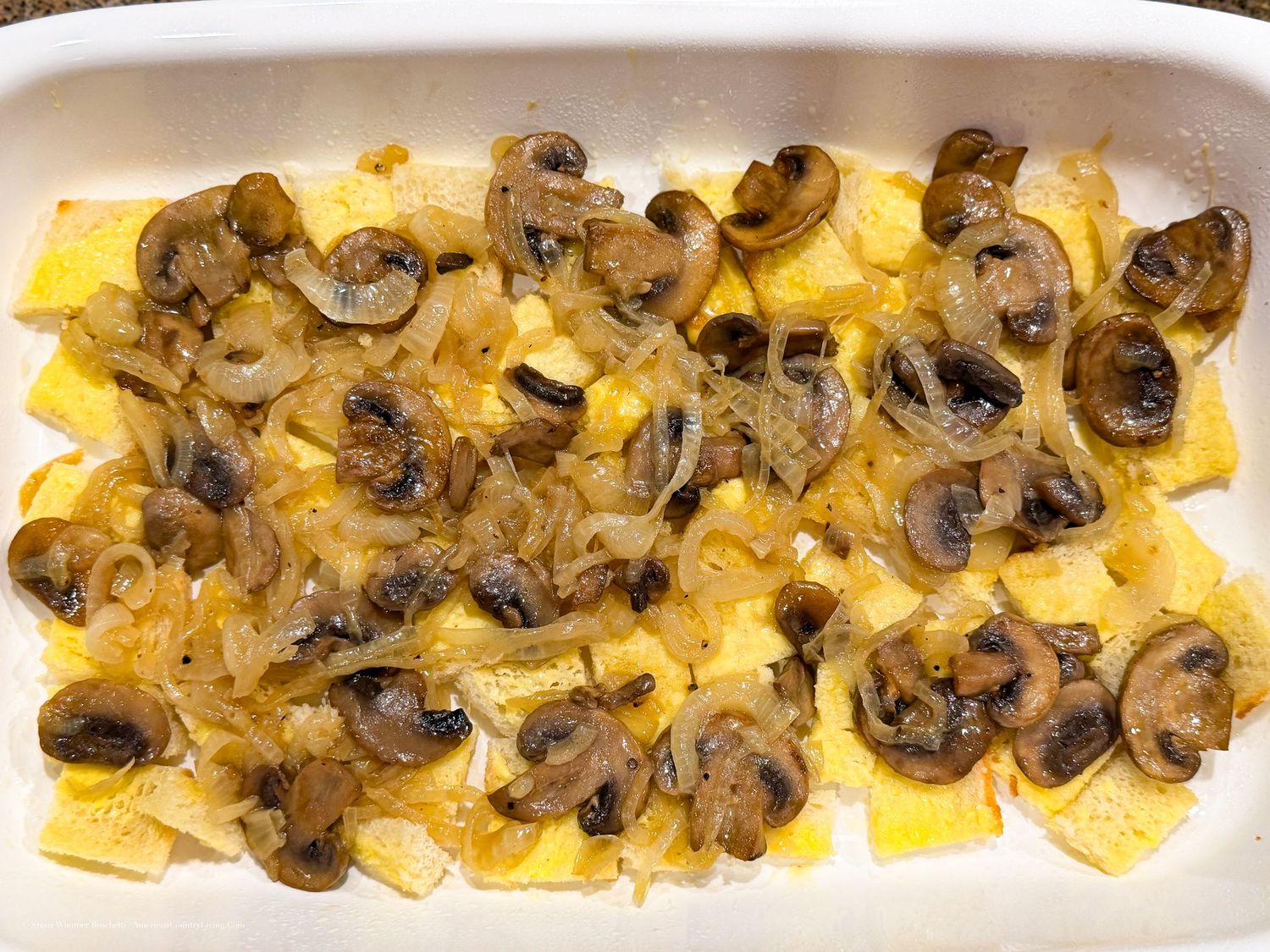
- Melt the butter in a large skillet over medium heat. Add the mushrooms and cook until they have released their moisture and it has evaporated, about 10 minutes. Add the onions and continue cooking for 5 to 8 minutes, or until softened. Season with salt and pepper. If using the same skillet for the sausage, transfer the mushroom and onion mixture to a bowl and set aside. Otherwise, leave it in the skillet until you're ready to assemble the casserole.
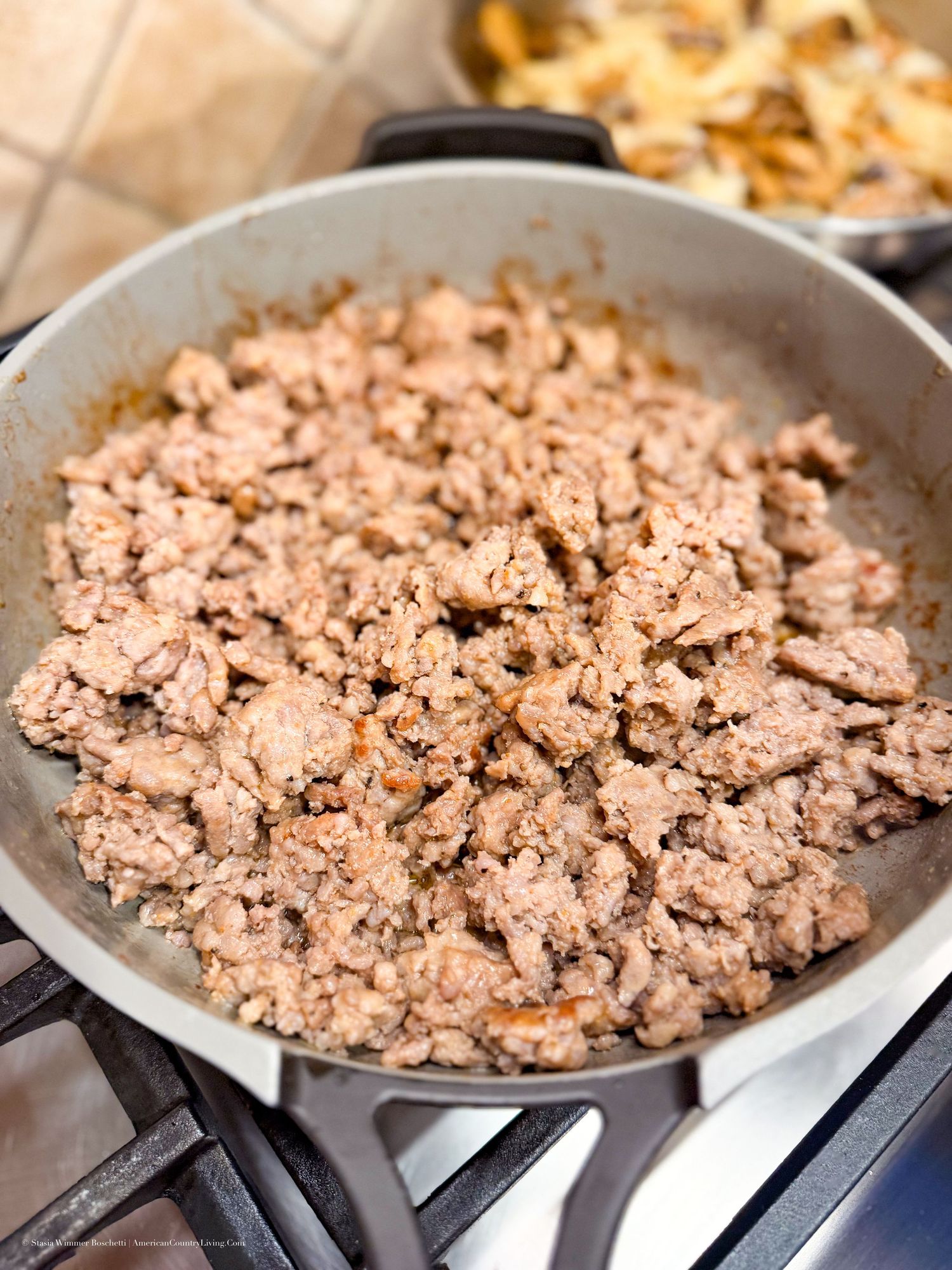
- In the same skillet, or in a separate skillet if preferred, cook the sausage over medium heat, breaking it into bite-sized pieces until browned and cooked through. Drain any excess grease.
- Lightly butter or grease a 9 x 13-inch baking dish.
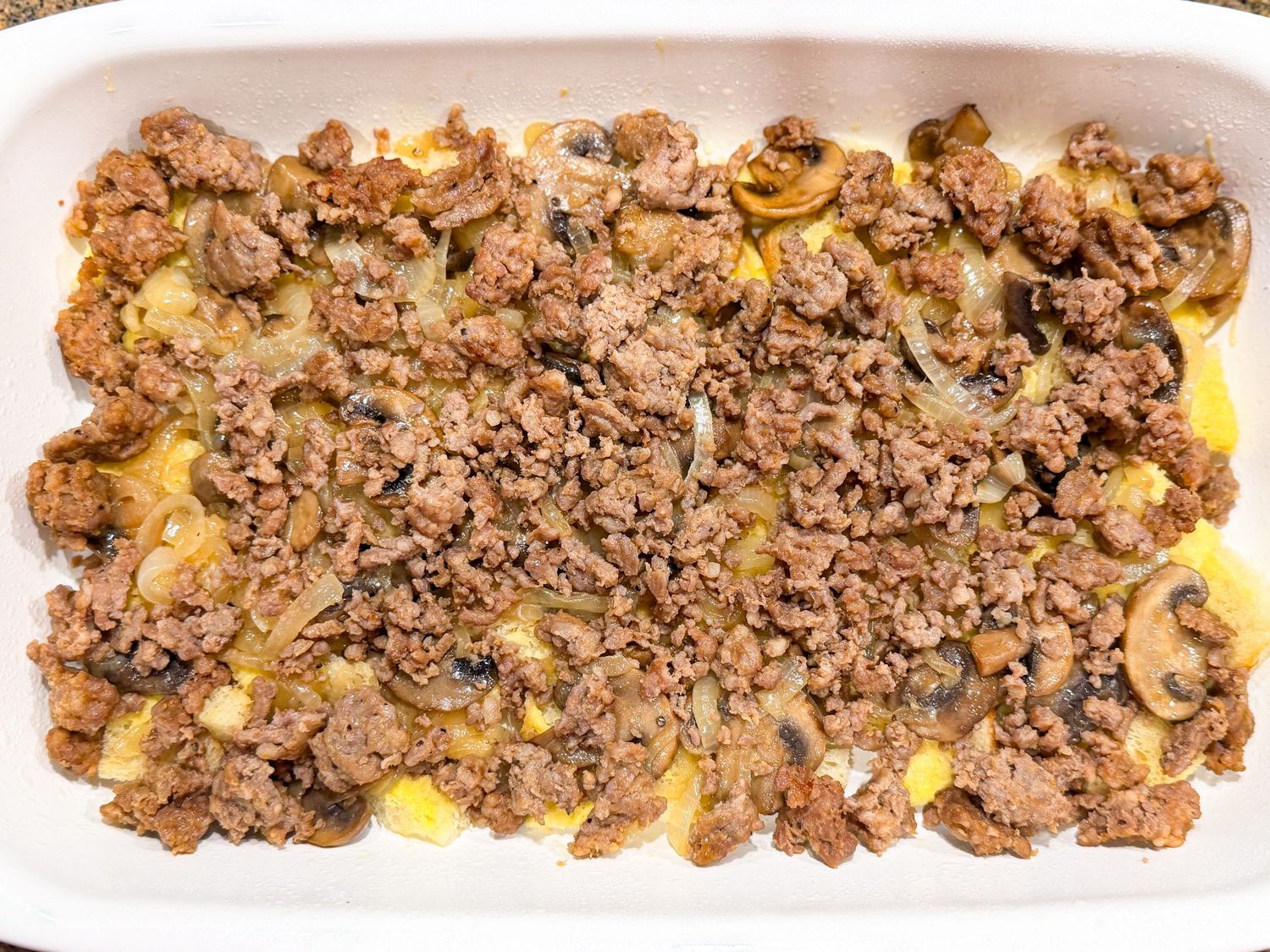
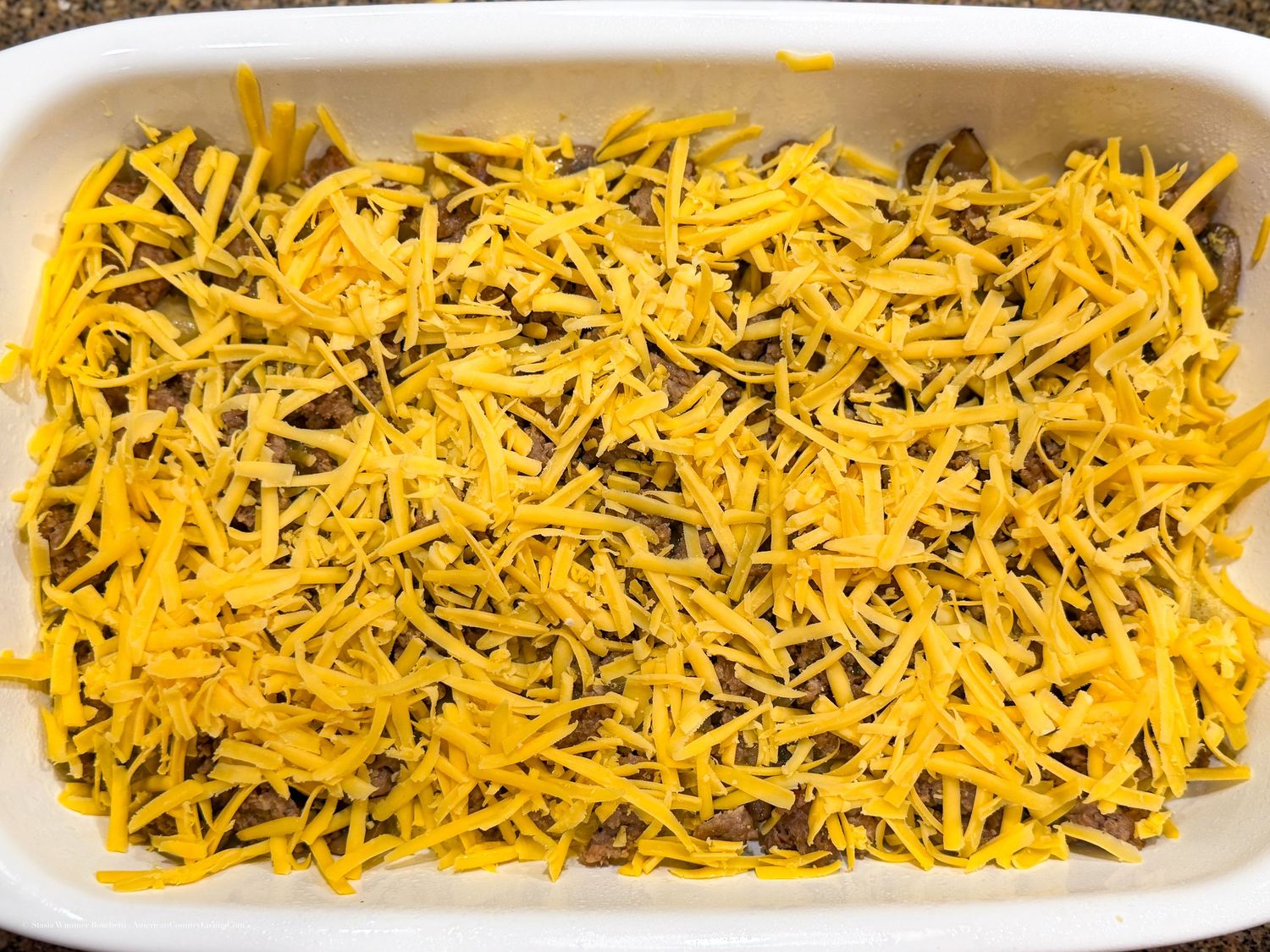
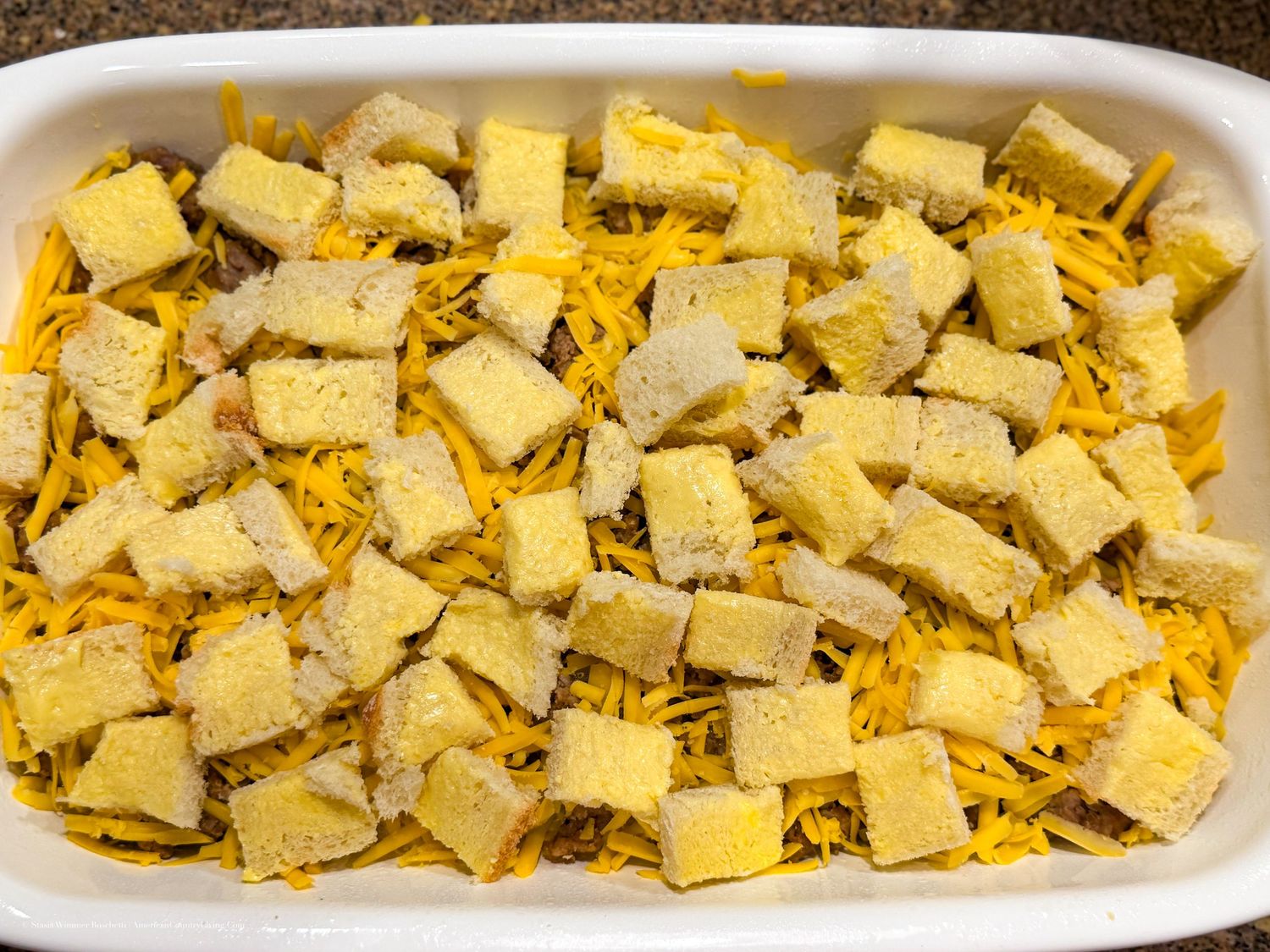
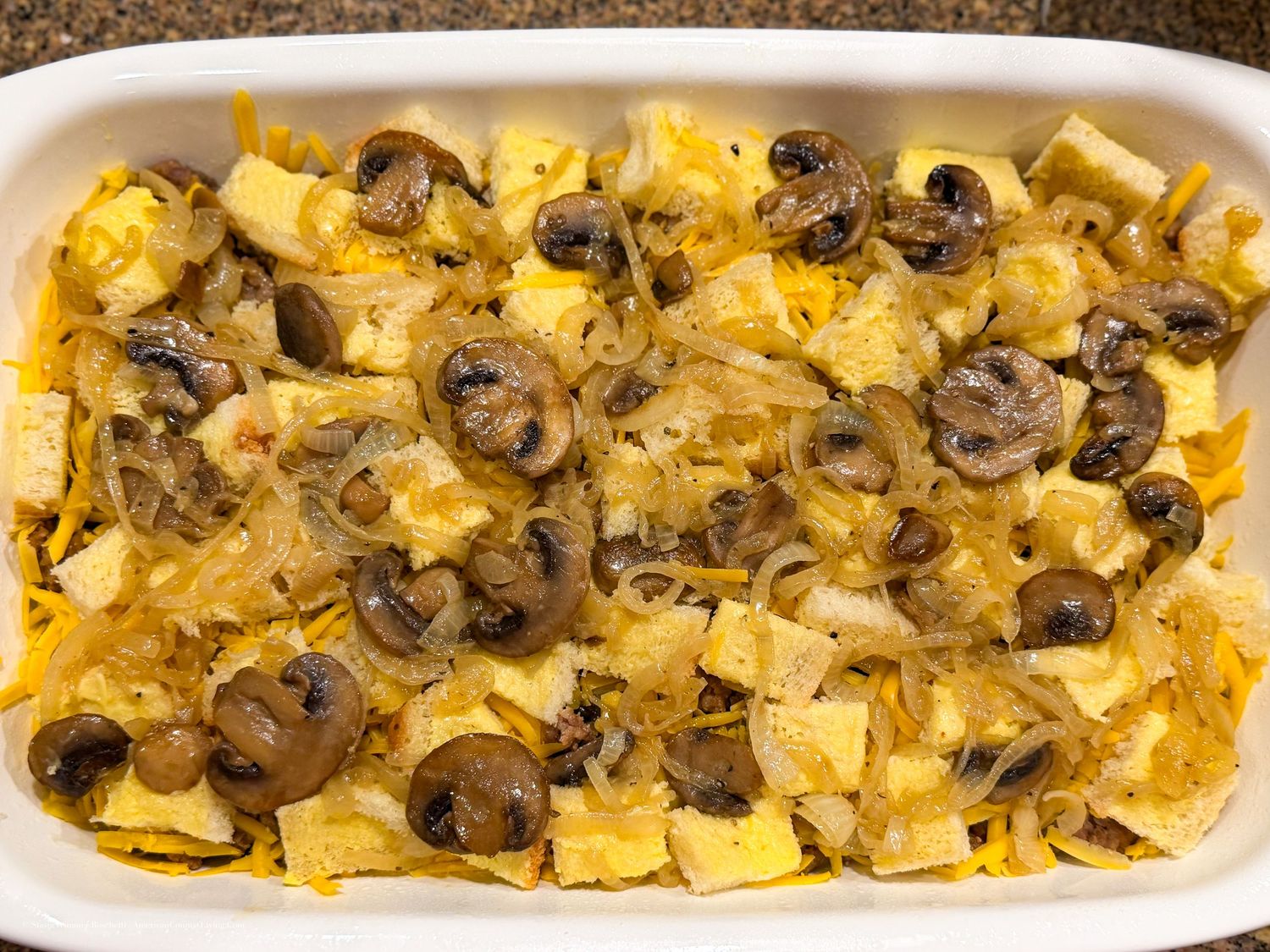
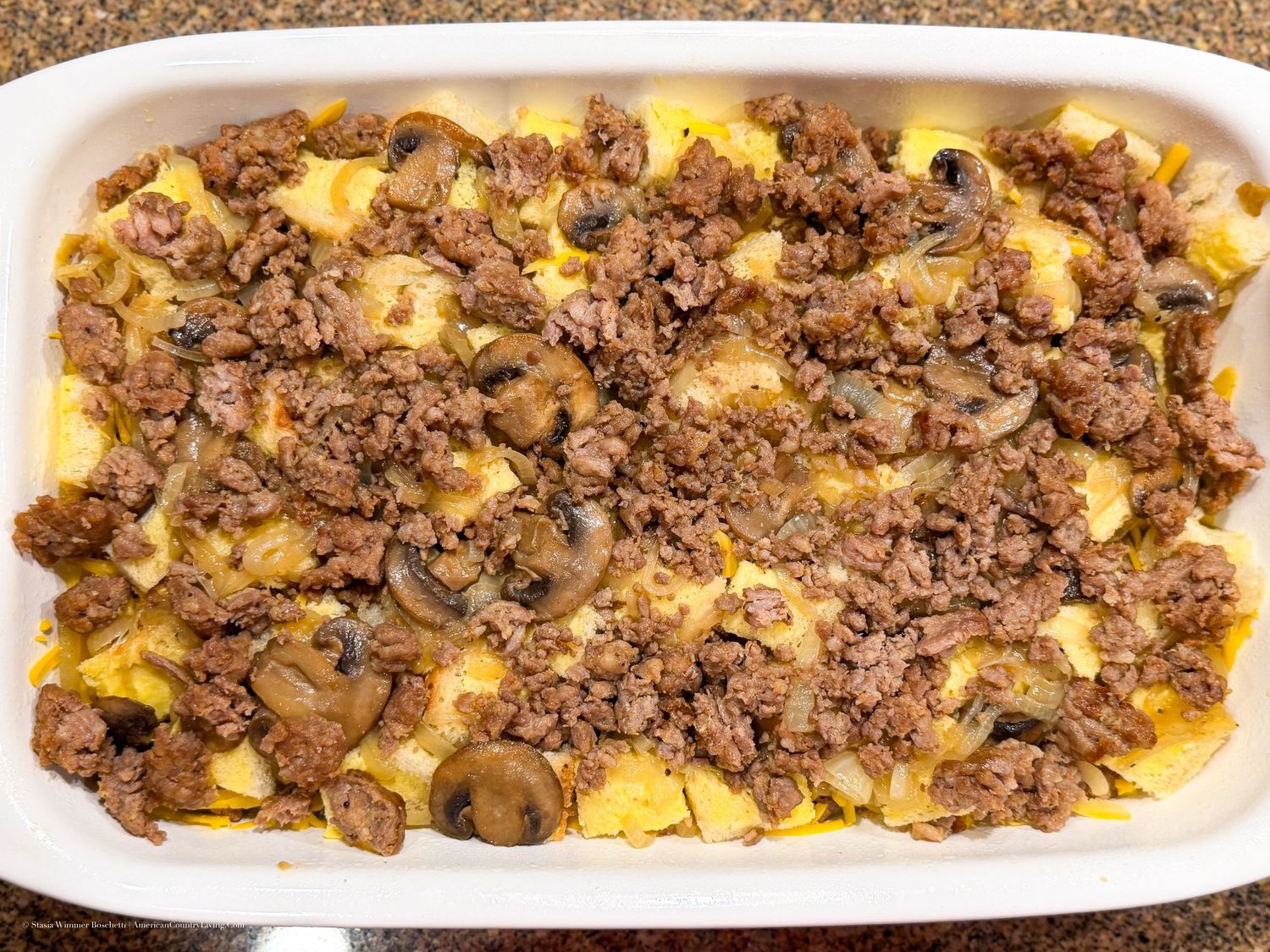
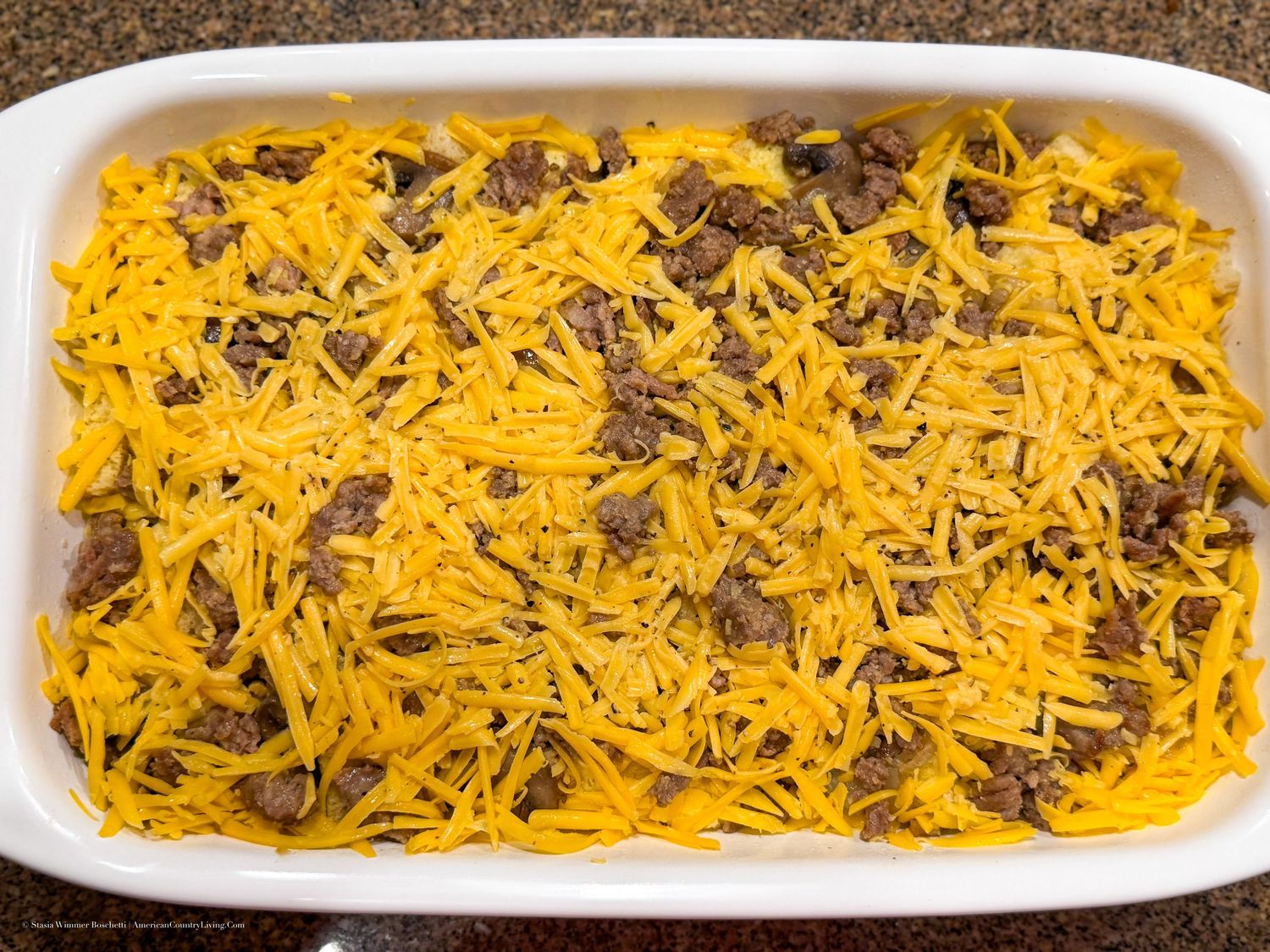
- Arrange half of the bread in the prepared baking dish. Top with half of the mushroom and onion mixture, half of the sausage, and half of the grated cheddar cheese. Repeat the layers with the remaining bread, vegetables, sausage, and cheese.
- In a large bowl, whisk together the eggs, milk, Dijon mustard, dry mustard, nutmeg, kosher salt, and black pepper until well combined.
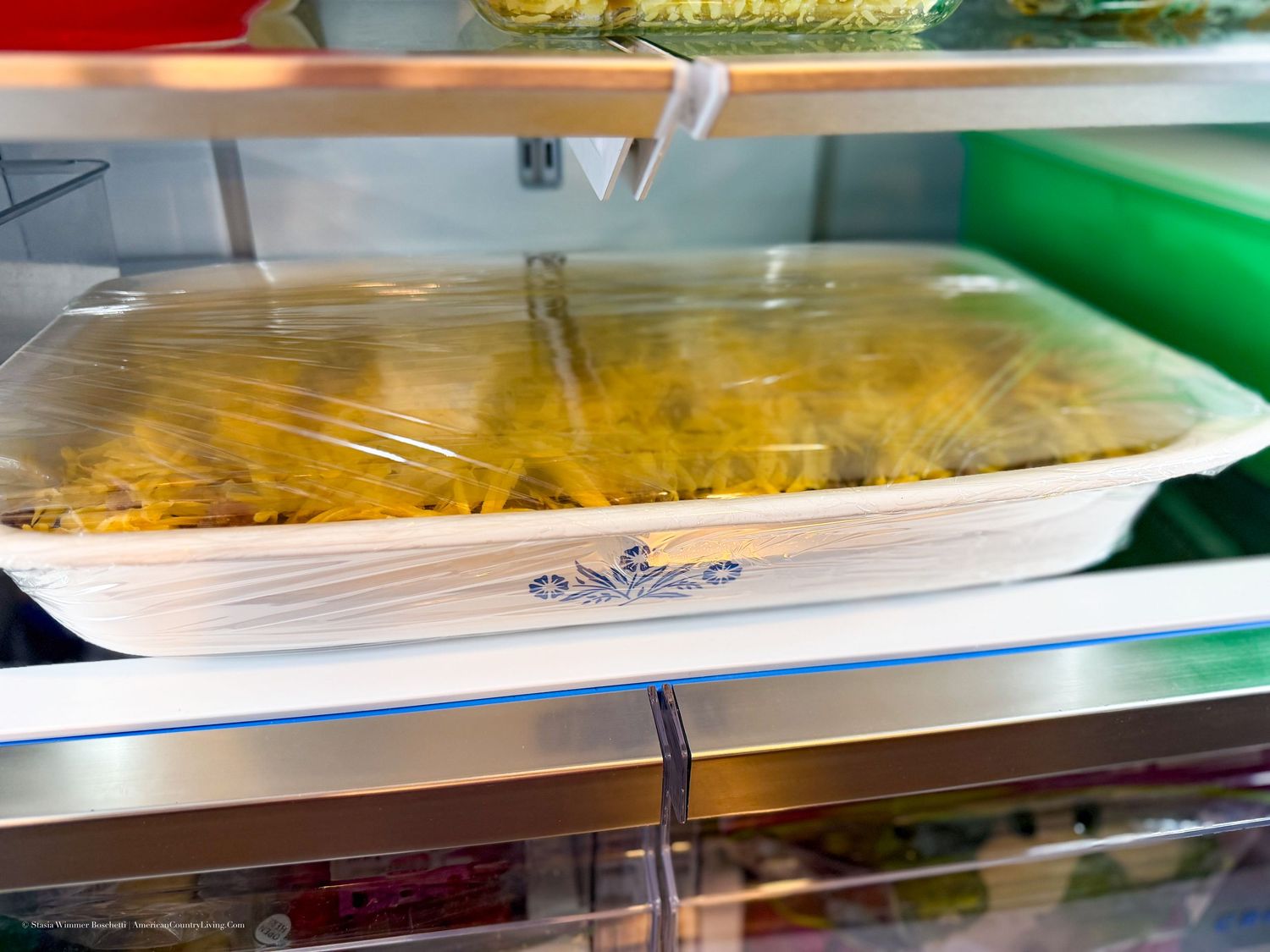
- Pour the egg mixture evenly over the casserole. Cover tightly and refrigerate overnight.
- The next morning, preheat the oven to 350°F.
- If desired, sprinkle the chopped parsley evenly over the top.
- Bake for 1 hour to 1 hour 15 minutes, or until the center is set, the top is puffed and golden brown, and a knife inserted into the center comes out clean. If the top begins to brown too quickly, loosely tent the casserole with aluminum foil during the final 15 to 20 minutes of baking.
- Let the casserole stand for 5 to 10 minutes before serving.
NOTES
- For extra richness, lightly butter the bread slices before assembling the casserole, just as the original recipe suggested.
- Serve with fresh fruit, warm crusty rolls, and plenty of hot coffee.

about the AUTHOr
Stasia Boschetti is an American culinary writer and the founder of American Country Living. With more than thirty years of experience in the kitchen, a background in catering, extensive travel, and a strong knowledge of regional food traditions, she writes about the recipes, histories, and customs that have shaped the way America cooks. She lives in the United States with her husband, family, and rescue animals.