Buttermilk-Style Homemade Pancakes
A good pancake should rise in the skillet, brown evenly around the edges, and stay tender enough to absorb butter and maple syrup without becoming heavy. That familiar American stack depends on a surprisingly small collection of ingredients and a little chemistry in the mixing bowl.
Pancakes have been cooked in various forms for centuries, long before the modern breakfast pancake appeared in American kitchens. What changed dramatically in the United States during the eighteenth and nineteenth centuries was the way cooks made batters rise. Amelia Simmons included pearlash, an early chemical leavener, in American Cookery in 1796, the first known cookbook written by an American and published in the United States. Pearlash was an important predecessor to the baking soda and baking powder that would eventually make quick breads, biscuits, cakes, and pancakes considerably easier to prepare.
This recipe uses both baking powder and baking soda. The baking powder provides dependable lift, while the baking soda reacts with the acidity created by adding white vinegar to milk. A common kitchen substitute for buttermilk uses about one tablespoon of vinegar or lemon juice for each cup of milk, followed by a brief rest before it is added to the batter.
That acidified milk also explains the name Buttermilk-Style Homemade Pancakes. Cultured buttermilk has a distinctive fermented flavor that milk and vinegar cannot completely reproduce, but the substitution works well when the goal is a tender pancake with enough acidity to support the leavening. King Arthur Baking found that milk and vinegar produced pancakes with comparable texture and browning to those made with buttermilk, although true buttermilk provided fuller flavor.
The other important detail is how the batter is mixed. Once the wet ingredients meet the flour, the goal is simply to combine them. A few lumps can remain. Continued stirring develops more gluten and can produce a pancake that is firmer and chewier than the soft interior most of us want from a breakfast stack.
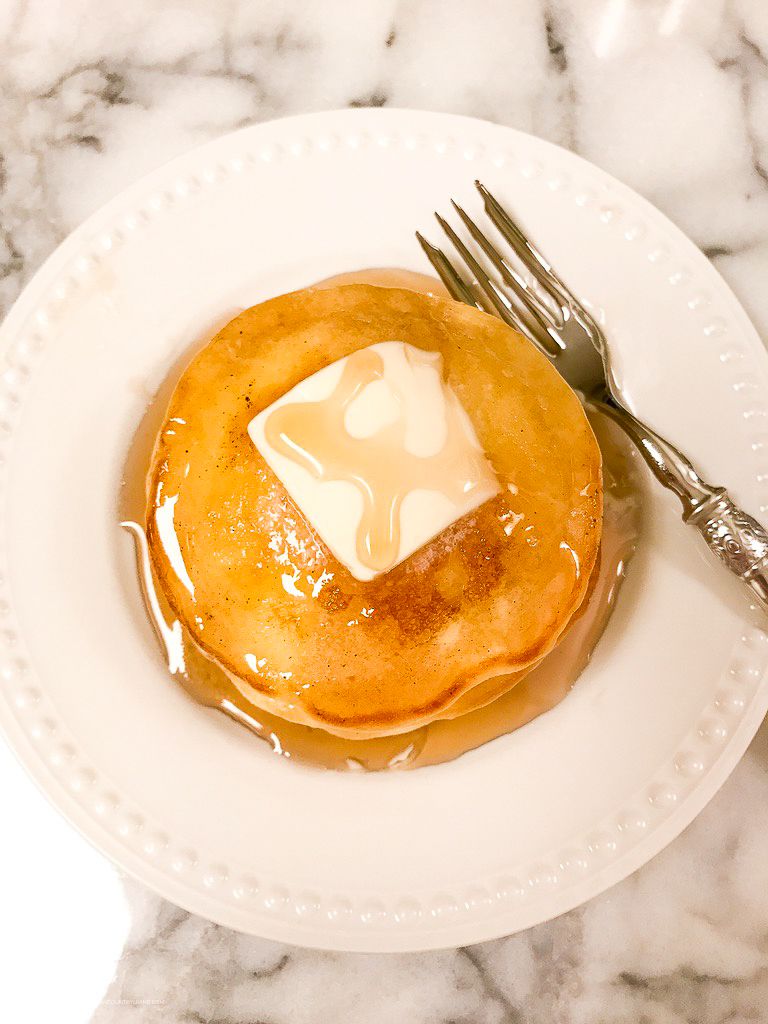
Then there is the skillet. Butter gives the pancakes those deeply browned patches around the edges, but the heat needs to stay moderate enough for the centers to cook before the surfaces become too dark. When bubbles begin to rise and break across the top and the outer edge starts to look set, the pancake is ready to turn.
I like these served exactly as you would expect: stacked while still warm, with butter melting into the surface and real maple syrup running down the sides. It is simple food, but pancakes reward good proportions and a little attention to technique. Once those details are right, there is very little reason to reach for a boxed mix.
Until next time, thank you for spending a little time with me. I hope you find a recipe to make, a story to enjoy, and something new to take into the kitchen. ♥️
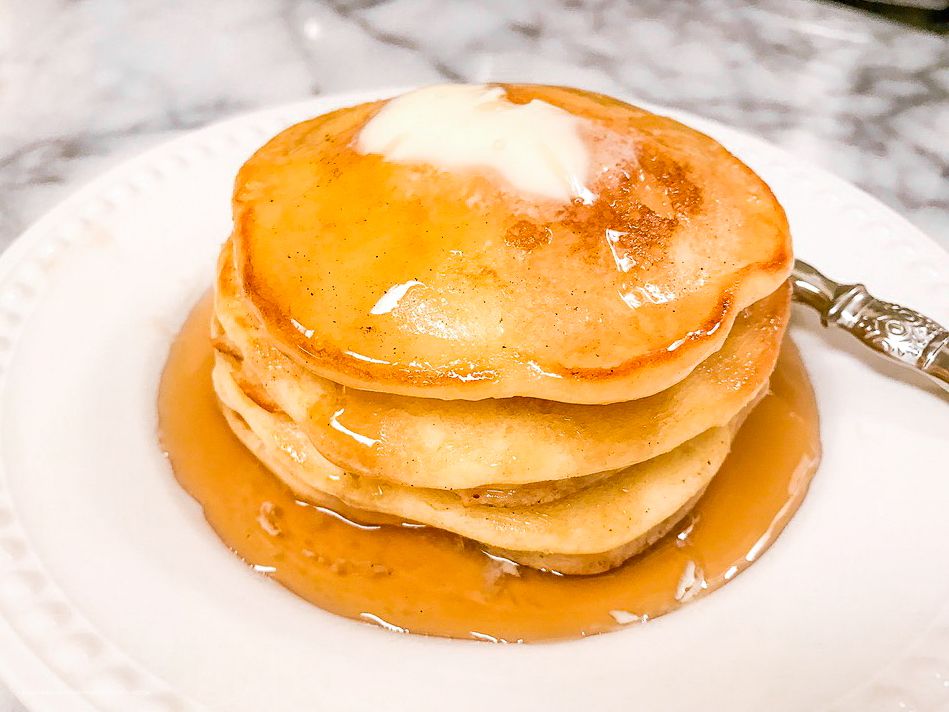
Buttermilk-Style Homemade Pancakes
PREP TIME: 10 minutes
COOK TIME: 10 minutes
SERVINGS: 8 servings
Ingredients:
1 1/2 cups milk
1 1/2 tablespoons white vinegar
2 large eggs
4 tablespoons unsalted butter, melted and slightly cooled
2 cups all-purpose flour
2 teaspoons baking powder
1 teaspoon baking soda
1 teaspoon salt
4 tablespoons granulated sugar
Unsalted butter, for the skillet
Maple syrup, for serving
Instructions:
- Combine the milk and white vinegar in a measuring cup. Stir and let stand for 5 to 10 minutes while you prepare the remaining ingredients.
- In a large mixing bowl, whisk together the flour, baking powder, baking soda, salt, and sugar.
- Add the eggs and melted butter to the milk mixture and whisk until combined.
- Pour the wet ingredients into the dry ingredients. Stir just until the flour is incorporated. A few small lumps in the batter are fine. Avoid overmixing.
- Heat a large skillet or griddle over medium heat. Add enough butter to lightly coat the cooking surface.
- Ladle the batter onto the hot skillet, leaving space between each pancake. Cook until bubbles rise and begin to break across the surface and the edges look set, about 2 to 3 minutes.
- Flip the pancakes and cook for another 1 to 2 minutes, or until the second side is golden brown and the center is cooked through.
- Serve warm with butter and maple syrup.
about the AUTHOr
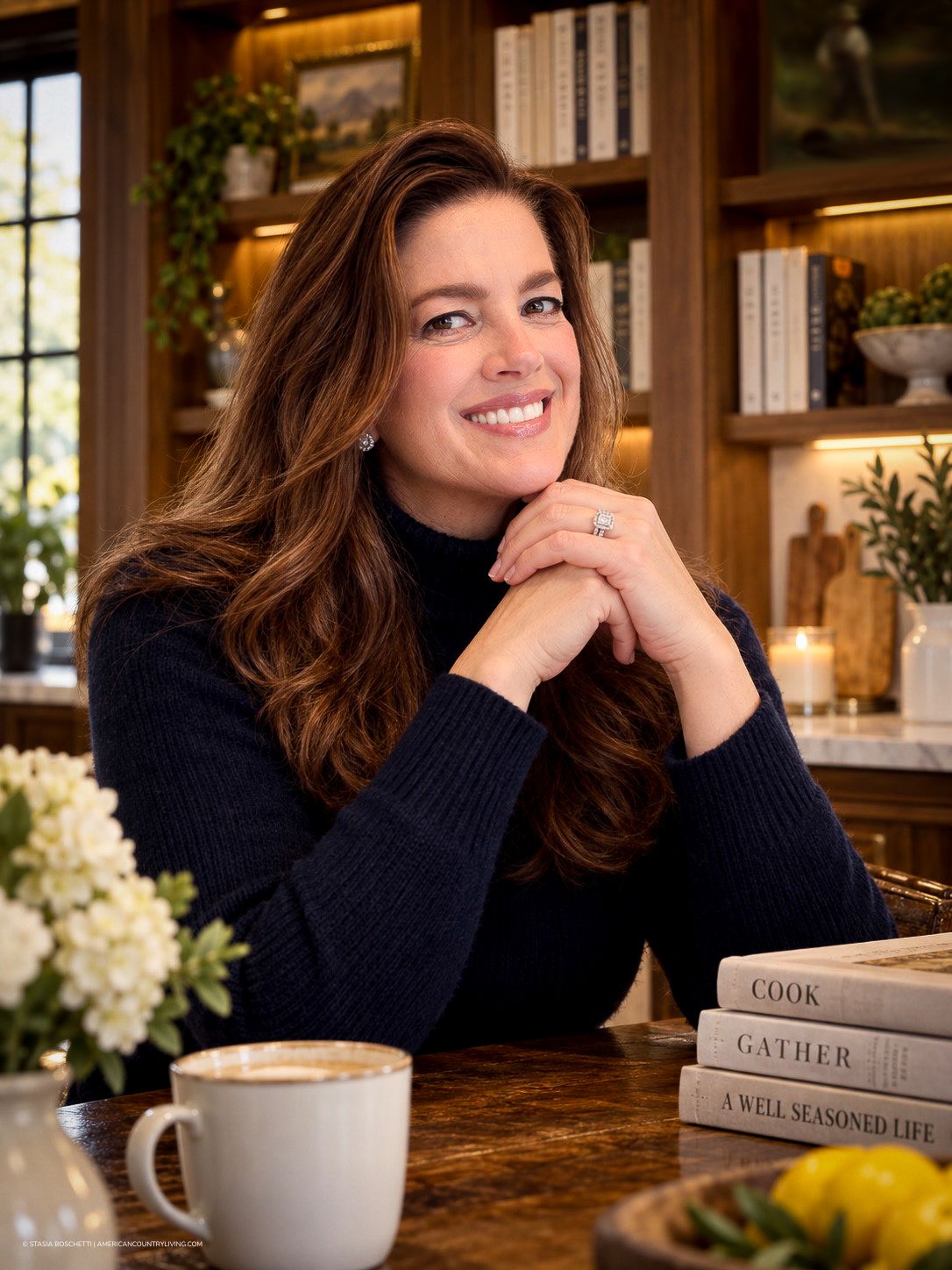
Stasia Boschetti is an American culinary writer and the founder of American Country Living. With more than thirty years of experience in the kitchen, a background in catering, extensive travel, and a strong knowledge of regional food traditions, she writes about the recipes, histories, and customs that have shaped the way America cooks. She lives in the United States with her husband, family, and rescue animals.