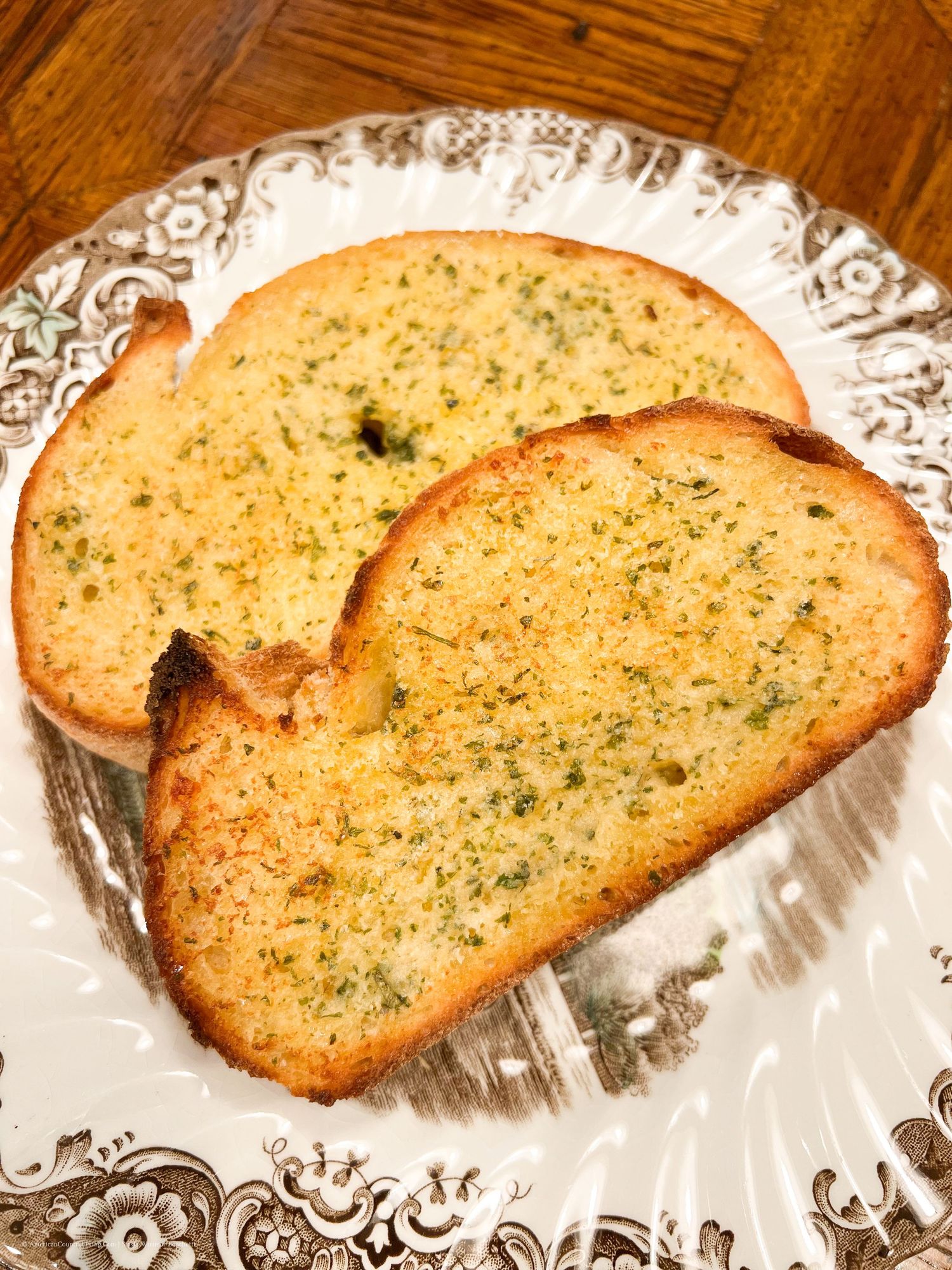
Homemade Garlic Bread
Garlic bread may arrive at the table as a side dish, but few people treat it like one once the basket starts making its way around.
The American version we know so well, a long loaf spread generously with butter, garlic, herbs, and sometimes Parmesan, belongs to the Italian-American kitchen. Its ancestry reaches back much farther to the Italian tradition of bruschetta, bread toasted over heat, rubbed with garlic, and dressed with olive oil. In Tuscany, where bruschetta has long been associated with the olive harvest, toasted bread provided a way to taste freshly pressed oil and also gave yesterday’s bread another useful turn at the table.
Garlic bread took a distinctly American direction as Italian cooking became more familiar across the United States. Millions of Italian immigrants arrived between the late nineteenth and early twentieth centuries, bringing regional cooking traditions that gradually changed as ingredients, incomes, restaurants, and American eating habits changed around them. By 1940, an American cookbook was already giving instructions for “Garlic Bread” made from French bread spread with garlic-infused butter and heated in the oven.
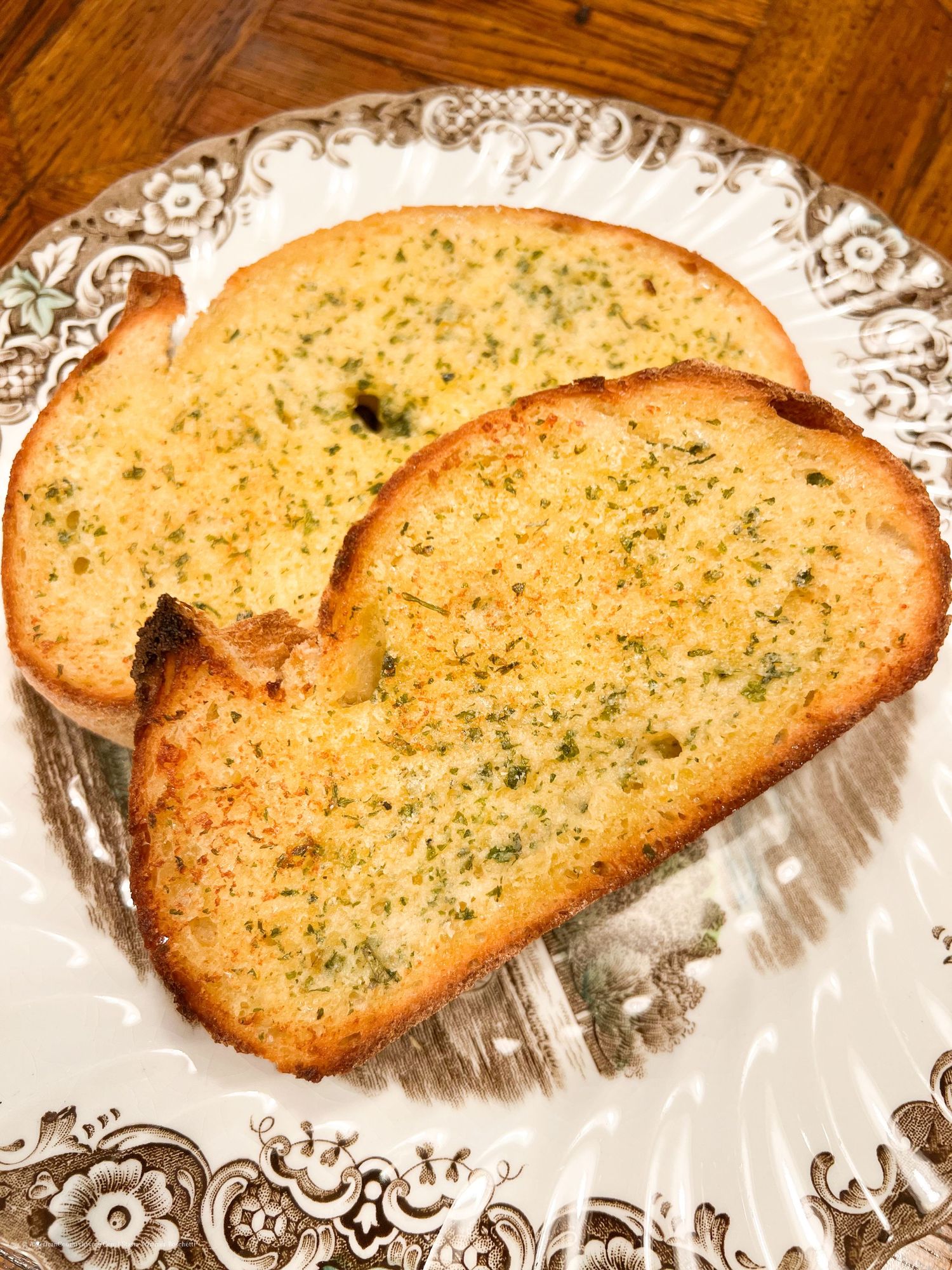
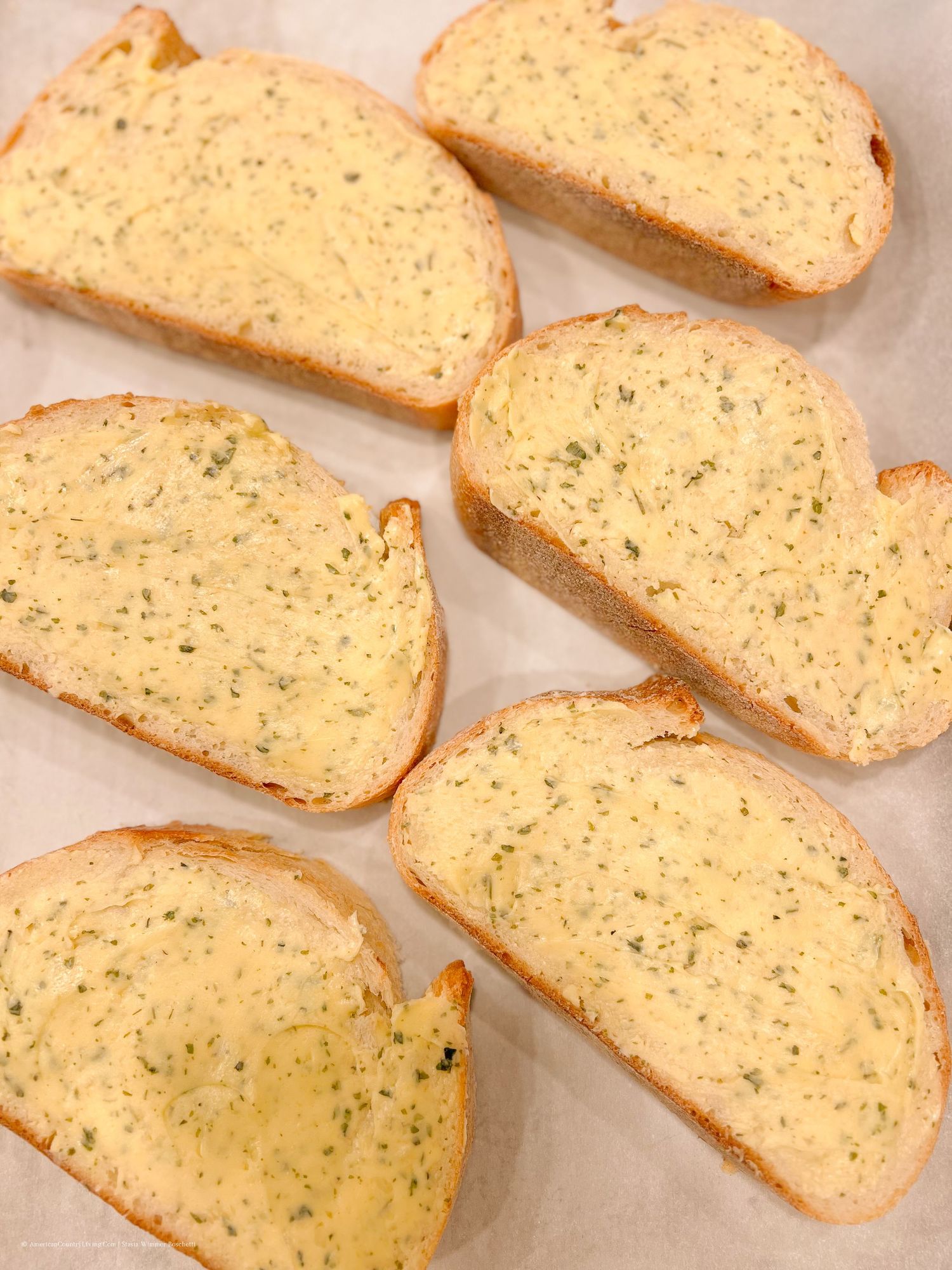
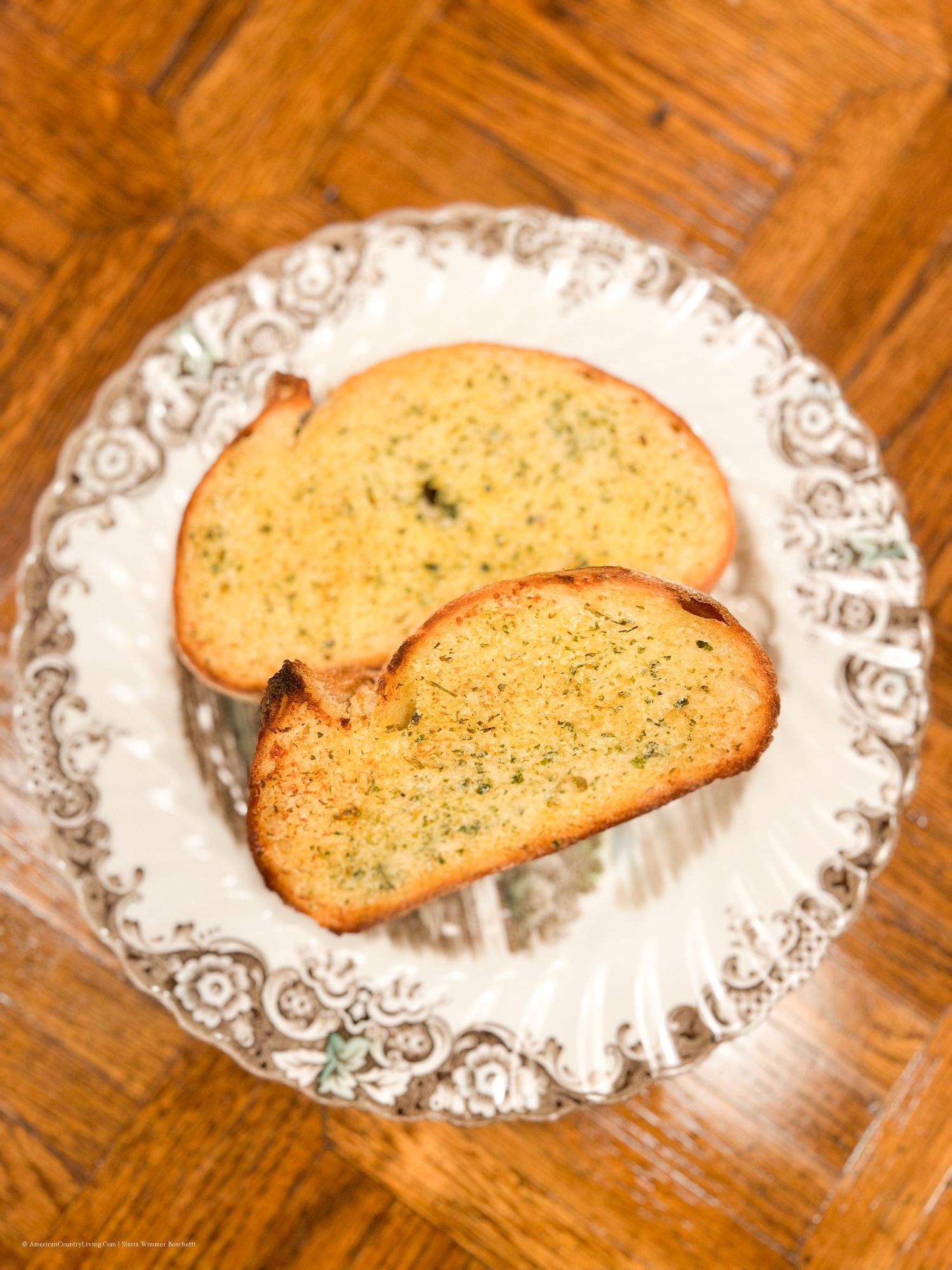
That butter tells much of the story.
Traditional bruschetta depends on olive oil. American garlic bread developed around a generous spread of softened butter, usually worked into the cut surface of a French or Italian-style loaf before baking. Garlic powder and dried herbs eventually became common pantry additions, particularly during the decades when Italian-American dishes such as spaghetti and meatballs, baked ziti, lasagna, and chicken Parmesan became standard in restaurants and home kitchens around the country.
This recipe follows that familiar American path. I use French bread because its substantial crust can take the heat of the oven while the interior stays soft enough to absorb the garlic butter. Parmesan brings a salty, nutty edge, parsley gives the finished bread a little freshness, and garlic powder distributes evenly through the butter so there are no harsh pockets of raw garlic.
The goal is a loaf with real texture. The cut surface should be golden around the edges and soaked with enough butter to remain tender underneath. Parmesan should toast slightly where it meets the hottest parts of the pan. The crust should still require a bite. Garlic bread becomes far less interesting when it is merely soft bread warmed under foil.
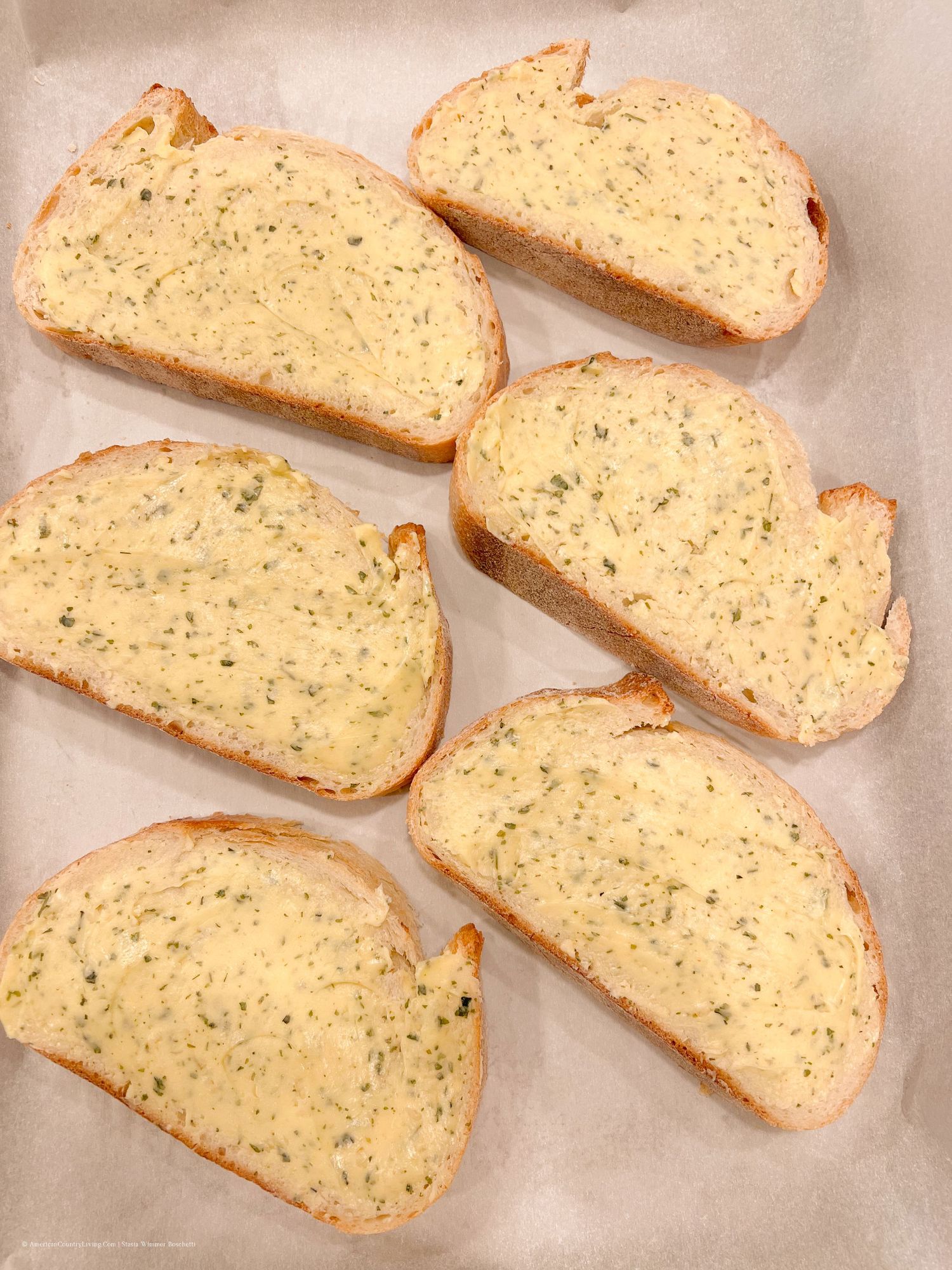
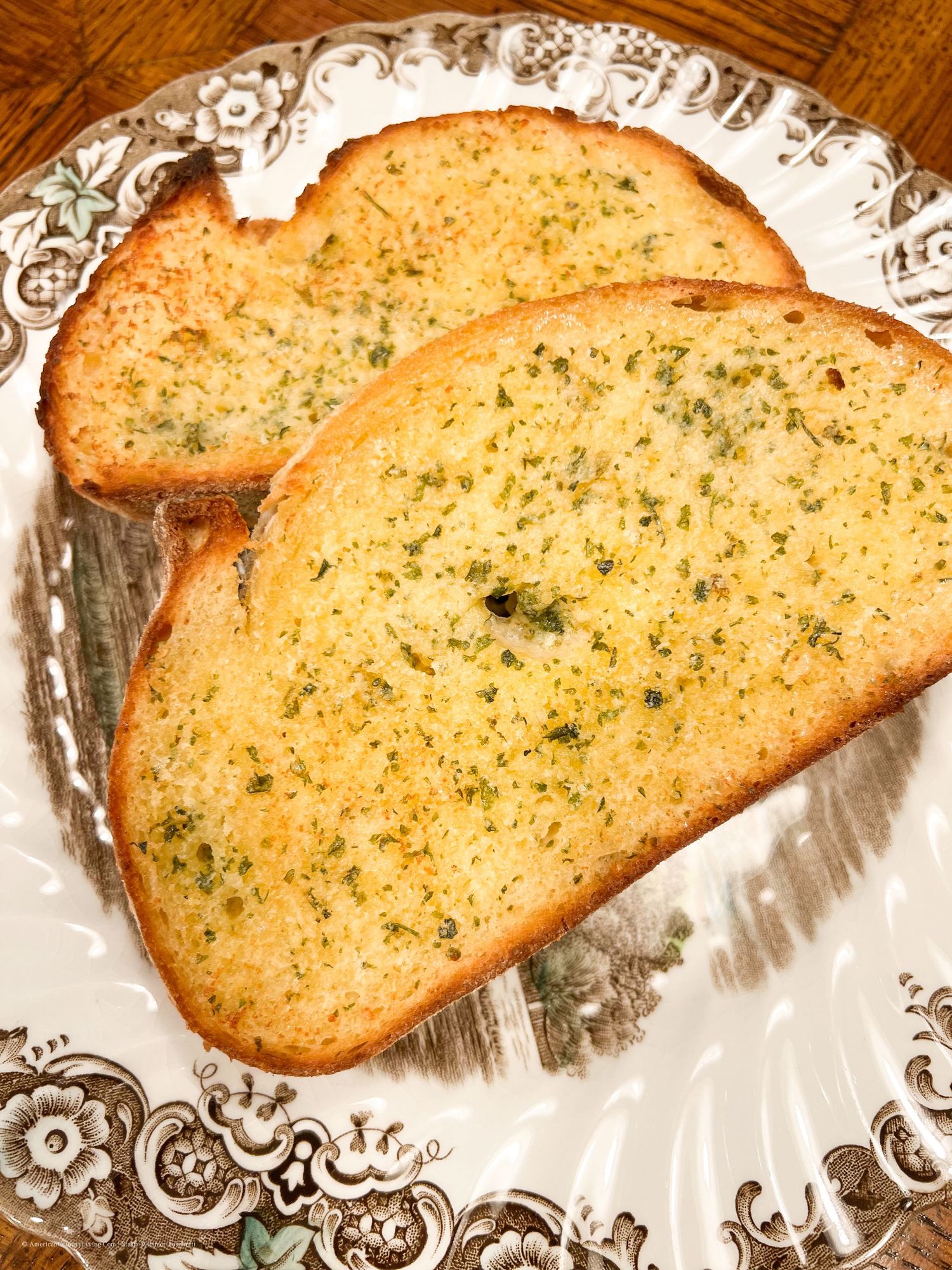
It is particularly good beside foods that leave something worth chasing around the plate. A piece torn from the loaf can catch the last streaks of tomato sauce after lasagna, soak up broth from minestrone, or go alongside a bowl of spaghetti and meatballs. Put a basket beside a baked pasta at a large family dinner and you will probably need more bread than you calculated.
There is also no reason to limit it to Italian-American food. Garlic bread works beautifully with a pot of vegetable soup, a chopped salad, roast chicken, or a casual spread of cheeses, olives, and sliced tomatoes. Cut into smaller pieces, it can even become the first thing people reach for while dinner is still making its way to the table.
Perhaps that explains its staying power in American kitchens. Garlic bread took an ancient and practical Mediterranean idea, toasted bread flavored with garlic, and followed the ingredients and habits of Italian-American cooking into something richer, softer, and unmistakably familiar. Butter, garlic, Parmesan, parsley, and a crusty loaf are hardly complicated ingredients. Put them together properly, however, and the bread basket suddenly receives a great deal more attention than anyone intended.
Until next time, thank you for spending a little time with me. I hope you find a recipe to make, a story to enjoy, and something new to take into the kitchen. ♥️
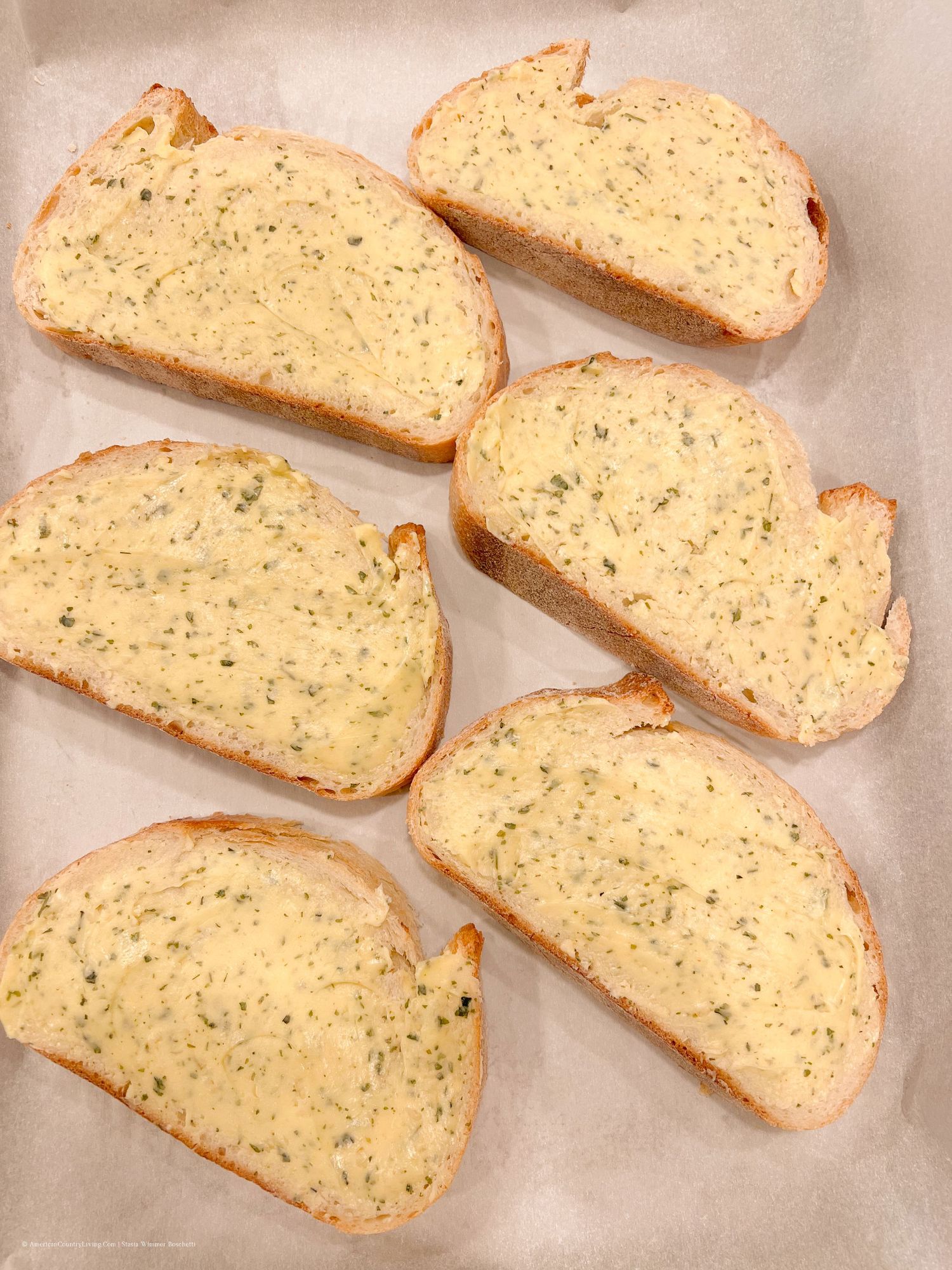
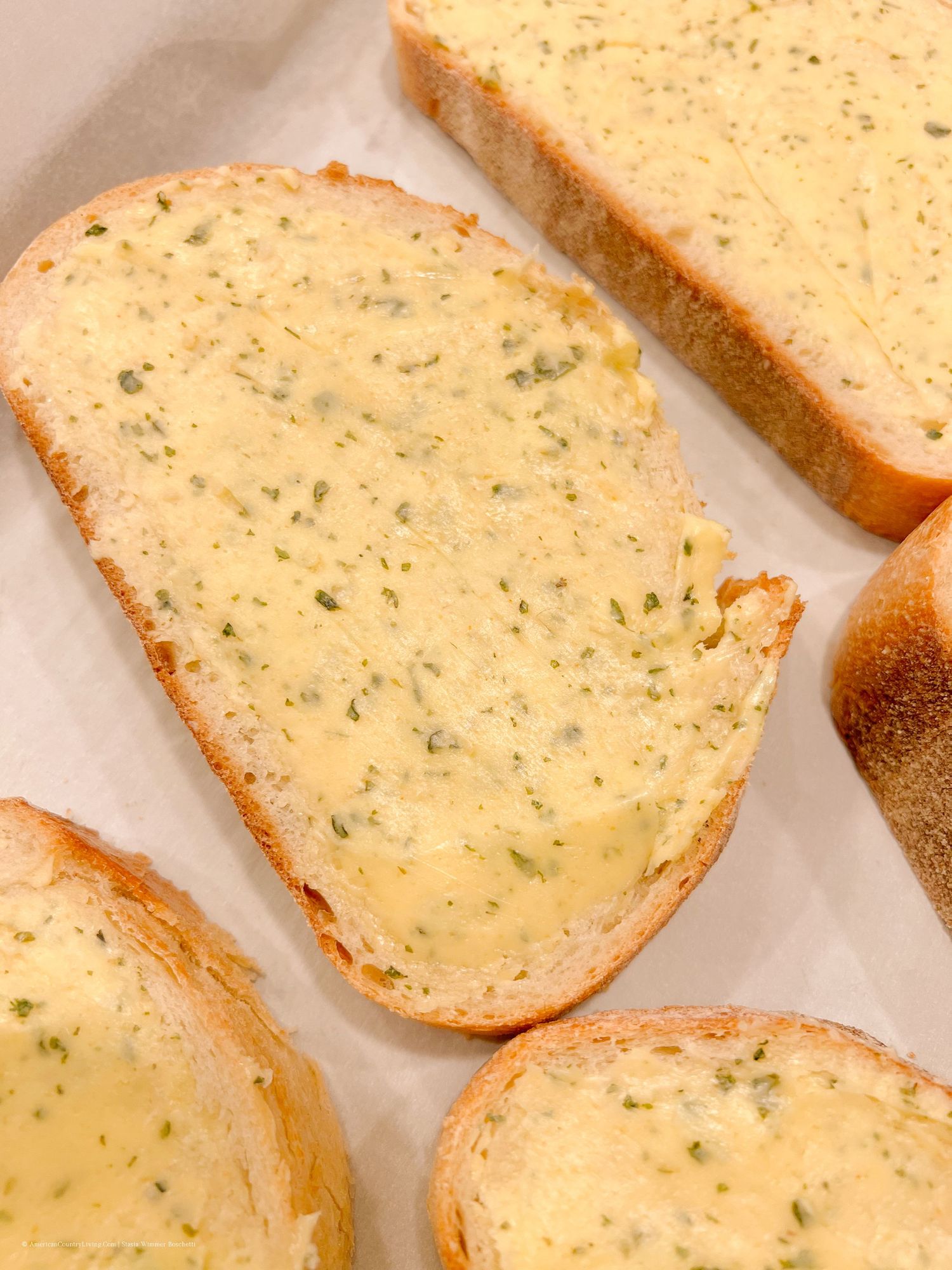
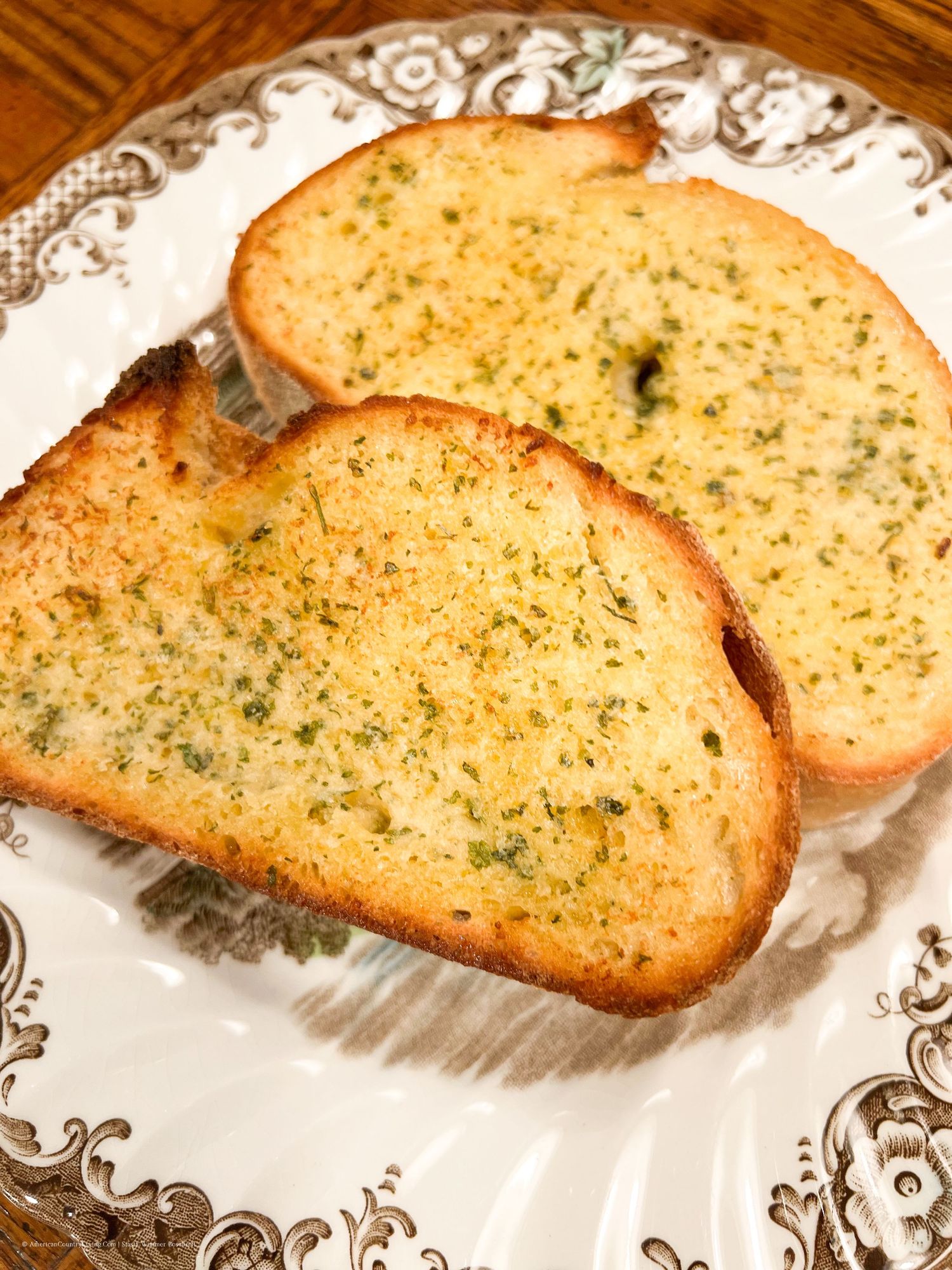
Garlic Bread Recipe
prep time: 15 minutes
broil time: 1 minute
servings: 6 servings
Ingredients:
1 loaf of French bread
2 sticks (1 cup or 8 oz) butter, softened
3 tablespoons grated Parmesan cheese
1 teaspoon garlic powder
1 tablespoon fresh parsley, chopped (or 1 teaspoon dried parsley)
Instructions:
- Prepare the Garlic Butter: In a bowl, combine the softened butter, garlic powder, parsley, and Parmesan cheese. Mix until smooth and fully incorporated.
- Prep the Bread: Preheat your oven's broiler. Cut the French bread into 1-inch thick slices and place them on a foil-lined baking sheet.
- Spread the Garlic Butter: Generously spread the garlic butter mixture on each slice of bread.
- Broil: Place the baking sheet under the broiler and broil for about 1 minute, or until the tops turn slightly golden brown. Keep a close watch to avoid burning.
- Serve: Remove from the oven and let cool for a minute before serving. Enjoy your delicious garlic bread!

about the AUTHOr
Stasia Boschetti is an American culinary writer and the founder of American Country Living. With more than thirty years of experience in the kitchen, a background in catering, extensive travel, and a strong knowledge of regional food traditions, she writes about the recipes, histories, and customs that have shaped the way America cooks. She lives in the United States with her husband, family, and rescue animals.