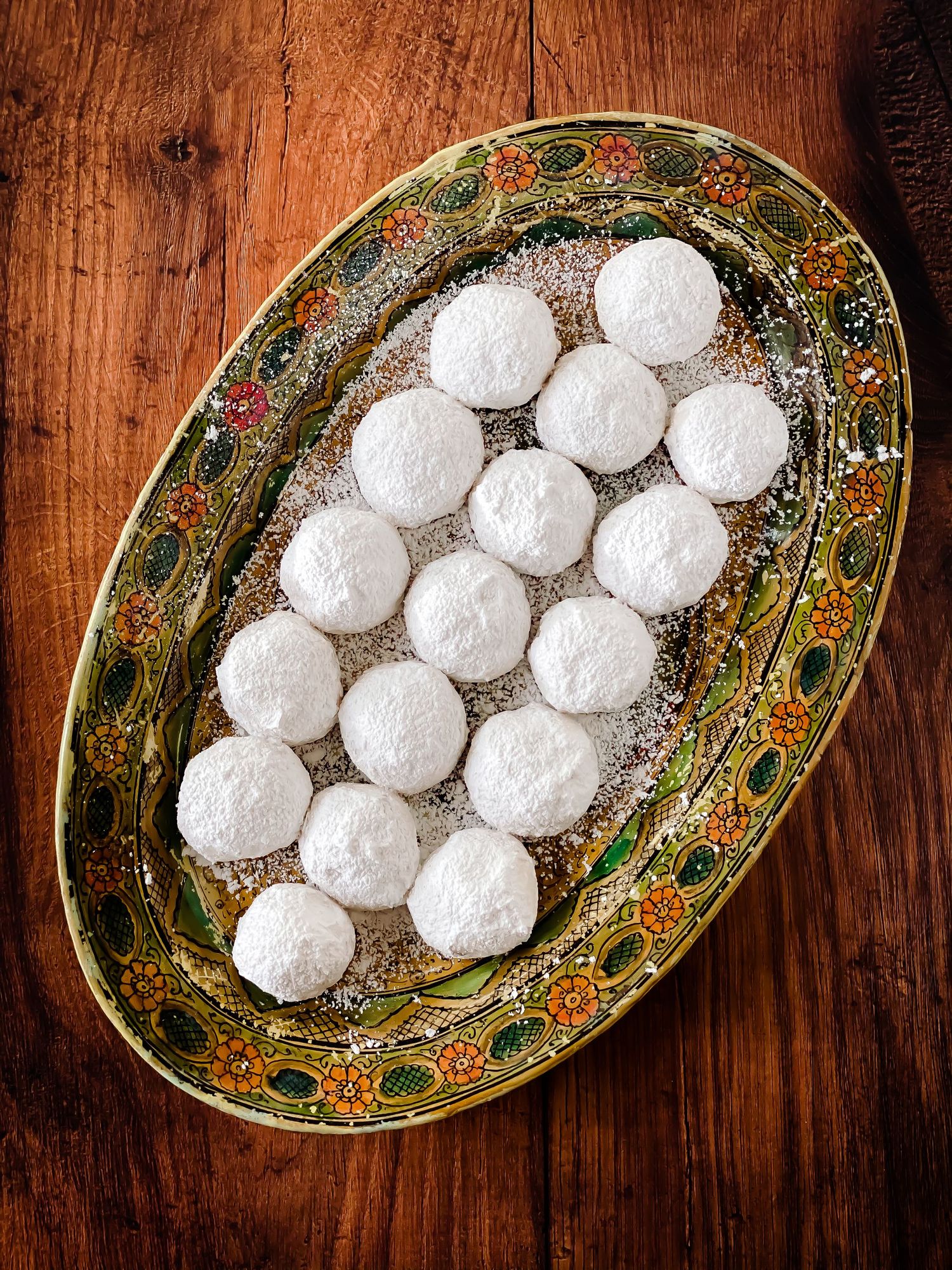
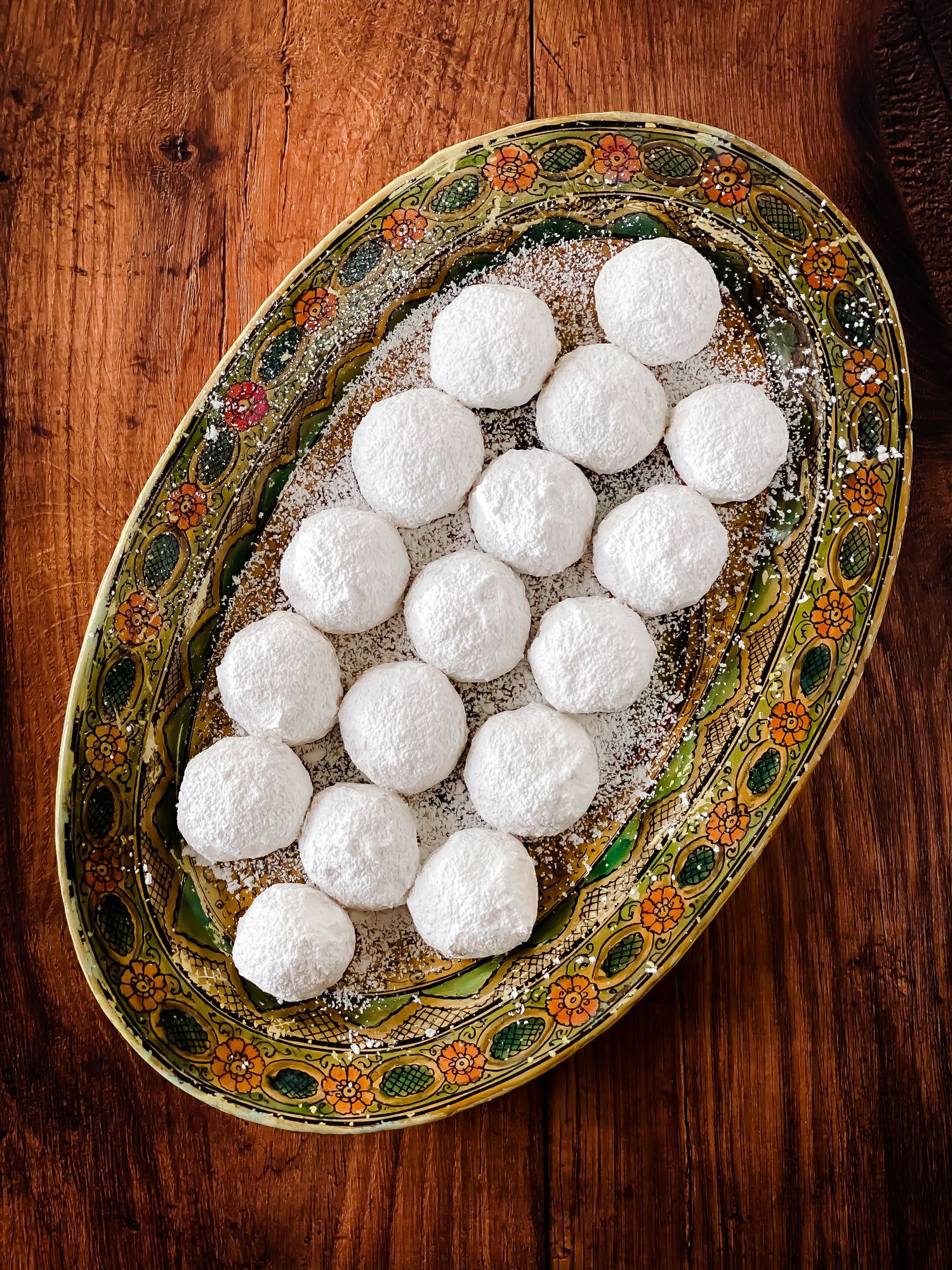
Italian Wedding Cookies
A cookie covered from top to bottom in powdered sugar tends to leave evidence behind. There will be sugar on the plate, sugar on your sweater, and very likely a small white cloud on the table after the first bite. Italian Wedding Cookies are worth the mess.
These little round cookies are built from one of baking’s oldest and most dependable combinations: butter, flour, sugar, and nuts. In this version, chopped pecans run through the dough, giving each cookie a rich, toasted flavor beneath its snowy coating of confectioners’ sugar. They are tender enough to crumble when bitten, with that sandy, almost melting texture that makes a good nut cookie so recognizable.
The name, however, deserves a little explanation.
What Americans call Italian Wedding Cookies belongs to a remarkably large family of nut-rich butter cookies found under different names in cookbooks and family recipe boxes. Russian tea cakes, Mexican wedding cookies, snowballs, butterballs, and Italian wedding cookies can all refer to closely related cookies made with butter, flour, finely chopped nuts, and powdered sugar. Food historians have had difficulty tracing this particular formula to one country, and there is little firm evidence that the familiar American cookie originated specifically as an Italian wedding confection. Similar nut cookies have been made for generations across Europe, the Mediterranean, and the Middle East.
By the middle of the twentieth century, the cookie was firmly established in American baking. Betty Crocker published its Russian Tea Cakes recipe in 1950, made with butter, powdered sugar, vanilla, flour, chopped nuts, and salt, then instructed bakers to roll the warm cookies in powdered sugar and coat them again after cooling. That formula will look immediately familiar to anyone who has made the cookies we now commonly call Italian Wedding Cookies.
The changing names tell part of the story of American home cooking. Recipes arrived with immigrants, crossed regional and family lines, appeared in community cookbooks, were clipped from newspapers, and were copied onto index cards.
Along the way, ingredients changed according to what a household used. Almonds might appear in one family’s version, walnuts in another, and pecans in kitchens where pecans were plentiful and familiar.
That last variation is the one I use here.
Pecans give these cookies a particularly American character. Their buttery flavor works beautifully with a dough that contains very little to distract from the nuts themselves. Toasting them first is worth the few extra minutes. Heat deepens their flavor and brings their natural oils forward, so the pecans taste richer once they are folded into the butter dough.
Then there is the powdered sugar, which does considerably more than make the cookies look like snowballs.
The first coating goes on while the cookies are still warm. Some of that sugar clings to the butter-rich surface and begins to settle into the exterior. A second coating after cooling builds the familiar white finish. American recipes for this style of cookie have used the warm-then-cool coating method for decades, including Betty Crocker’s 1950 version.
I like them at Christmas, when a plate of white cookies looks right at home beside gingerbread, spritz, thumbprints, and all the other tins that begin filling American kitchens in December. Still, there is no reason to confine them to one month of the year. They are especially good beside strong coffee, when the bitterness of the coffee cuts through the butter and sugar, and they hold well enough to make a fine cookie for a shower, luncheon, or afternoon visit.
Their wedding association may have helped give them an elegant name, but their staying power comes from something much more practical. A handful of familiar pantry ingredients produces a cookie with real texture and flavor, and the recipe is simple enough to be made year after year without fuss.
Whatever name appears on the recipe card in your family, you may recognize the cookie the moment you bite into one: buttery pecans, a tender crumb, vanilla, and enough powdered sugar to make reaching for a napkin inevitable.
Until next time, thank you for spending a little time with me. I hope you find a recipe to make, a story to enjoy, and something new to take into the kitchen.♥️
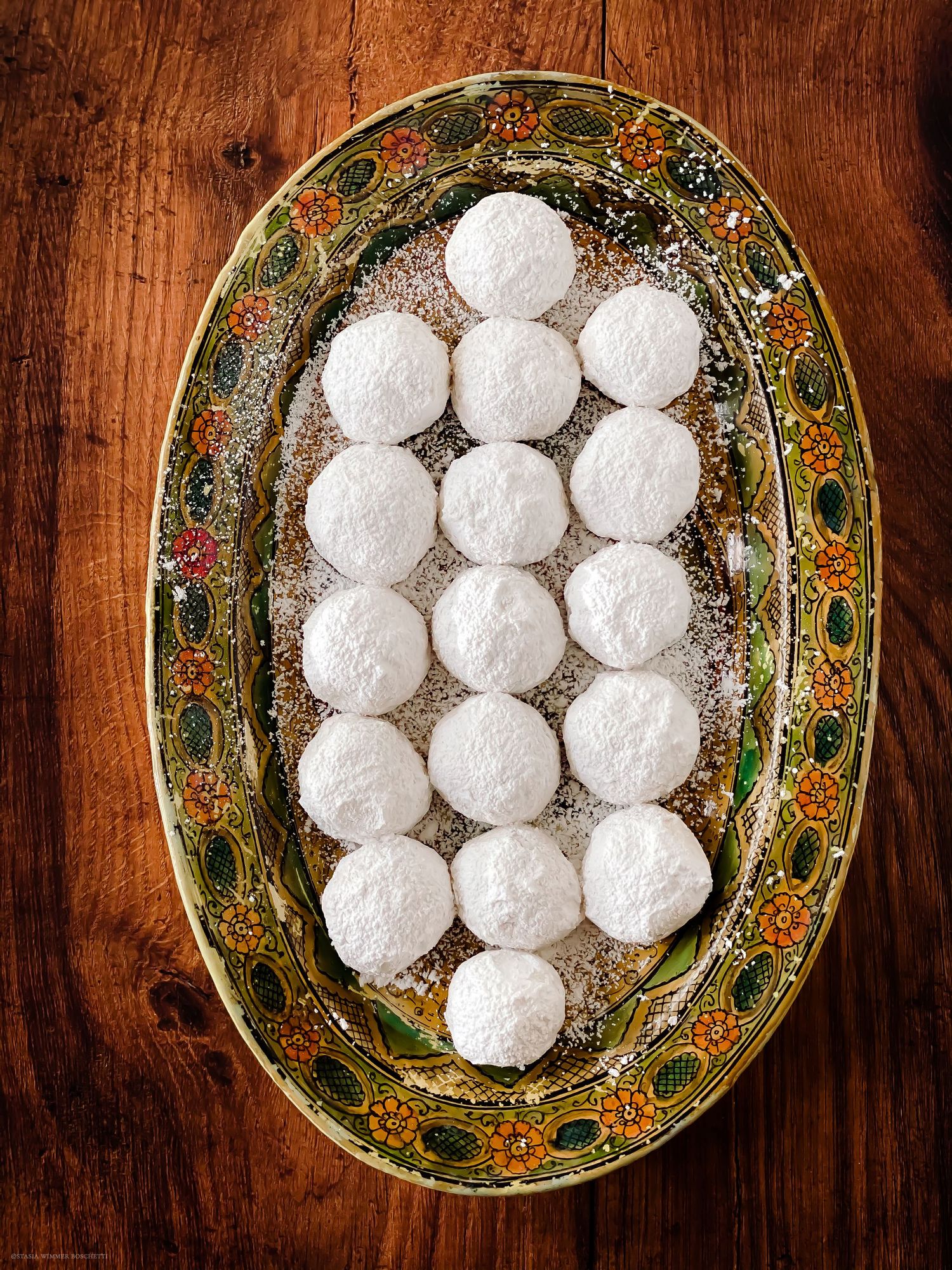
Italian Wedding Cookies
PREP TIME: 15 MINUTES
Chill Time: 1 hour
COOK TIME: 17 MINUTES
OVEN TEMPERATURE: 350°F
SERVINGS: 3 dozen
Ingredients:
1 cup unsalted butter (2 sticks), softened (room temperature)
3/4 cup powdered sugar, sifted
2 teaspoons vanilla extract
2 cups all-purpose flour, sifted
1/2 teaspoon salt
1 cup pecans, toasted and chopped
Coating Sugar
1 1/2 cups powdered sugar
Instructions:
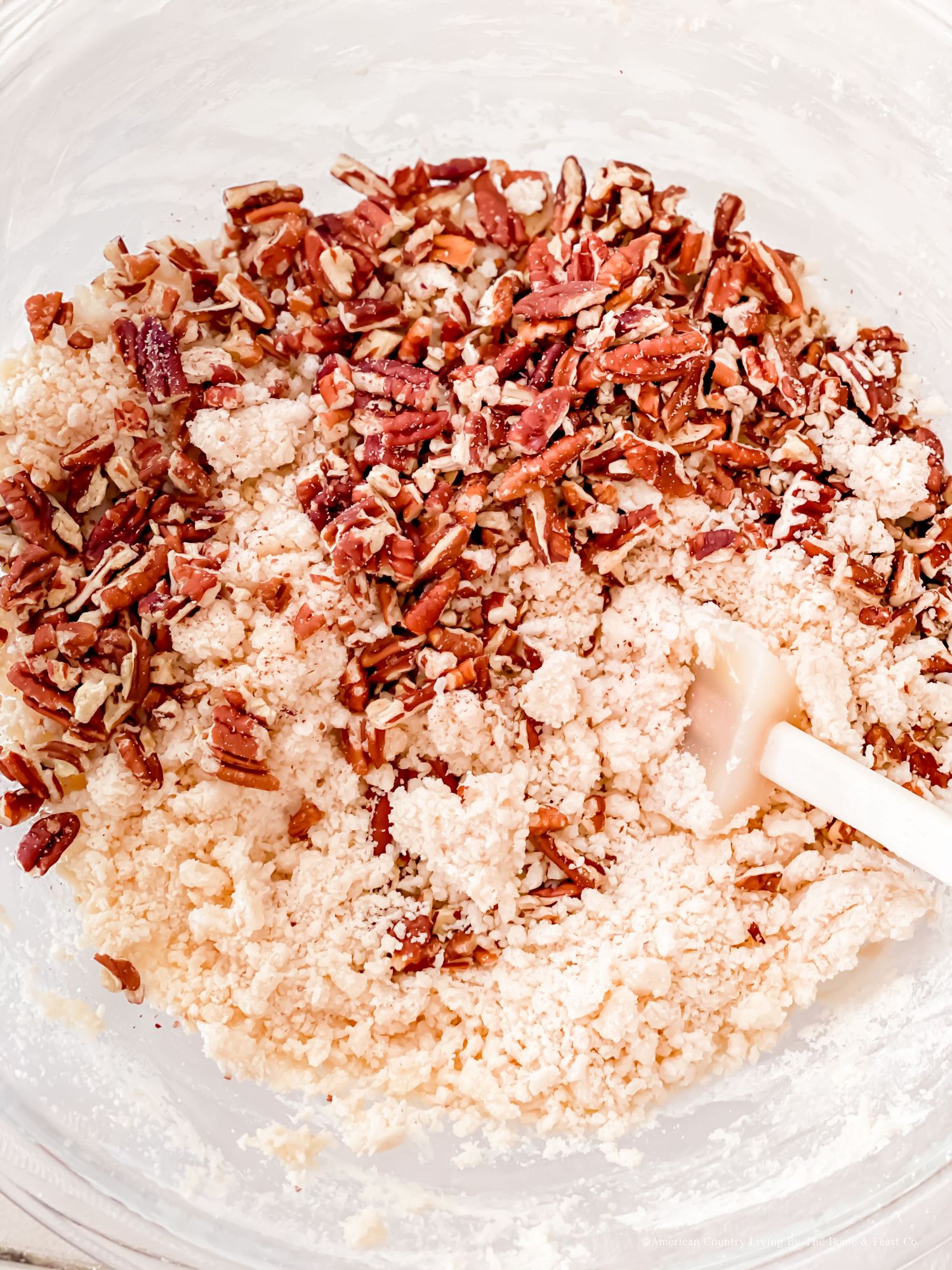
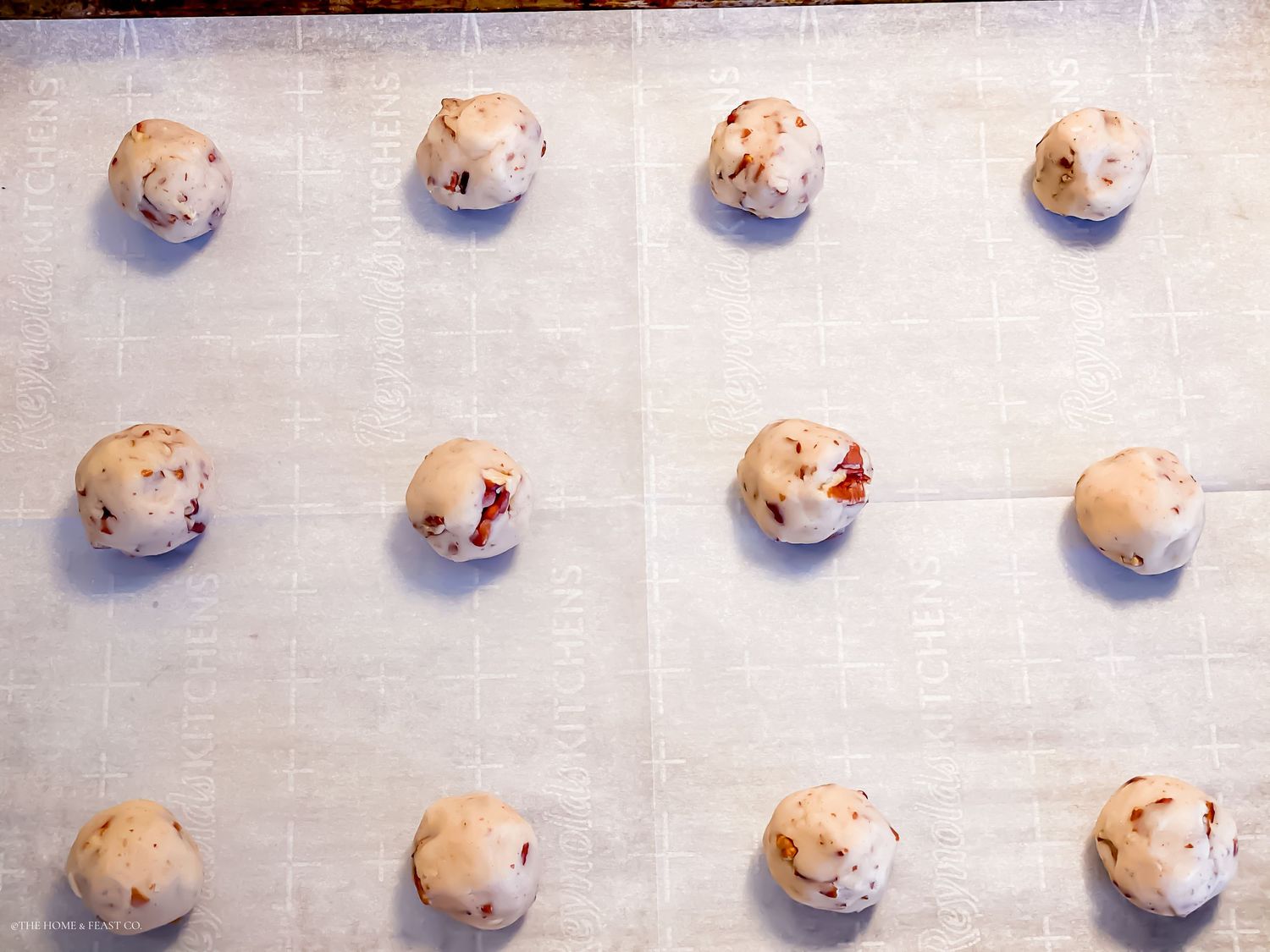
- In a large mixing bowl cream the butter and powdered sugar with an electric mixer. Add vanilla extract, mix until combined. Add the flour and salt and mix until combined. Stir in the chopped pecans. Using a small ice cream scoop or tablespoon, scoop out dough and roll into a small ball, place on a foiled lined tray or baking sheet. Continue until all the cookie dough has been rolled into tablespoon sized balls. Cover with plastic wrap and chill in the refrigerator for one hour.
- Preheat the oven to 350°F. Line a baking sheet with parchment paper and place 12 or so chilled dough balls on a sheet. Bake for 17 minutes or until the bottom and top are lightly browned. Remove from the oven and let cool for about a minute or two, but not too long before your first roll through the powdered sugar.
- When out of the oven and warm but touchable, roll each cookie into the powdered sugar, place on the cooling rack. They will be sticky which is what you want. Wait a few minutes and while still warm roll in the powdered sugar for a second time, place on the cooling rack. They will still be slightly sticky, but not as much as the first roll through the powdered sugar. Once cookies are completely cool, roll in the powdered sugar for a third and final time. The powdered sugar will coat the cookie perfectly, but won’t be sticky at all. Place on the cooling rack until ready to plate.
- Repeat baking and coating process with remaining cookies.
Recipe Notes
- While the oven was preheating and my cookie dough balls were chilling in the refrigerator, I prepared three baking sheets with parchment paper. I left the cookie dough balls in the refrigerator until ready to place on a baking sheet and into the oven. Keeping the balls cold until ready to bake helps keep the ball like shape.
- Since each cookie sheet takes about 17 minutes to bake, I put the next batch in to bake while I’m rolling the previous batch in the powdered sugar.
- Toast pecans on the stove in a skillet over medium heat for about 2-3 minutes. They can burn quickly, so be careful. Use a wood spoon and keep the nuts moving in the skillet. Remove them to the plate to cool. If you used chopped pecans to begin with then skip the next step. If you used halved pecans, once cooled, place into a large baggie and use the back of a wood spoon to break into chopped pieces.

about the AUTHOr
Stasia Boschetti is an American culinary writer and the founder of American Country Living. With more than thirty years of experience in the kitchen, a background in catering, extensive travel, and a strong knowledge of regional food traditions, she writes about the recipes, histories, and customs that have shaped the way America cooks. She lives in the United States with her husband, family, and rescue animals.