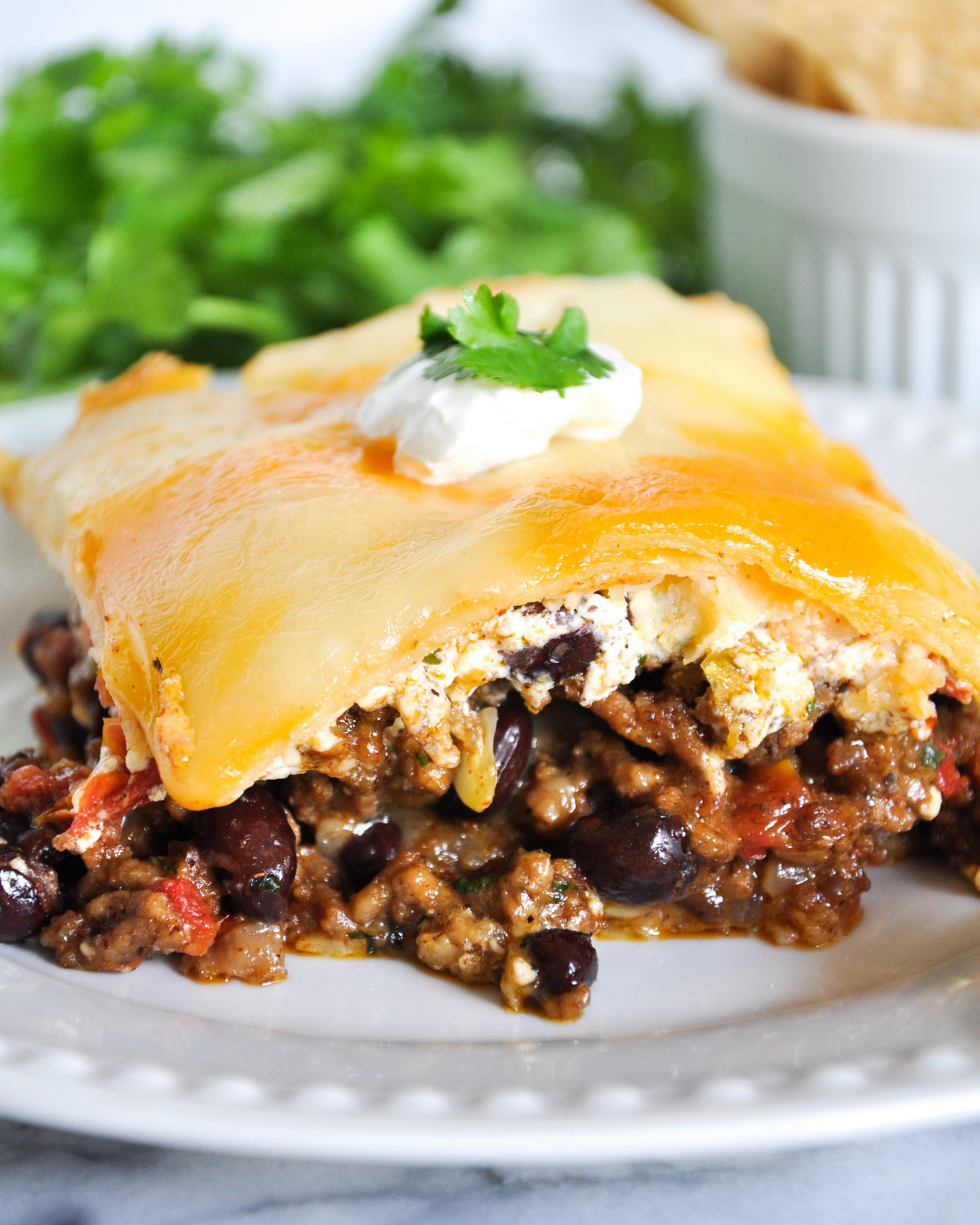
Tex-Mex Casserole
Few things announce dinner quite like a baking dish coming out of the oven beneath a browned, bubbling layer of Monterey Jack and sharp cheddar.
This Tex-Mex Casserole is hearty, generous, and built from ingredients that have become familiar in American kitchens: seasoned ground beef, corn tortillas, black beans, tomatoes and green chiles, sour cream, cilantro, and plenty of cheese. It feeds a table easily, travels well when dinner is happening somewhere else, and has the particular advantage of being assembled in one substantial pan.
Its name also belongs to a regional American cuisine with a history much deeper than the shorthand meaning of tacos and melted cheese that the term sometimes carries today.
Tex-Mex grew from the cooking of Texas and northern Mexico, shaped over centuries by Indigenous, Spanish, Mexican, Tejano, and later American influences. Texas remained part of New Spain and then Mexico before becoming an independent republic in 1836 and joining the United States in 1845. Food, of course, never observed those political borders as neatly as maps did. Ingredients, cooking methods, families, ranching traditions, and trade continued to move through the region.
Even the expression “Tex-Mex” had another life before anyone regularly used it for dinner. “TexMex” was used as an abbreviation for the Texas and Mexican Railway, which was chartered in the nineteenth century. By the early twentieth century, the term was also being applied to Texans of Mexican heritage, and eventually it became attached to the regional food itself.
San Antonio played an especially important role in bringing that cooking before a broader American audience. Beginning in the late nineteenth century, the women remembered as the Chili Queens sold bowls of chili con carne from stands in the city’s plazas. Their inexpensive meals drew residents, travelers, and tourists, helping establish San Antonio as one of the great centers of what would eventually be recognized as Tex-Mex cooking. Chili con carne even appeared at Chicago’s 1893 World’s Columbian Exposition at a San Antonio Chili Stand.
The cuisine continued developing in restaurants across Texas. Combination plates of enchiladas, beans, rice, sauces, and cheese became familiar restaurant fare. Nachos joined the story in 1943 just across the Texas border in Piedras Negras, Mexico, when Ignacio “Nacho” Anaya assembled fried tortilla pieces with cheese and jalapeños for a group of women visiting from nearby Eagle Pass. The dish quickly crossed the border and entered the American repertoire.
For years, much of this food was simply called Mexican food in the United States. The distinction became more widely discussed after Diana Kennedy published The Cuisines of Mexico in 1972 and drew attention to the differences between the regional cooking of Mexico and the Mexican-American dishes that had developed north of the border. In the process, Tex-Mex increasingly came to be recognized by its own name and as a regional American cuisine with a history of its own.
A casserole like mine comes considerably later in that story. It belongs to the American home-cooking habit of taking recognizable flavors and arranging them in a baking dish large enough to feed several people.
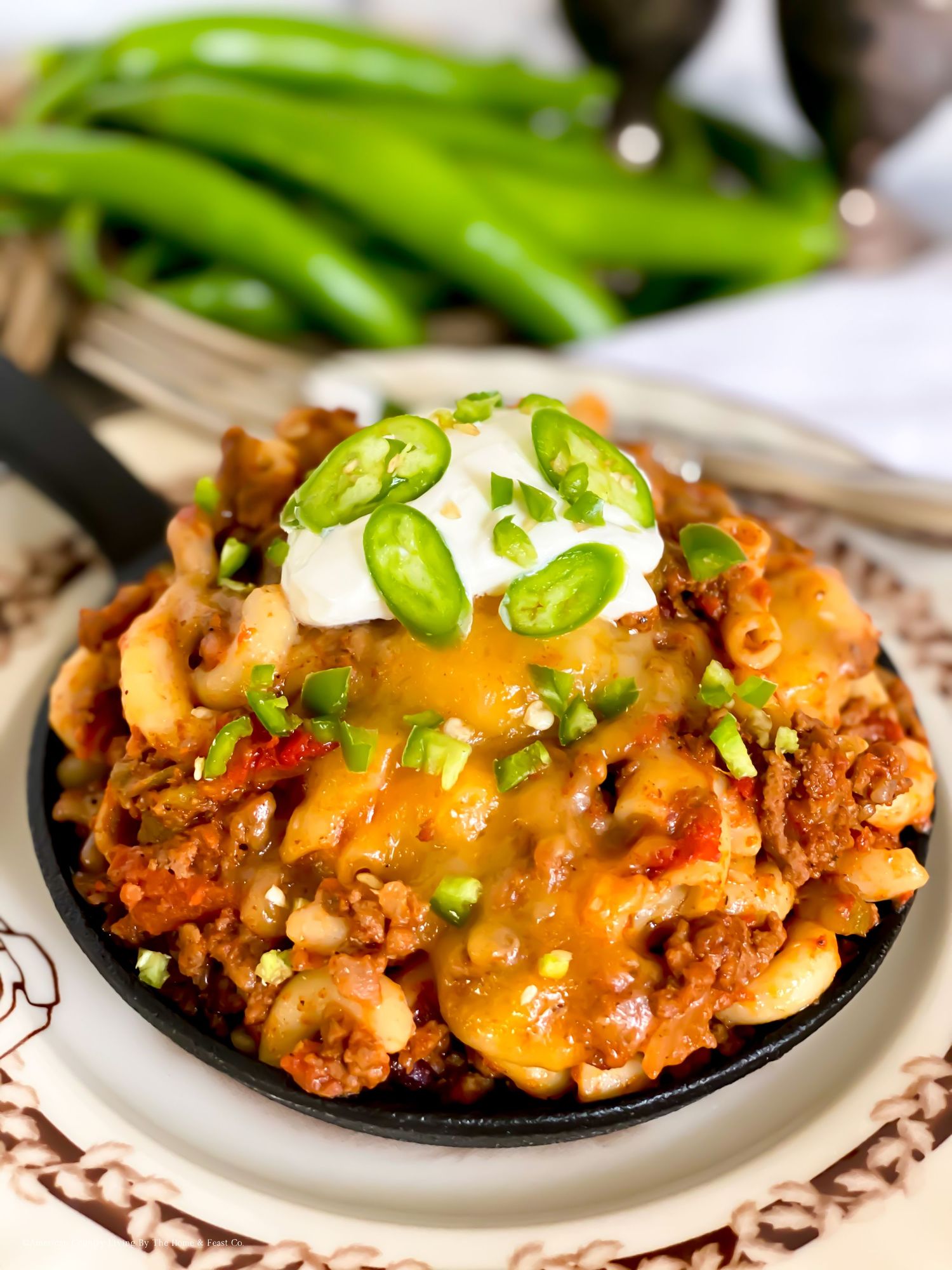
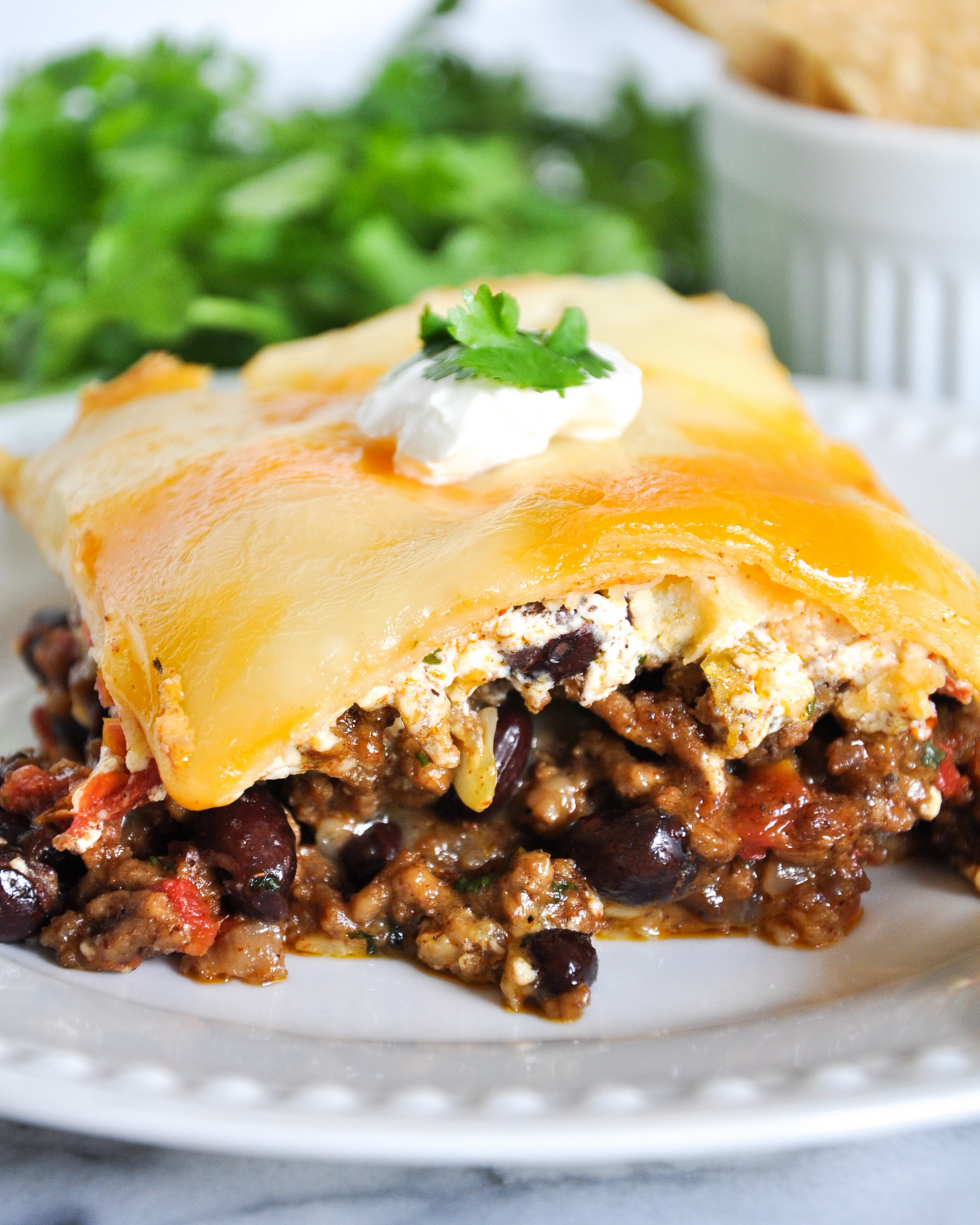
Corn tortillas form the layers here, which gives the casserole more character than using flour tortillas. Between them goes seasoned ground beef cooked with onion and garlic, black beans, tomatoes with green chiles, fresh cilantro, sour cream, Monterey Jack, and sharp cheddar.
That combination produces exactly what I want from this dish: beef and beans for substance, chiles for warmth, corn tortillas that soften into the filling while retaining their flavor, and enough cheese to hold everything together.
I lightly coat the tortillas with melted butter before layering them into the baking dish. Once baked beneath the filling and cheese, they become tender around the center of the casserole while the exposed portions along the top and edges take on a little more color.
There is also a practical point worth observing with the beef. Once it has browned, drain away excess fat before adding the rest of the filling ingredients. Two pounds of ground beef can release quite a bit, and leaving all of it behind can make a finished casserole heavy and greasy.
The same principle applies to the canned ingredients. I drain and rinse the black beans before adding them. The tomatoes and green chiles bring their own moisture and acidity, so there is already enough liquid working its way through the layers as the casserole bakes.
Then comes the cheese, and this is not the place to be timid with it.
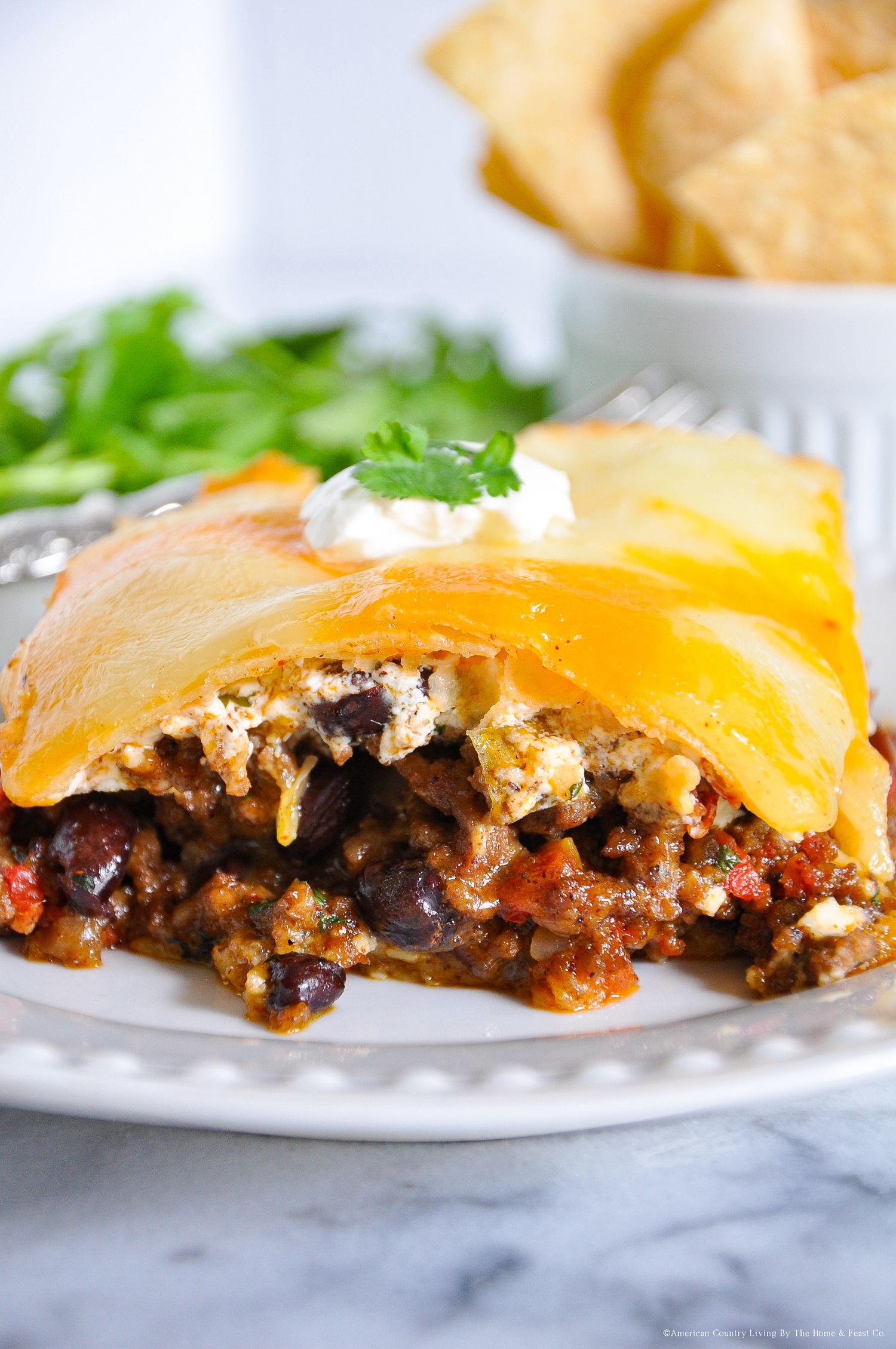
Monterey Jack melts smoothly and gives the casserole that soft, cohesive texture you want when cutting into the pan. Sharp cheddar brings more pronounced flavor. I like the two together because each does a different job.
After baking, I give the casserole a few minutes to settle before cutting it. Straight from the oven, the cheese and filling are still moving beneath the tortillas. A short rest allows the layers to hold together, which means more casserole reaches the plate and less remains behind on the serving spatula.
This is substantial enough to serve as dinner by itself, although I usually like something fresh alongside it. A crisp green salad, sliced avocado, tomatoes dressed with lime, or a simple cabbage slaw provides a good counterpoint to the beef, sour cream, and melted cheese.
And that may be the best way to understand a casserole like this. It does not claim to be an old border recipe handed down unchanged through generations. It is an American home-kitchen interpretation built around flavors that developed from the long culinary exchange between Texas and Mexico.
That history deserves to be told accurately, because Tex-Mex has earned its place at the American table.
My casserole simply gives us a very good reason to put a baking dish there, too.
Until next time, thank you for spending a little time with me. I hope you find a recipe to make, a story to enjoy, and something new to take into the kitchen.♥️
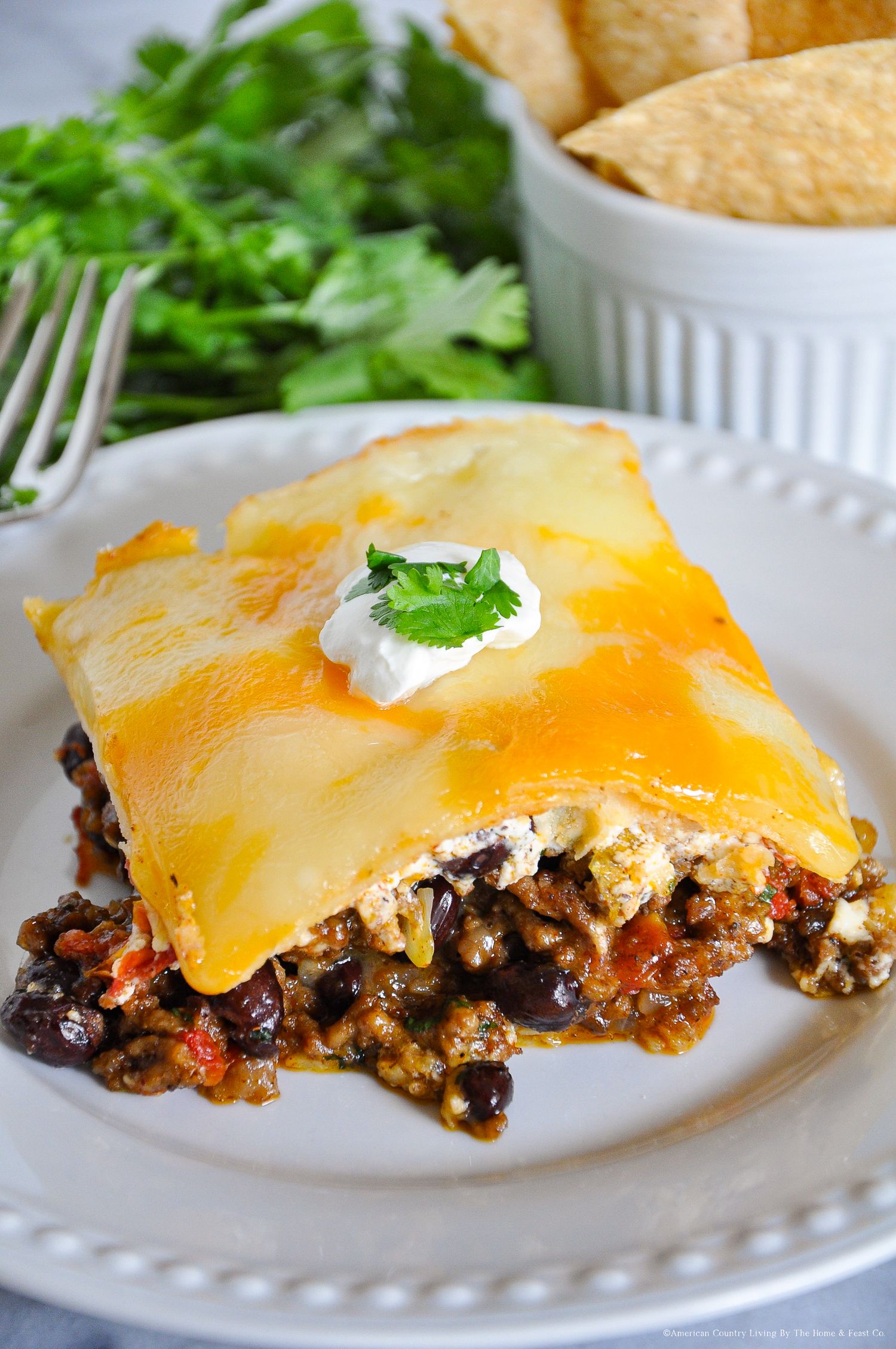
Tex-Mex Casserole
PREP TIME: 20 MINUTES
COOK TIME: 30 MINUTES
Oven temperature: 350°F
SERVINGS: 6 SERVINGS
Ingredients:
12 corn tortillas
2 pounds ground beef
1 large onion, chopped
4 cloves of garlic, minced
4 tablespoons of taco seasoning
1 (15 ounce) can black beans, drained and rinsed
1 (15 ounce) can diced tomatoes with green chilies, drained
1/2 cup fresh cilantro, roughly chopped
16 ounce sour cream
16 ounces Monterey jack cheese, shredded
16 ounces sharp cheddar cheese, shredded
1/4 cup butter, melted
Instructions:
- Preheat the oven to 350°F.
- In a large skillet over medium heat brown meat until almost cooked throughout, drain off any extra fat. Add diced onion and sauté until translucent and soft, add garlic cooking for just a few minutes, add taco seasoning and simmer on low until meat is cooked throughout, mixing well. Remove from heat, add black beans, tomatoes with green chilies, and cilantro stir together until combined.
- To assemble, very lightly coat both sides of the tortillas with melted butter and set aside. Begin with lining the bottom of a large baking dish with six tortillas. Next, spoon half the Tex-Mex mixture on top the tortillas, sprinkle with half of the Monterey jack and cheddar cheese, top with the remaining Tex-Mex mixture, cover with the sour cream, layer with the remaining six tortillas, and then top with remaining Monterey jack and cheddar cheese.
- Bake uncovered at 350°F for 30 minutes or until bubbling throughout and the cheese has melted. Cool slightly and serve. Enjoy!

about the AUTHOr
Stasia Boschetti is an American culinary writer and the founder of American Country Living. With more than thirty years of experience in the kitchen, a background in catering, extensive travel, and a strong knowledge of regional food traditions, she writes about the recipes, histories, and customs that have shaped the way America cooks. She lives in the United States with her husband, family, and rescue animals.