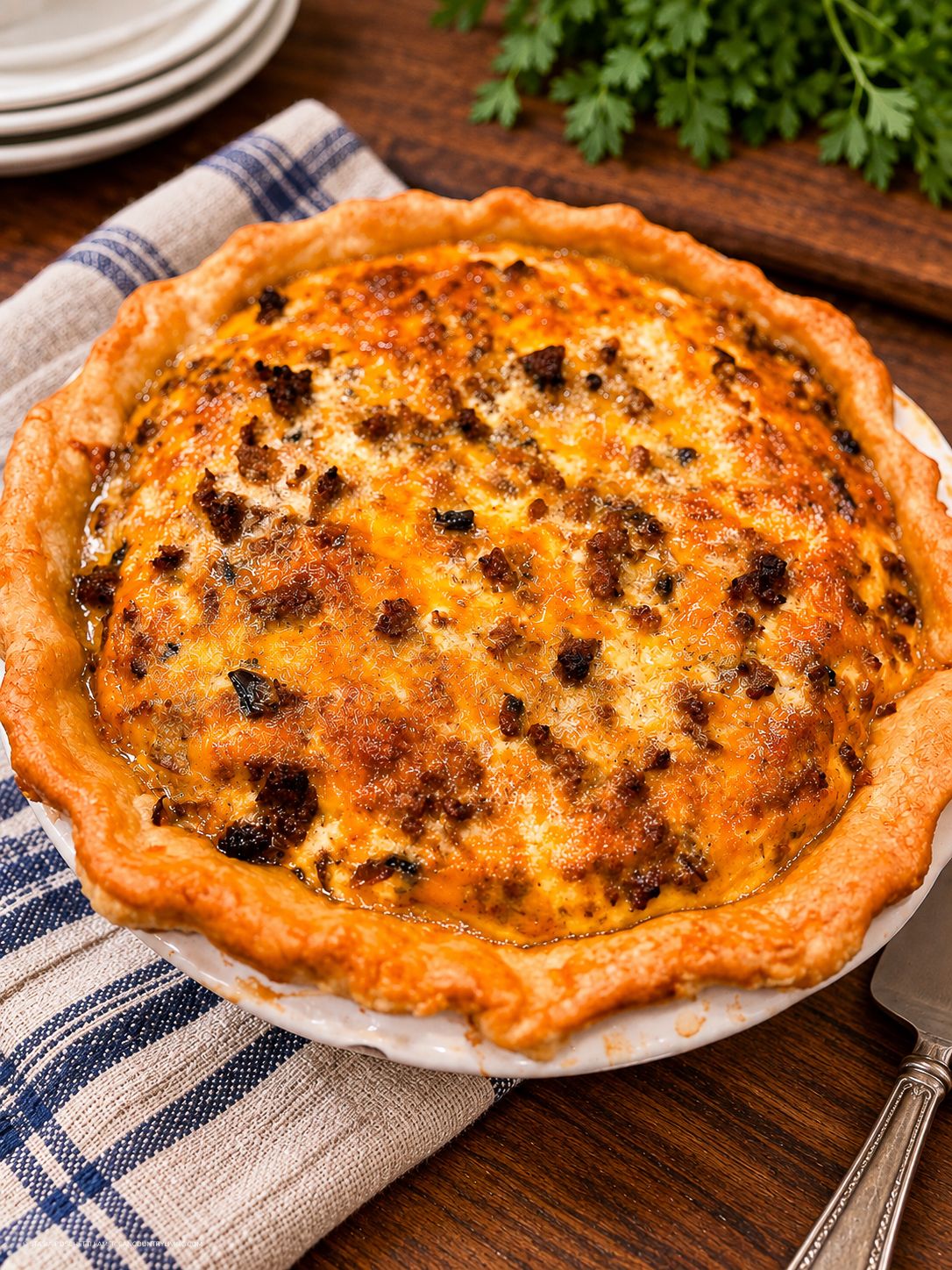
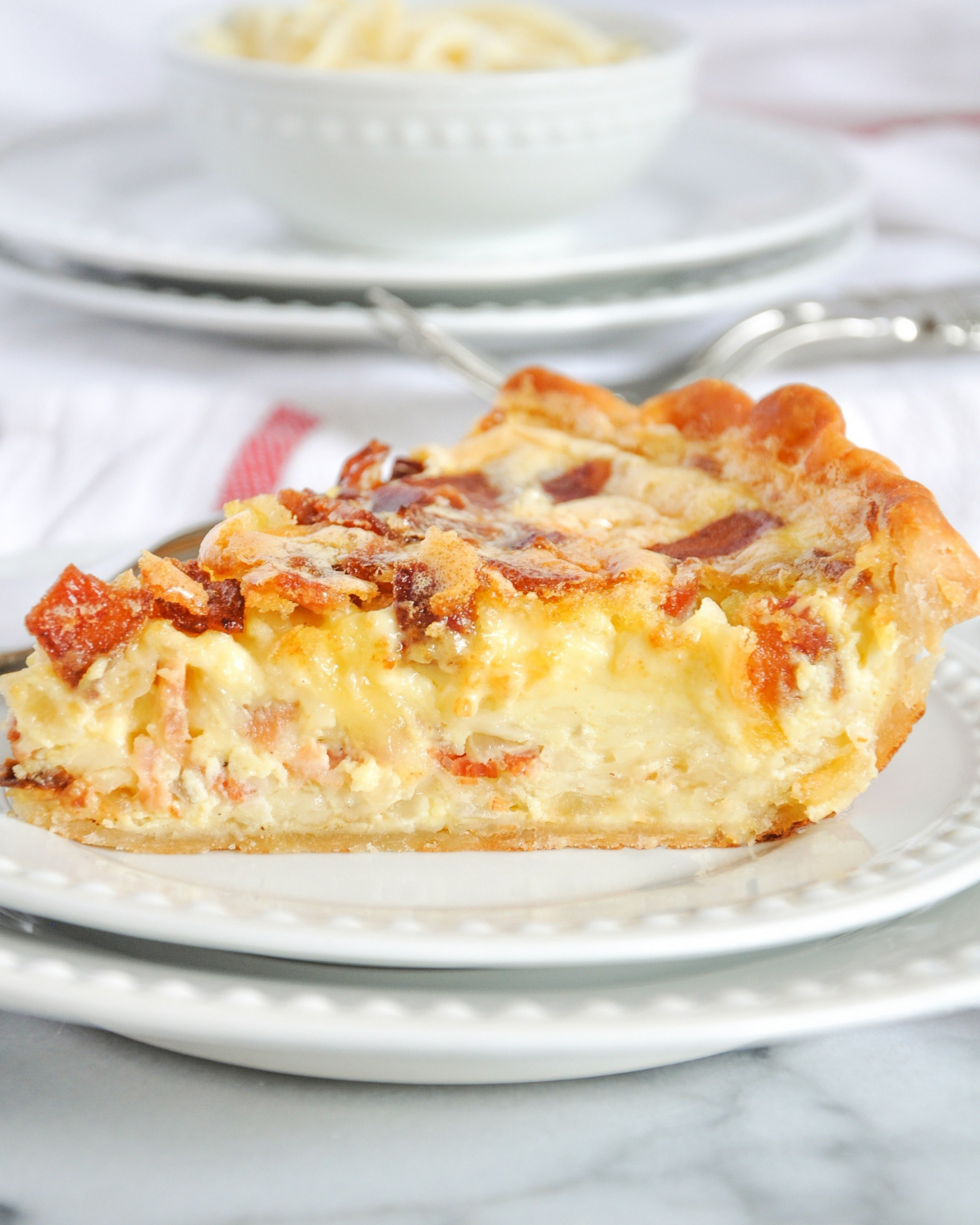
Quiche Lorraine With Bacon, Swiss And Gruyère
Quiche Lorraine has traveled a long way from northeastern France, picking up a few American habits along the way.
In Lorraine, the famous savory tart has traditionally been a fairly spare affair: pastry filled with eggs, cream and pieces of smoked pork. French sources describing the regional dish still make a point of that short ingredient list, and cheese is absent from the traditional preparation. Served warm with a green salad, it remains one of Lorraine’s best-known culinary specialties, alongside madeleines from Commercy and the region’s mirabelle plums.
The quiche many Americans know developed into something richer. Swiss cheese became common in American recipes, Gruyère found its way into plenty of restaurant and home-kitchen versions, and onions were frequently added alongside bacon. That is the family of quiche this recipe belongs to. I use both Swiss and Gruyère, which gives the filling a deeper, nuttier flavor while still keeping the bacon at the center of the dish.
It is worth understanding the distinction because the name Quiche Lorraine has become remarkably broad on this side of the Atlantic. In Lorraine itself, contemporary traditional recipes still call for smoked bacon or pork belly, eggs, cream and shortcrust pastry. One version published by France’s official tourism site includes eggs, egg yolks, heavy cream, smoked bacon and seasoning, with no cheese at all.
I am perfectly happy to let the French keep the historical record straight while putting Gruyère in mine.
Here, crisp bacon is paired with finely chopped onion cooked until tender, then layered with Swiss and Gruyère beneath a custard of whole eggs, additional yolks and cream. Those extra yolks matter. They give the filling more richness and help produce the smooth, substantial texture that separates a well-made quiche from something resembling scrambled eggs baked in a pie shell.
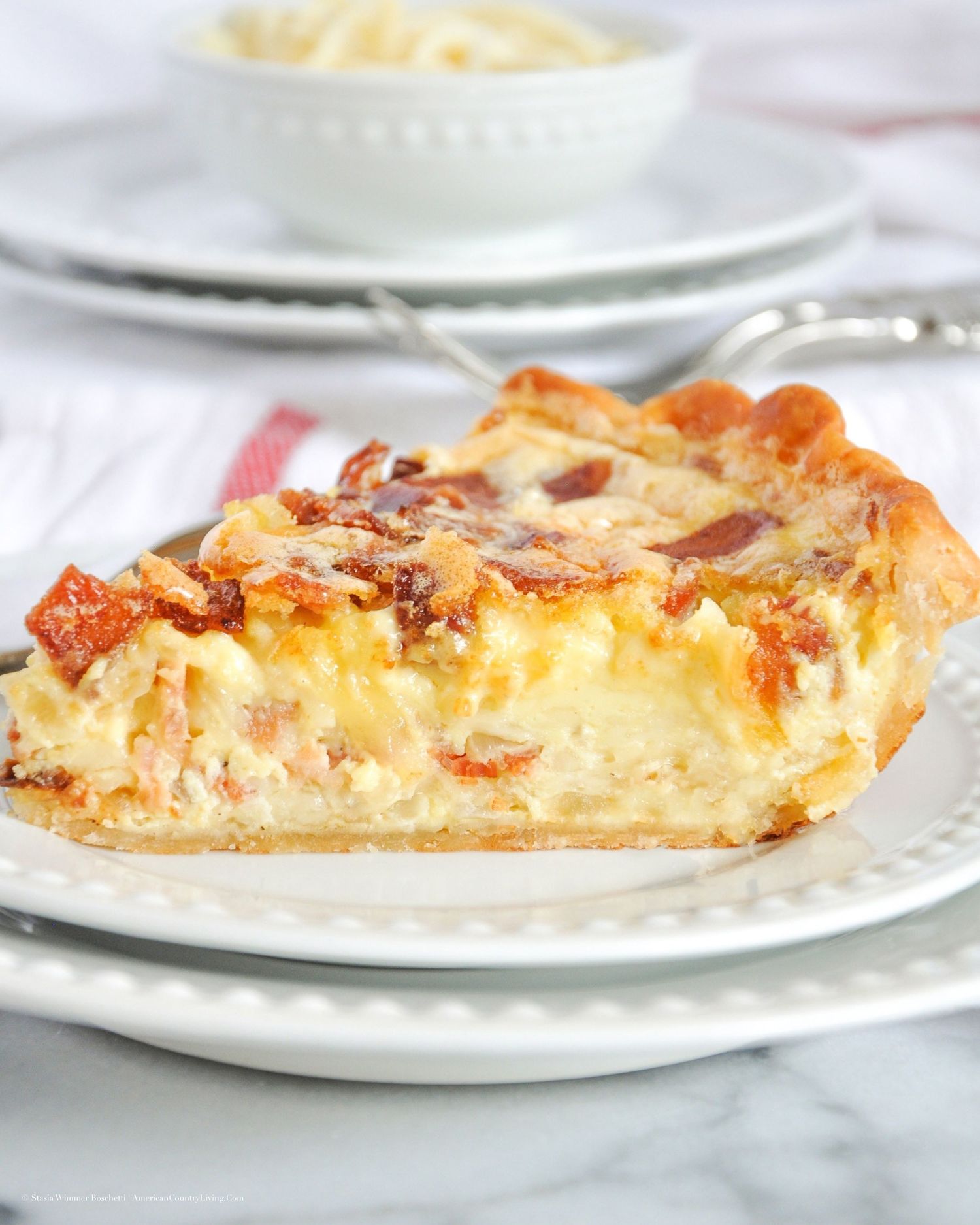
Gruyère brings the pronounced flavor. Made in Switzerland, it has the nutty, savory character and excellent melting qualities that make it particularly well suited to egg dishes. Swiss-style cheese is milder, so using the two together keeps the filling flavorful without allowing the cheese to overwhelm the bacon and custard.
The crust deserves equal attention. A creamy filling poured straight into raw pastry can leave the bottom pale and damp, particularly in a deep pie plate. Partially baking the shell first gives the pastry a head start. Pie weights, dried beans or rice hold the dough against the pan while it bakes so the base stays flat instead of puffing into the space intended for the filling.
I also brush the partially baked shell with egg wash before filling it. Once it returns to the oven, that thin coating cooks against the pastry and helps create another barrier between crust and custard. It is a small kitchen detail, but exactly the kind that becomes apparent when you cut the first slice and find a properly baked bottom beneath all that cream, bacon and cheese.
Give the finished quiche fifteen minutes before cutting into it. Straight from the oven, the custard is still settling and the cheese is molten. A short rest allows the eggs to finish setting with the residual heat, and the wedges come away from the pan much more cleanly.
This is the sort of dish I would serve with a sharp green salad dressed with Dijon vinaigrette, especially when the quiche is warm. Fresh fruit works beautifully for breakfast or brunch. And although quiche has been firmly attached to brunch menus in America for decades, there is no reason to confine it there. A substantial slice with dressed greens makes an excellent lunch, and leftovers are remarkably good the next day.
There is also no need to apologize to Lorraine for the Gruyère. Recipes change as they cross borders, settle into new kitchens and meet the ingredients cooks have at hand. Knowing where a dish began gives us the useful part of the story. Knowing what happened to it afterward makes that story considerably more interesting.
Until next time, thank you for spending a little time with me. I hope you find a recipe to make, a story to enjoy, and something new to take into the kitchen. ♥️
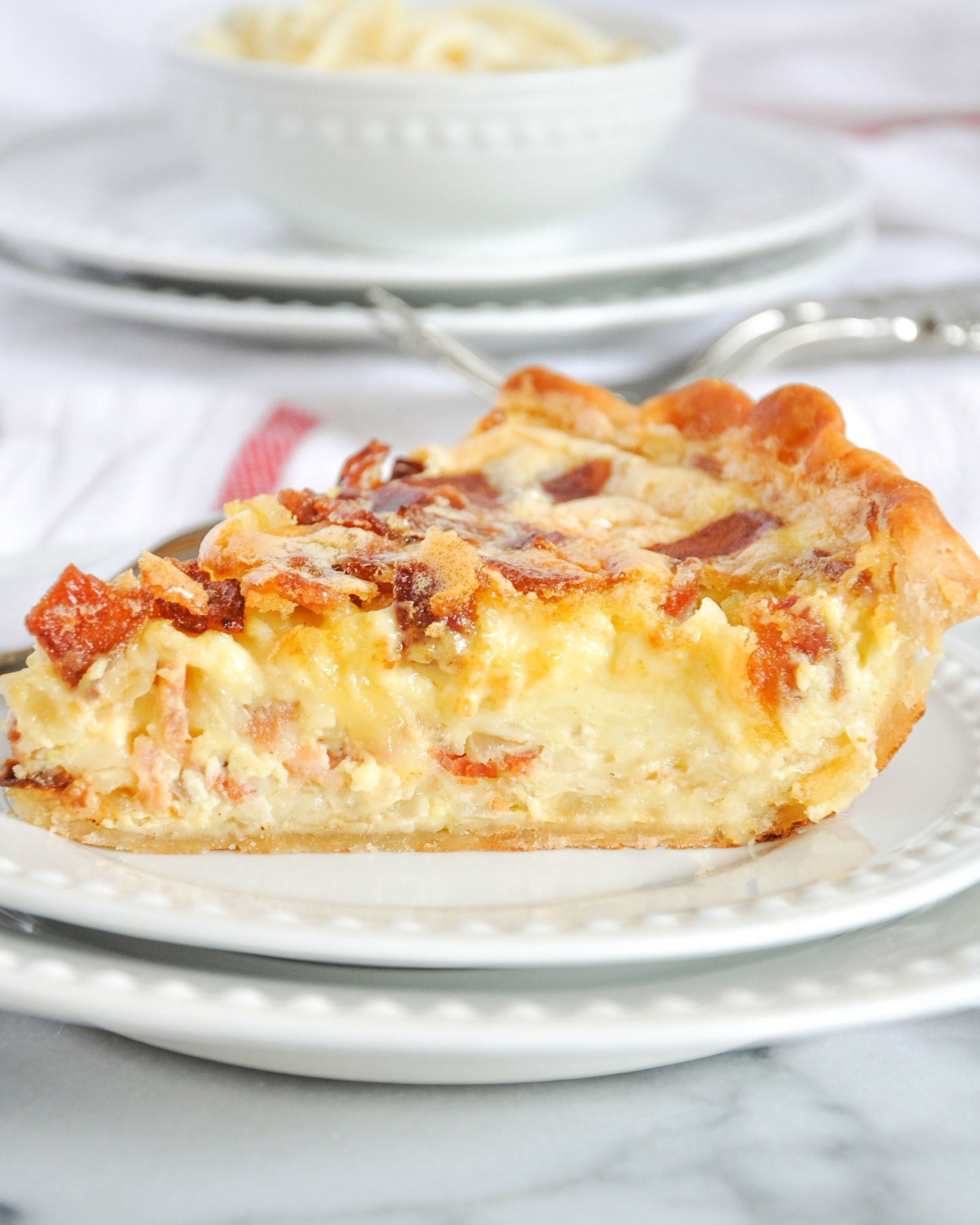
Quiche Lorraine With Bacon, Swiss And Gruyère
PREP TIME: 30 MINUTES
PAR-Bake Crust: 11 minutes @ 400°F
Quiche Bake Time: 45 minutes @ 350°F
servings: 4-6 SERVINGS
Ingredients:
10 slices bacon
3/4 cup finely chopped onion
3 large eggs
2 large egg yolks
1 cup heavy cream or whole milk
1 cup finely shredded Swiss cheese
1 cup finely shredded Gruyère cheese
1/2 teaspoon kosher salt
1/2 teaspoon freshly ground black pepper
1/4 teaspoon dry mustard
1 prepared pastry for a 9½-inch single-crust pie
1 large egg white
1 teaspoon water
Instructions:
- Preheat the oven to 400°F. If using a store-bought pie crust, thaw according to the package directions. Line a rimmed baking sheet with parchment paper or foil and set aside.
- Par-bake the crust: Fit the pastry into a 9½-inch quiche dish or deep-dish pie plate. Tuck the edges under and crimp as desired. Line the crust with foil or parchment paper and fill with pie weights, dried beans, or uncooked rice. Bake for 8 minutes. Carefully remove the liner and weights, then return the crust to the oven and bake for 3 minutes more. Remove from the oven and reduce the temperature to 350°F.
- While the crust bakes, cook the bacon in a medium skillet over medium heat until crisp. Transfer the bacon to a paper towel-lined plate to drain. When cool enough to handle, crumble and set aside.
- Pour off most of the bacon drippings, leaving a small amount in the skillet. Add the onion and cook over medium heat until tender and translucent. Remove from the heat and set aside to cool slightly.
- In a medium mixing bowl, whisk together the eggs, egg yolks, cream or whole milk, salt, pepper, and dry mustard until thoroughly combined.
- In a small bowl, whisk together the egg white and 1 teaspoon water. Lightly brush the bottom and sides of the blind-baked crust with the egg wash.
- Sprinkle half of the cooked onion, Swiss cheese, Gruyère, and crumbled bacon evenly over the crust. Ladle half of the egg mixture over the filling. Repeat with the remaining onion, cheeses, bacon, and egg mixture.
- Set the quiche on the prepared baking sheet and bake at 350°F for about 45 minutes, or until the filling is set around the edges and the center has only a slight wobble when the pan is gently moved. If the crust begins to brown too quickly, loosely cover the edges with foil.
- Transfer the quiche to a wire rack and let rest for 15 minutes before slicing and serving.
The Perfect All-Butter Pie Crust
REVIEWS
Katlin, Pinterest
"I make this recipe frequently. It’s perfect the way it is. Love it! #QuicheLorraine"
Rebecca, Pinterest
"My family loved this. I wasn’t sure how they’d feel but apparently one quiche was not enough for five. Definitely making a double batch next time!"
Mark, Pinterest
"This was delicious and a crowd pleaser! I substituted Extra Sharp Cheddar, since that's what I had on hand. Still amazing!"
Arlene Geer January 24, 2023 at 12:13 pm ★★★★★
"I have made this twice now. Delicious. Will make it again and again."
Kelly Vandenberg April 21, 2021 at 2:43 pm ★★★★★
"My new favorite quiche recipe!!! THANK you! Delicious & nice balance of cheese to egg!"
Quiche Lorraine: A Review - The Fancy Napkins December 7, 2017 at 6:59 am
"At first, I found a plain old quiche, but that was quickly poo-poo’d by Ian who wanted a Quiche Lorraine. His wish was granted."
15 MOUTHWATERING QUICHE RECIPES TO GET YOU UP IN THE MORNING WITH ZEAL OCTOBER 29, 2017 AT 3:26 PM
"Mouthwatering Quiche Lorraine"
about the AUTHOr
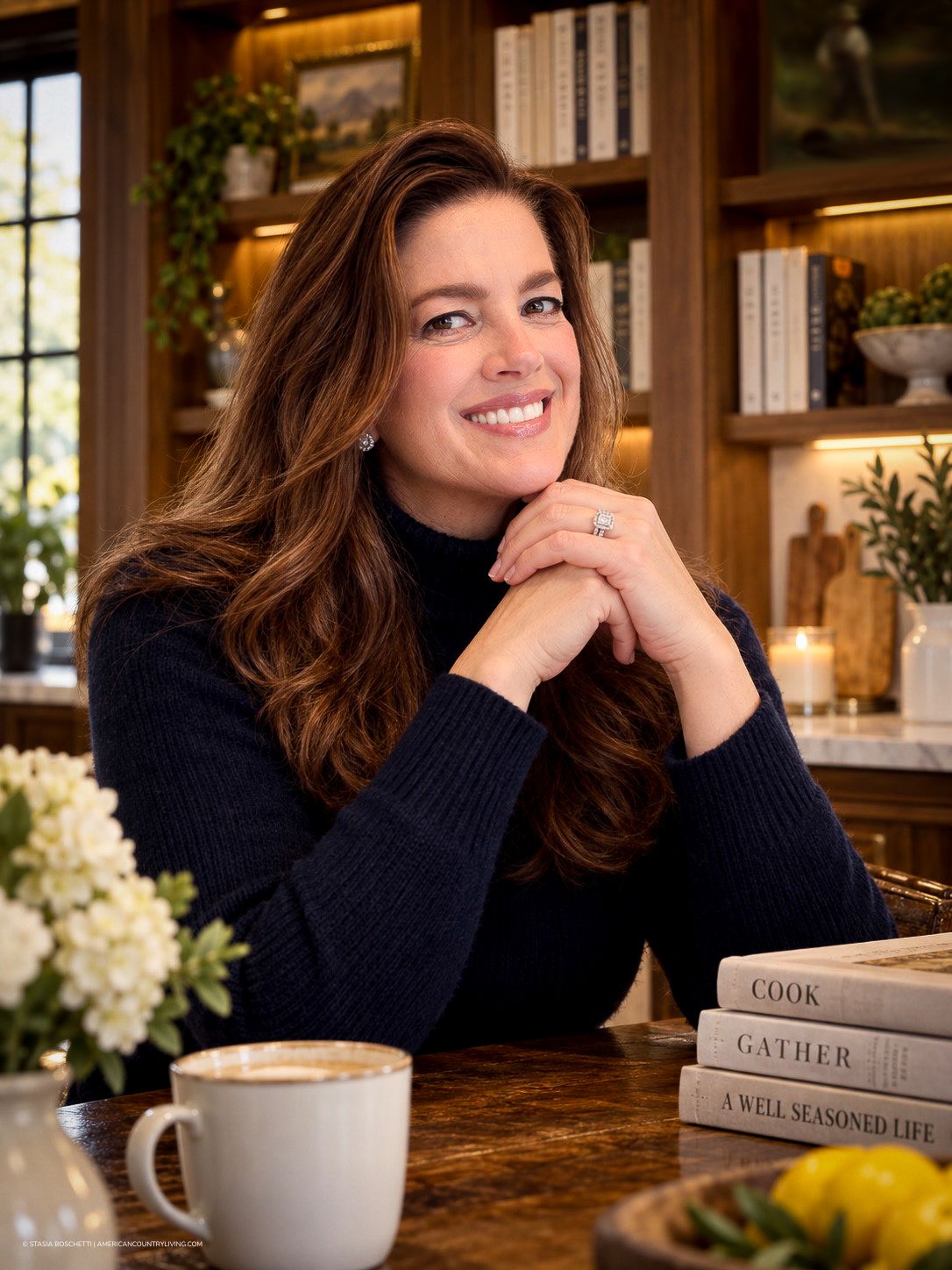
Stasia Boschetti is an American culinary writer and the founder of American Country Living. With more than thirty years of experience in the kitchen, a background in catering, extensive travel, and a strong knowledge of regional food traditions, she writes about the recipes, histories, and customs that have shaped the way America cooks. She lives in the United States with her husband, family, and rescue animals.